
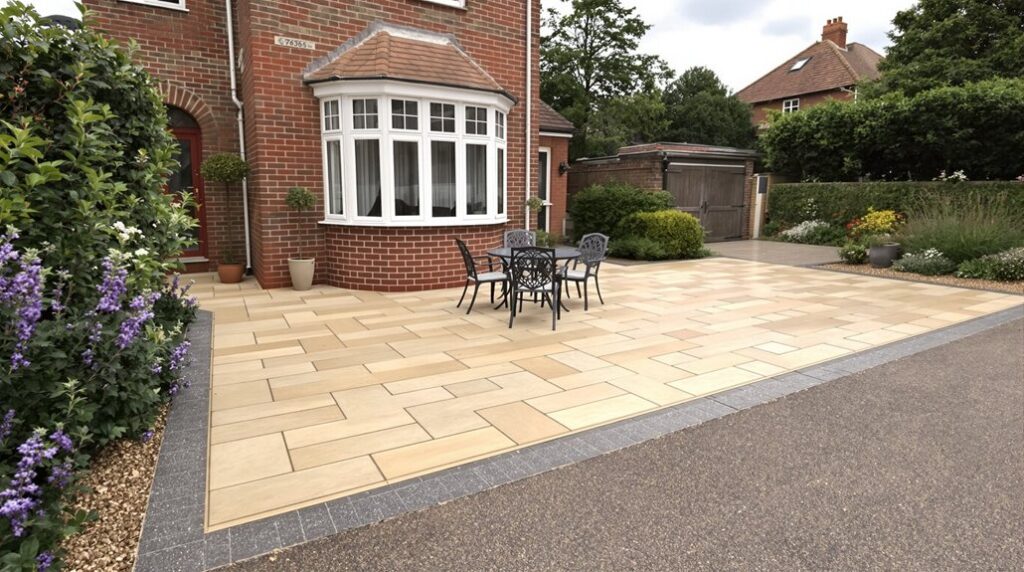
Hertfordshire driveways owners face a critical decision when selecting between resin bound and resin bonded driveway surfaces. These two systems appear deceptively similar yet differ substantially in performance, longevity, and cost implications. The choice impacts everything from drainage compliance with local planning requirements to long-term maintenance expenses. Understanding these fundamental distinctions becomes essential before committing to what represents one of the most significant exterior investments for any property.
Understanding the Fundamental Differences Between Resin Bound and Resin Bonded Systems
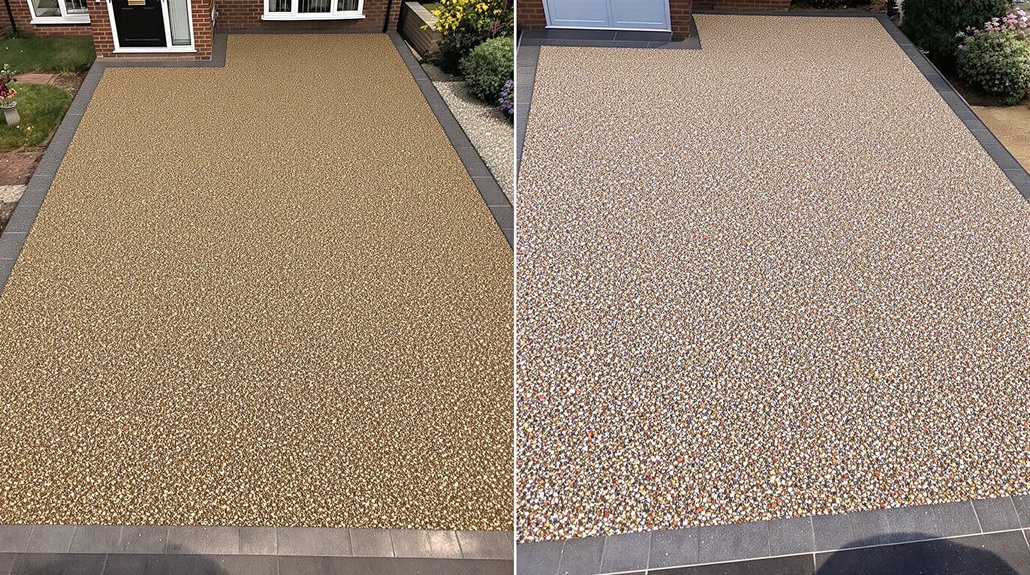
While both resin bound and resin bonded driveways utilize similar materials, their construction methods and resulting characteristics differ considerably. Resin bound systems thoroughly mix aggregate stones with resin before application, creating a smooth, porous surface. This method guarantees complete coverage of each stone, enhancing resin properties and creating superior adhesion throughout the entire surface depth.
Conversely, resin bonded systems apply loose aggregate over a resin-coated base, securing stones only at their contact points with the adhesive layer. This fundamental difference markedly impacts surface longevity, with resin bound surfaces typically lasting 15-20 years compared to resin bonded systems averaging 8-12 years. The mixing method also affects permeability, maintenance requirements, and overall durability of the finished driveway surface.
Installation Methods and Technical Requirements for Each Surface Type
Although both resin systems require proper ground preparation, their installation processes demand distinctly different technical approaches and equipment specifications. Resin bound installation techniques involve mixing aggregate with polyurethane resin off-site before applying the mixture to prepared surfaces using specialized troweling equipment. This method requires precise temperature control and timing to guarantee proper curing.
Successful resin bound installation demands precise off-site mixing, specialized equipment, and careful temperature control throughout the curing process.
Resin bonded systems follow different technical specifications:
- Surface preparation – Apply resin directly to clean, dry substrate
- Aggregate broadcasting – Scatter loose stones onto wet resin surface
- Excess removal – Remove unbonded aggregate after curing period
- Surface sealing – Optional protective coating application
Professional installers must consider weather conditions, substrate compatibility, and curing times. Resin bound systems typically require heated mixing equipment, while resin bonded installations need broadcasting tools and collection systems for surplus aggregate removal. Both installation methods benefit from skilled craftsmanship by certified professionals who understand the unique requirements of each surface type and can ensure exceptional results through proper technique.
Drainage Properties and Hertfordshire Planning Permission Considerations
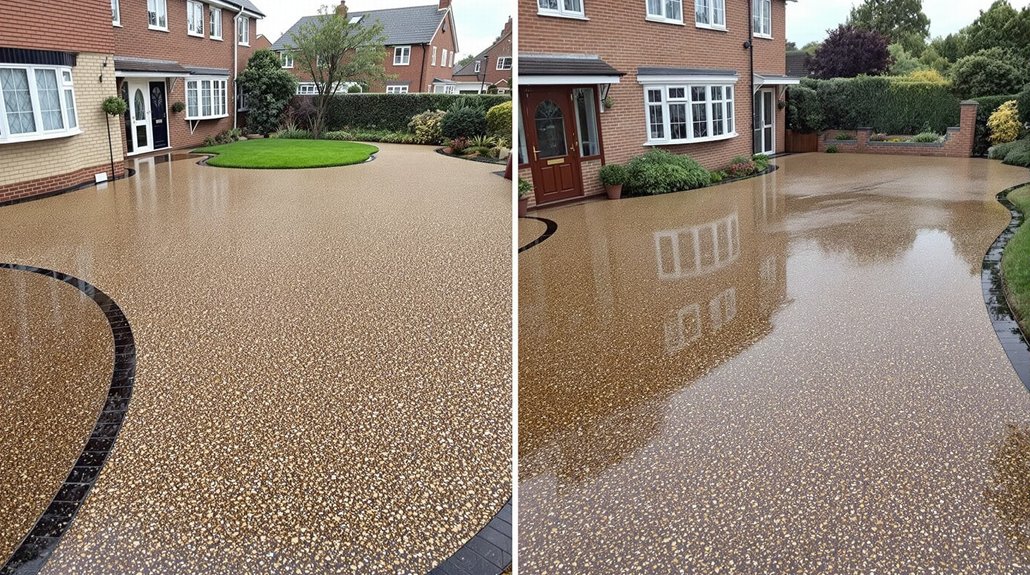
Permeability stands as the defining characteristic that separates resin bound surfaces from their bonded counterparts when addressing Hertfordshire’s increasingly stringent drainage regulations. Resin bound systems feature permeable construction allowing water penetration through aggregate gaps, eliminating surface water accumulation. This natural drainage capability typically satisfies local planning regulations without requiring additional soakaway systems or drainage features.
Conversely, resin bonded surfaces create impermeable barriers requiring extensive drainage solutions. Hertfordshire councils mandate proper water management for non-permeable driveways exceeding 5 square meters, often necessitating planning applications. Installation costs increase considerably when incorporating drainage channels, soakaways, or redirection systems to prevent surface runoff affecting neighboring properties.
Planning regulations favor permeable surfaces as sustainable urban drainage solutions. Resin bound installations generally qualify as permitted development, while resin bonded projects may trigger formal planning permission requirements depending on size and drainage provisions.
Durability, Maintenance, and Long-Term Performance Comparison
The structural integrity of resin bound and resin bonded surfaces differs markedly due to their contrasting installation methods and material composition. Resin bound systems typically demonstrate superior resin longevity, with expected lifespans of 15-25 years compared to resin bonded surfaces lasting 8-12 years.
Maintenance Requirements:
- Resin Bound: Minimal maintenance with occasional pressure washing and rare aggregate replacement
- Resin Bonded: Regular resealing every 3-5 years and frequent loose stone removal
- Wear Resistance: Resin bound surfaces maintain consistent appearance under heavy traffic loads
- Weather Impact: Resin bonded systems experience faster UV degradation and thermal expansion issues
Cost analysis reveals resin bound driveways offer better long-term value despite higher initial investment, while resin bonded surfaces require ongoing maintenance expenses that accumulate markedly over time.
Cost Analysis and Budget Planning for Your Hertfordshire Driveway Project
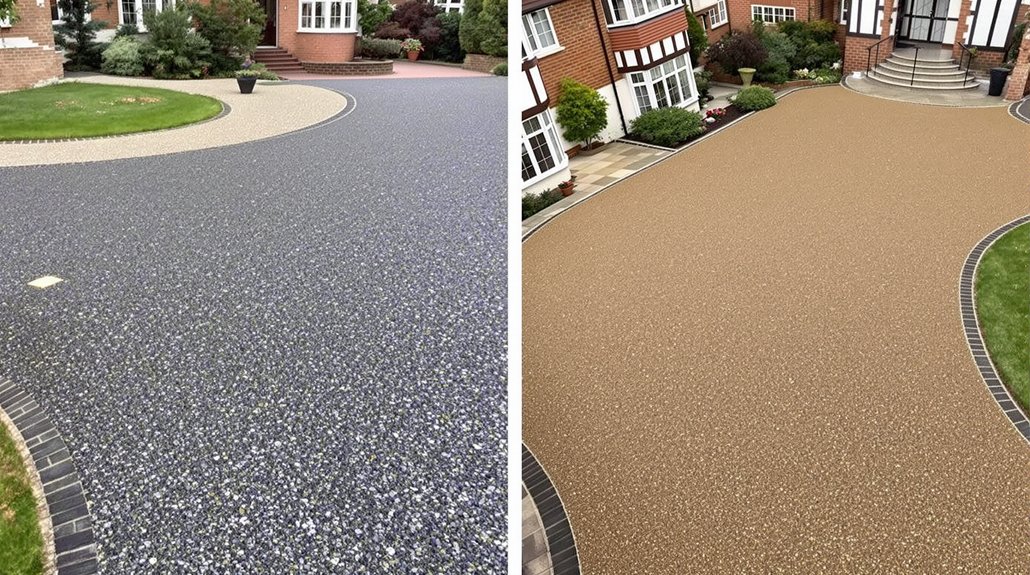
Understanding financial implications becomes essential when selecting between resin bound and resin bonded driveway solutions for Hertfordshire properties. Resin bound systems typically command higher upfront costs, ranging £40-80 per square metre, while resin bonded alternatives cost £20-40 per square metre. The cost breakdown reveals material expenses, labour charges, and surface preparation requirements greatly impact total investment.
Budgeting tips include obtaining multiple quotes from certified installers and factoring in long-term maintenance expenses. Resin bound driveways offer superior value despite higher initial costs due to extended lifespan and minimal upkeep requirements. Hertfordshire homeowners should consider property size, existing surface conditions, and desired aesthetic outcomes when planning budgets. Professional assessment guarantees accurate cost estimation and prevents unexpected expenses during installation phases.
Design Options, Aesthetics, and Kerb Appeal Potential
Design flexibility distinguishes resin bound and resin bonded driveways through distinct aesthetic possibilities for Hertfordshire properties.
Resin bound systems offer superior design versatility with extensive colour options and smooth texture variations. The aggregates remain fully encapsulated, creating seamless surfaces that complement traditional and contemporary architectural styles. Multiple aggregate combinations enable custom colour schemes matching existing property features.
Resin bound systems deliver exceptional design flexibility through extensive color options and seamless surfaces that complement any architectural style.
Resin bonded driveways provide different aesthetic characteristics:
- Exposed aggregate texture creates natural, tactile surface finishes
- Limited colour blending due to surface-applied resin coating methods
- Rustic appearance suits period properties and countryside settings
- Maintenance visibility shows wear patterns and aggregate displacement over time
Both systems enhance kerb appeal, though resin bound installations typically achieve more polished, uniform appearances. Property owners should consider architectural context, maintenance preferences, and long-term visual consistency when selecting between these surfacing options for ideal aesthetic outcomes.
Choosing the Right Resin Surface for Your Property’s Specific Needs
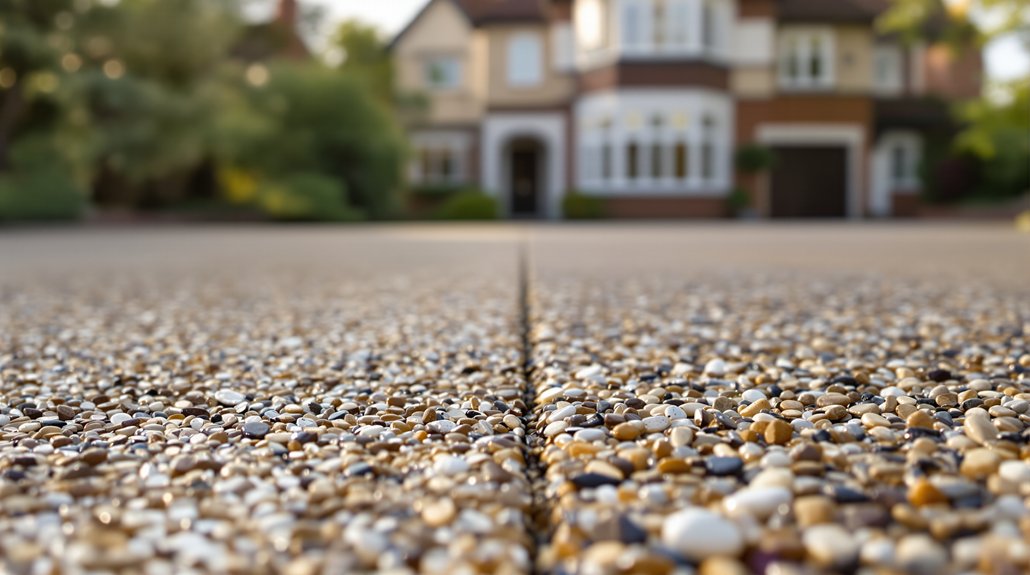
When property owners evaluate resin surfacing options, several critical factors determine the most appropriate choice between bound and bonded systems. Surface functionality requirements directly influence selection decisions, as each system serves different purposes and environments.
| Factor | Resin Bound | Resin Bonded |
|---|---|---|
| Traffic Load | Heavy vehicles, frequent use | Light pedestrian traffic |
| Drainage | SUDS compliant, permeable | Requires separate drainage |
| Budget | Higher initial investment | Cost-effective solution |
Property owners must assess their specific project requirements, including expected usage patterns, drainage obligations, and long-term maintenance preferences. Commercial properties typically benefit from resin bound systems due to durability demands, while residential pathways often suit resin bonded applications. Professional consultation guarantees superior system selection based on individual circumstances and performance expectations.