
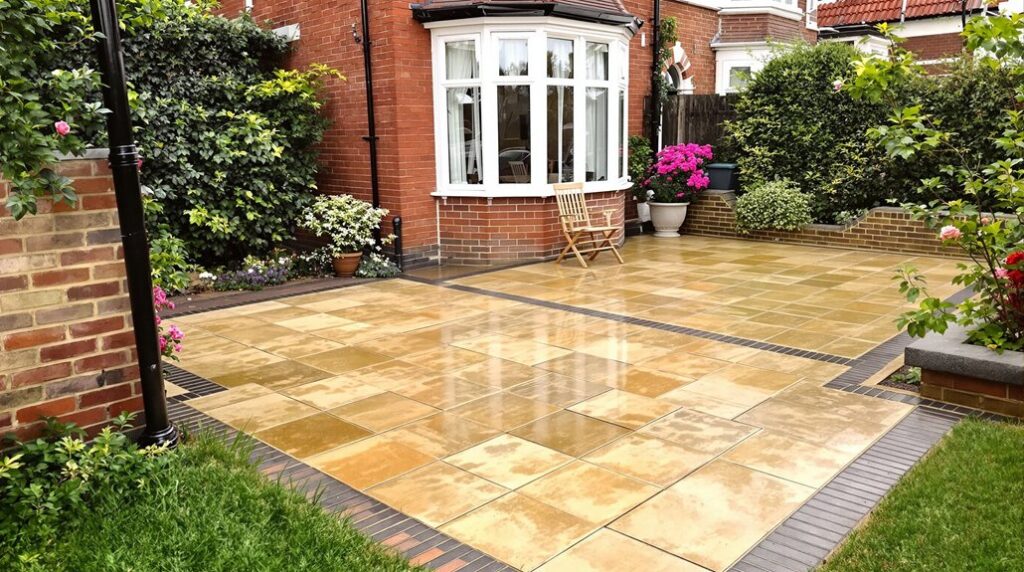
Block paving transforms ordinary driveways and patios into striking focal points that define a property’s character. Hertfordshire homeowners face unique considerations when selecting patterns, from honoring the architectural heritage of Georgian terraces to complementing sleek contemporary designs. The wrong choice can clash with neighborhood aesthetics or fail local planning requirements. Understanding which patterns suit specific property types, soil conditions, and council regulations determines whether the investment enhances or detracts from long-term property value.
Classic Block Paving Patterns That Complement Hertfordshire’s Period Properties
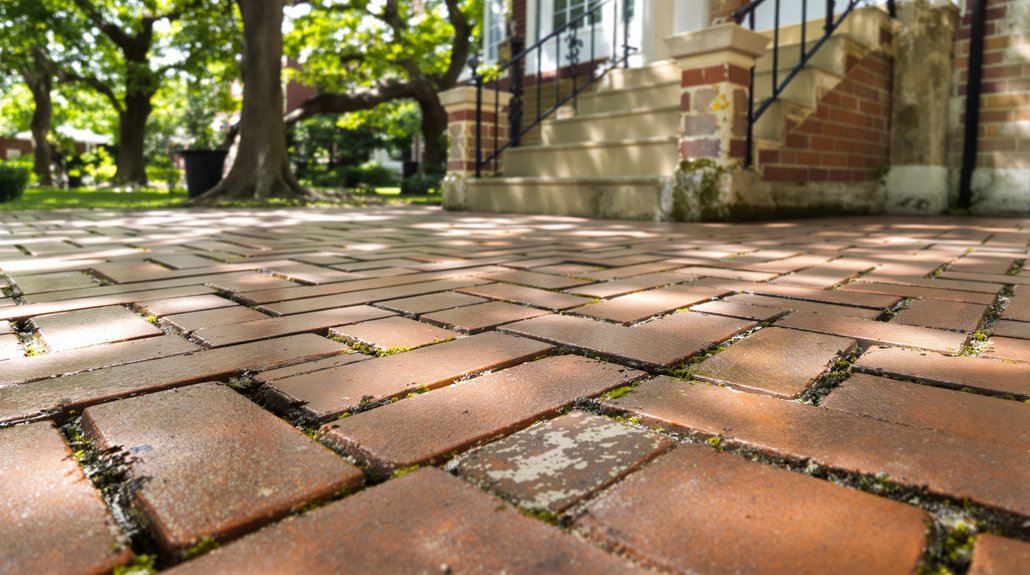
When considering driveway renovations for Hertfordshire’s Georgian and Victorian homes, property owners must select block paving patterns that honor the architectural heritage while providing modern functionality. Traditional herringbone patterns offer timeless herringbone elegance that perfectly complements period facades, creating visual continuity between historical architecture and contemporary landscaping needs.
The 90-degree herringbone pattern provides exceptional structural stability while maintaining classical aesthetics. For properties seeking subtle variation, the basketweave pattern delivers distinctive basketweave charm through its perpendicular brick arrangement, particularly effective for wider driveways and courtyards.
Running bond patterns suit Georgian terraces, emphasizing horizontal lines that echo window proportions. Stack bond arrangements work excellently for Victorian properties, creating geometric precision that matches ornate architectural details. These classic patterns guarantee driveways enhance rather than compete with Hertfordshire’s distinguished period architecture. Professional driveway installers combine traditional elegance with modern durability, ensuring these time-tested patterns meet contemporary performance standards while preserving historical character.
Contemporary Paving Designs for Modern Hertfordshire Homes
While period properties require respectful traditional approaches, modern Hertfordshire homes demand bold contemporary paving designs that reflect current architectural trends and lifestyle preferences. Large format blocks in linear patterns create striking geometric effects that complement clean architectural lines. Popular contemporary layouts include running bond patterns with oversized rectangular blocks and random modular designs that break traditional symmetry.
Sleek finishes such as smooth-surfaced concrete blocks or polished natural stone provide the refined aesthetic modern properties require. Bold colors including charcoal, deep grays, and contrasting whites create dramatic visual impact while maintaining sophistication. Mixed-material approaches combining block paving with steel, glass, or timber elements enhance contemporary appeal. These design choices transform driveways and patios into architectural features that seamlessly integrate with modern Hertfordshire homes’ innovative styling.
Choosing the Right Pattern Size and Scale for Your Property Type
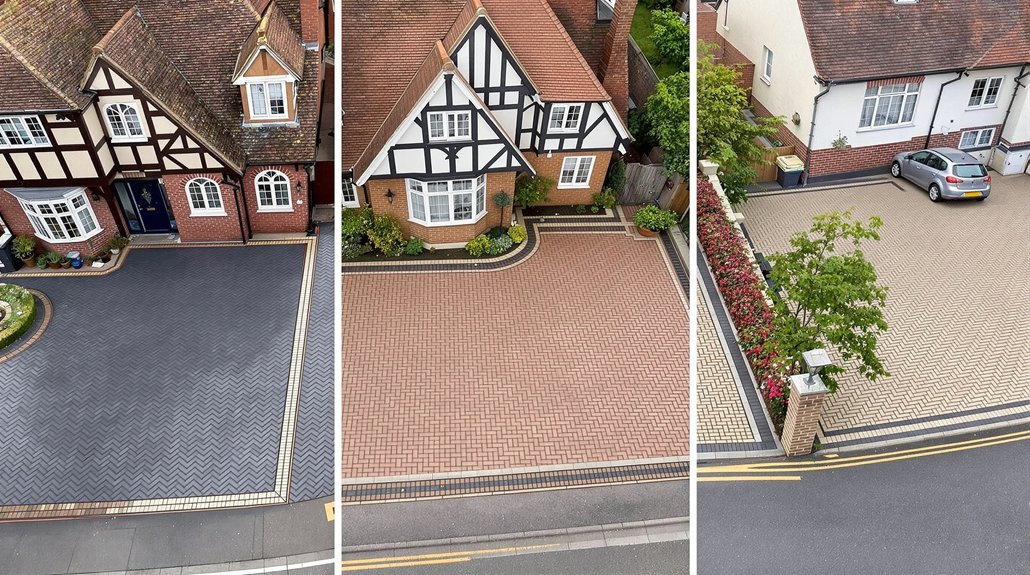
Scale considerations play a crucial role in selecting block paving patterns that complement rather than overwhelm a property’s architectural proportions.
The right paving pattern scale transforms outdoor spaces from overwhelming eyesores into harmonious extensions of your home’s character.
Smaller properties benefit from intricate patterns with finer details, while larger homes can accommodate bold geometric shapes and expansive designs. Victorian terraces suit traditional herringbone or basketweave patterns, whereas contemporary developments work well with linear or tapered designs that echo modern architectural lines.
Pattern selection should evoke the desired emotional response:
- Intimate charm – Small-scale patterns create cozy, welcoming approaches for compact homes
- Grand elegance – Large geometric shapes establish impressive, sophisticated entrances for substantial properties
- Harmonious balance – Medium-scale designs provide versatile solutions that neither dominate nor disappear
Consider sight lines from windows and entrances, ensuring the chosen pattern enhances rather than competes with the property’s existing features and proportions.
Durability and Maintenance Considerations for Different Paving Patterns
Beyond aesthetic appeal, the structural integrity and longevity of block paving patterns depend greatly on their resistance to wear and the complexity of their maintenance requirements. Simple patterns like stretcher bond distribute weight evenly across joints, enhancing paving longevity through reduced stress concentration points. Complex geometric designs may create weak spots where blocks meet at unusual angles, potentially compromising durability over time.
Maintenance tips vary greatly between patterns. Herringbone and basket weave designs trap debris in their intricate joints, requiring more frequent cleaning and re-sanding. Running bond patterns allow easier access for individual block replacement and joint maintenance. Regular sealing schedules should account for pattern complexity—detailed designs need more attention to prevent weed growth and maintain structural stability than straightforward linear arrangements.
Local Planning Regulations and Pattern Selection Guidelines for Hertfordshire
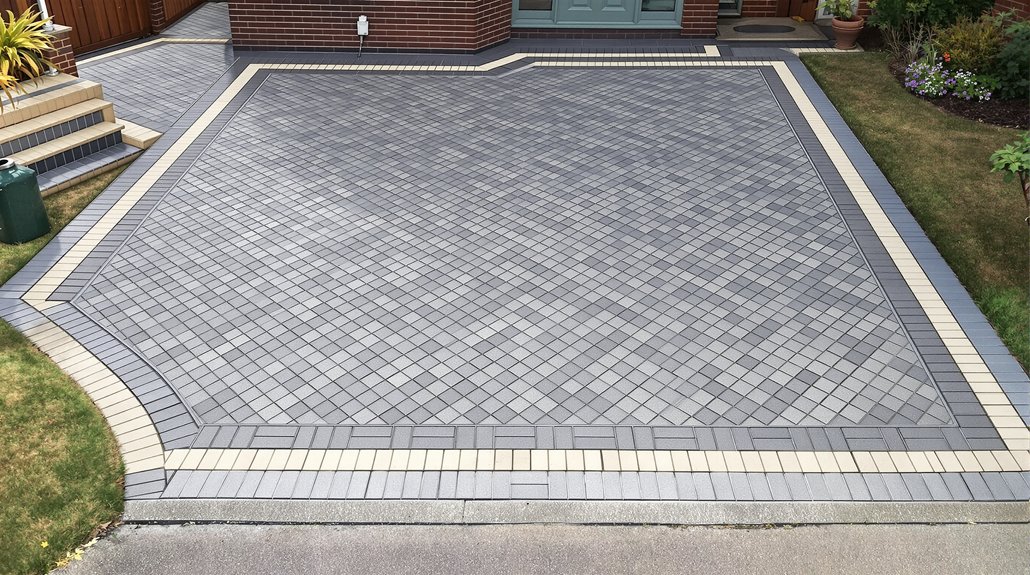
When homeowners in Hertfordshire select block paving patterns, they must navigate specific local planning regulations that govern both aesthetic and practical considerations. Each district council maintains specific guidelines regarding appropriate materials and designs, particularly in conservation areas and listed building zones.
Local regulations often emphasize maintaining the character of historic neighborhoods while accommodating modern functionality. Pattern restrictions typically focus on:
- Preserving your neighborhood’s cherished heritage that future generations will thank you for protecting
- Avoiding costly mistakes that could result in expensive reinstallation and planning disputes
- Ensuring your investment adds lasting value rather than creating future compliance headaches
Homeowners should consult their local planning authority before installation, as some areas require formal planning permission for certain paving patterns, especially those affecting front gardens or public-facing areas.