
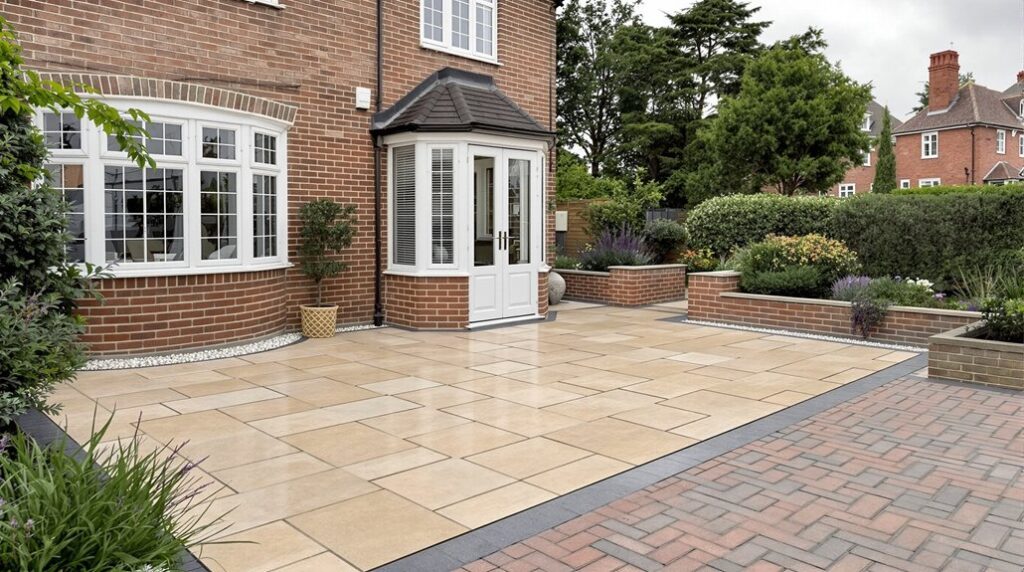
Installing a new driveway presents an ideal opportunity to reimagine the surrounding landscape. Many homeowners overlook the potential for creating a cohesive outdoor space that requires minimal upkeep while maximizing visual impact. The key lies in understanding how plant selection, hardscaping choices, and irrigation planning work together. When these elements align properly with the driveway’s design, the result transforms an ordinary entrance into something far more compelling than expected.
Planning Your Garden Layout Around Driveway Design
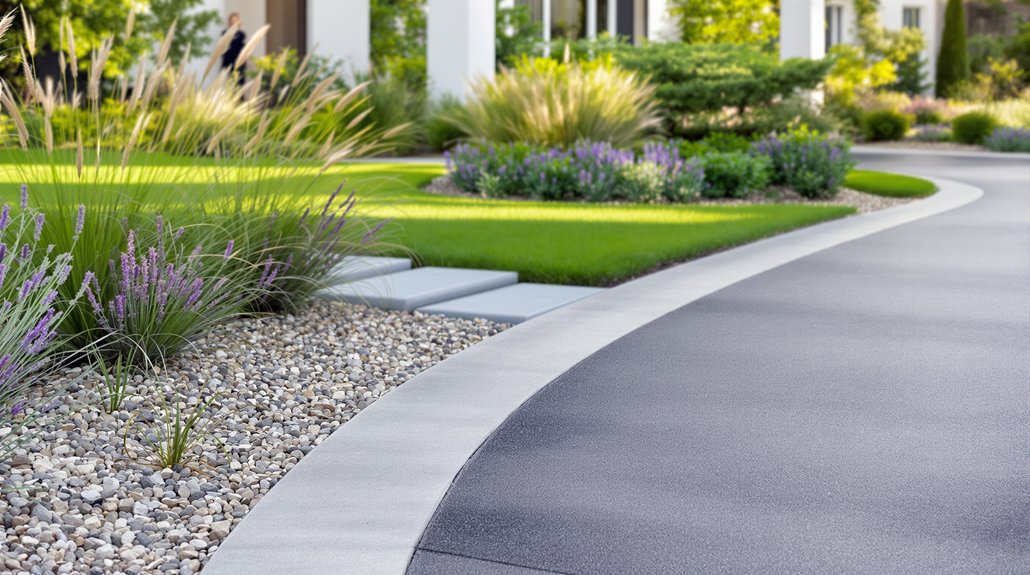
The driveway serves as the backbone of any front garden design, dictating traffic flow and establishing the primary visual framework for the entire space. Successful garden planning begins with analyzing driveway orientation and its relationship to existing structures, sunlight patterns, and natural drainage flows.
Strategic placement of garden beds alongside the driveway creates visual interest while maintaining practical functionality. Consider how garden accessibility affects maintenance routines—position high-maintenance plants near easily reached areas and low-maintenance options in distant corners. The driveway’s curve or straight lines should complement garden bed shapes rather than compete with them.
Modern resin-bound surfaces and permeable paving options help manage water runoff effectively while creating an attractive foundation for surrounding plantings. Proper spacing between planted areas and the driveway edge prevents root damage to paving while ensuring adequate room for vehicle doors and pedestrian movement throughout the landscape.
Selecting Hardy Plants That Thrive With Minimal Care
Once the driveway layout establishes the garden’s structural foundation, plant selection becomes the determining factor in achieving true low-maintenance success. Native species offer the most reliable choice for sustainable gardening, as they naturally adapt to local climate conditions and soil types. These plants require minimal intervention while supporting local wildlife ecosystems.
Drought tolerance ranks as the most valuable characteristic for reducing ongoing maintenance demands. Ornamental grasses, sedums, and regional wildflowers establish robust root systems that withstand extended dry periods without supplemental watering. Evergreen shrubs provide year-round structure while demanding little attention beyond occasional pruning.
Strategic placement of these hardy varieties near driveway edges creates visual appeal without constant upkeep, ensuring the front garden remains attractive throughout all seasons.
Strategic Hardscaping Elements for Year-Round Appeal
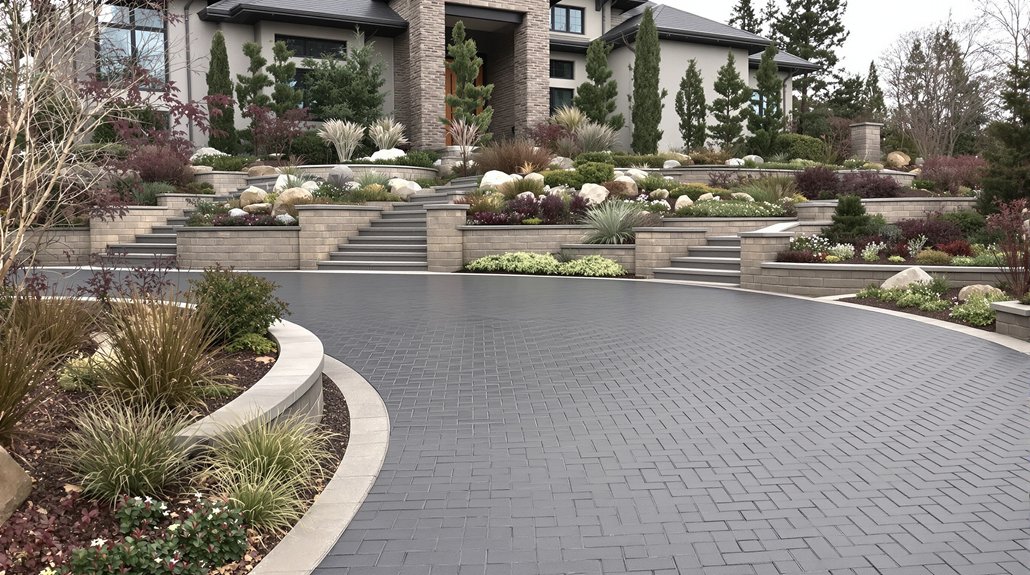
While hardy plants form the living backbone of a low-maintenance garden, permanent hardscaping features provide the structural elements that maintain visual interest regardless of seasonal changes or plant dormancy periods. Stone pathways, decorative borders, and retaining walls create defined spaces that require minimal upkeep while adding architectural appeal.
Textured surfaces like exposed aggregate concrete, natural stone pavers, or decorative gravel introduce visual depth without demanding regular maintenance. These materials withstand weather extremes and foot traffic while complementing both contemporary and traditional home styles.
Strategic placement of focal points such as sculptural elements, water features, or specimen boulders draws attention and creates memorable impressions. Well-positioned hardscaping reduces the need for extensive plantings while establishing a sophisticated framework that enhances property value year-round.
Effective Mulching and Ground Cover Solutions
Beyond structural elements, organic ground treatments serve as the unsung heroes of low-maintenance landscaping by suppressing weeds, retaining soil moisture, and reducing the frequency of garden interventions. Eco friendly mulching options include shredded bark, wood chips, and composted leaves that naturally decompose while enriching soil nutrients. These materials create protective barriers that regulate temperature fluctuations and minimize water evaporation.
Effective groundcover plants like creeping thyme, pachysandra, and ajuga establish dense root systems that outcompete unwanted vegetation. These perennial solutions require minimal watering once established and spread naturally to fill gaps. Strategic placement around trees and between hardscaping features creates cohesive visual flow while dramatically reducing maintenance requirements. The combination of organic mulch and living groundcover creates sustainable, self-maintaining garden zones.
Smart Irrigation Systems for Water-Wise Gardening
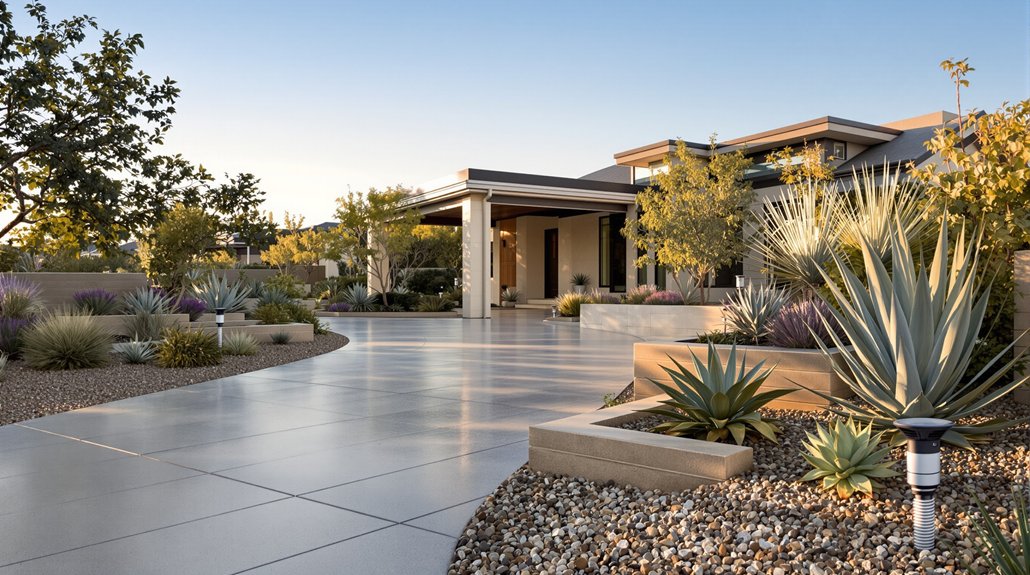
As water conservation becomes increasingly critical for sustainable gardening, intelligent irrigation technologies offer precise control over moisture delivery while eliminating guesswork and waste. Smart controllers automatically adjust watering schedules based on weather data, soil conditions, and plant requirements, reducing water consumption by up to 30% compared to traditional timers. These systems integrate seamlessly with existing sprinkler infrastructure while providing remote monitoring capabilities through smartphone applications.
Modern irrigation solutions include:
- Weather-based smart controllers that postpone watering during rainfall and adjust for seasonal temperature changes
- Soil moisture sensors that prevent overwatering by measuring actual ground conditions before activation
- Drip irrigation zones targeting specific plant areas with minimal evaporation loss
These technologies create efficient, self-regulating watering systems that maintain healthy landscapes while conserving precious water resources.
Creating Visual Harmony Between Garden and Driveway Materials
Cohesion between driveway surfaces and adjacent garden elements creates a unified front yard aesthetic that enhances curb appeal and property value. Strategic material contrasts prevent monotony while maintaining visual flow. Concrete driveways pair effectively with natural stone borders or decomposed granite pathways, creating textural interest without competing elements. Gravel driveways complement brick edging and wooden raised beds for rustic charm.
Color palettes should bridge hardscape and landscape seamlessly. Gray concrete harmonizes with silver-foliaged plants like lavender and sage, while warm-toned pavers coordinate with terracotta containers and red-leafed specimens. Echo driveway hues through mulch selection, container materials, or accent stones throughout planting beds. Repetition of key colors in varying intensities strengthens the connection between built and natural elements, resulting in a professionally designed appearance that requires minimal ongoing coordination efforts.
Seasonal Maintenance Tips for Long-Term Success
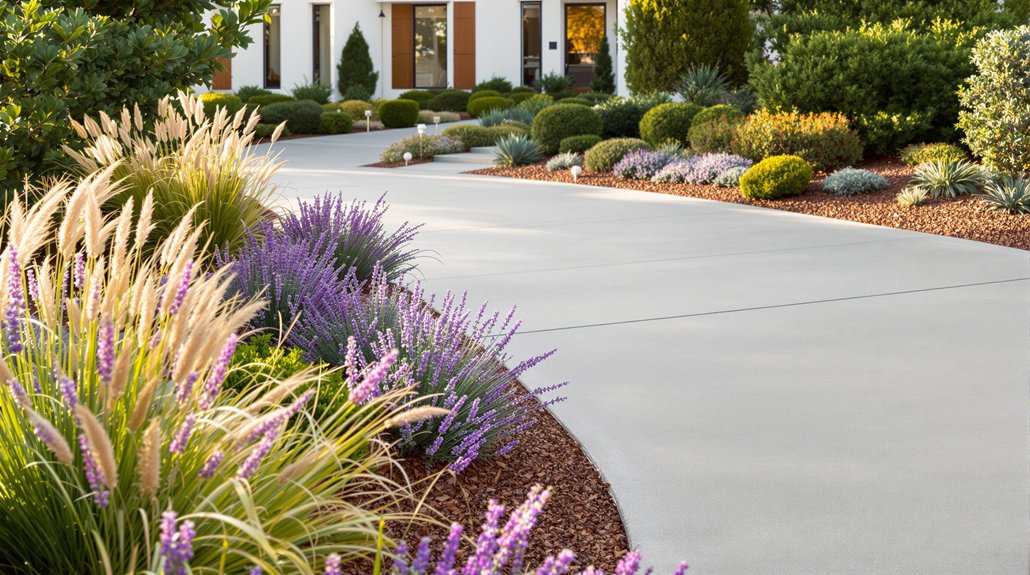
While thoughtful design establishes the foundation of a low-maintenance front garden, strategic seasonal care assures lasting beauty with minimal effort.
Smart seasonal maintenance transforms a well-designed front garden into a year-round showcase that practically cares for itself.
Essential Seasonal Tasks for Maximum Impact:
- Spring Foundation Work – Apply fresh mulch around plantings to suppress weeds and retain moisture. Remove winter debris and perform light seasonal pruning on flowering shrubs after blooms fade. Check irrigation systems and refresh pathway edges.
- Summer Efficiency Measures – Deep water established plants weekly rather than frequent shallow watering. Deadhead spent flowers on perennials to encourage continued blooming. Monitor for pest issues early when treatment is most effective.
- Fall Winter Preparation – Cut back ornamental grasses and herbaceous perennials. Apply winter mulch protection around tender plants. Clean and store garden tools properly to extend their lifespan and assure spring readiness.