

Traditional driveways contribute greatly to urban runoff problems, sending pollutants and excess water directly into storm systems. Homeowners increasingly recognize that their paving choices impact local water quality and flooding issues. Permeable driveway materials offer a practical solution that manages stormwater on-site while maintaining the functionality and appearance property owners expect. These innovative surfaces work by allowing water to filter through rather than flow away, but selecting the right option requires understanding specific material properties and installation requirements.
Understanding Permeable Paving Materials and How They Work
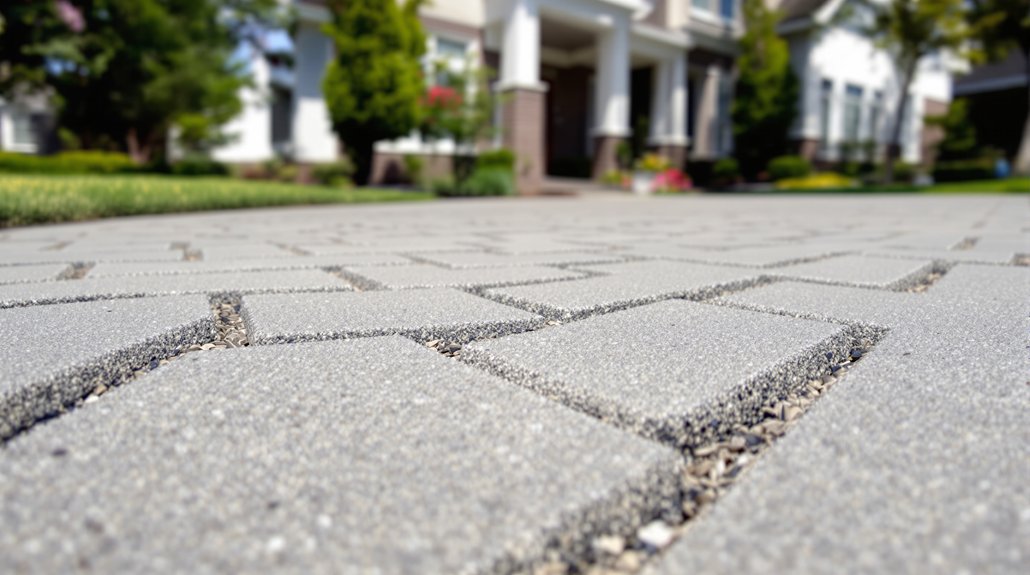
Three primary types of permeable paving materials allow water to infiltrate through their surface rather than creating runoff: porous concrete, permeable asphalt, and interlocking pavers with gaps. These materials contain interconnected voids that enable stormwater to pass through the surface layer into underlying gravel beds or native soil.
Porous concrete incorporates larger aggregate with minimal fine particles, creating spaces between stones. Permeable asphalt follows similar principles but uses bituminous binding agents. Interlocking pavers rely on deliberate spacing filled with permeable materials like sand or gravel.
The permeable benefits include reduced flooding, groundwater recharge, and pollution filtration. This technology considerably minimizes environmental impact by preventing contaminated runoff from reaching waterways while naturally filtering pollutants through soil layers. Modern resin-bound surfaces also provide excellent drainage capabilities while complying with Sustainable Drainage Systems (SuDS) regulations, making them an increasingly popular eco-friendly choice.
Gravel and Crushed Stone Driveways: The Classic Permeable Choice
While modern permeable paving technologies offer sophisticated solutions, gravel and crushed stone driveways represent the most straightforward and time-tested approach to permeable surface design. These surfaces excel in drainage efficiency, allowing water to infiltrate directly through the material rather than creating runoff.
| Feature | Gravel | Crushed Stone |
|---|---|---|
| Particle Size | 3/8″ to 3/4″ | 1/4″ to 2″ |
| Compaction | Minimal | Moderate |
| Cost | Low | Low-Medium |
| Maintenance | Annual raking | Periodic leveling |
| Durability | 5-10 years | 10-15 years |
Design aesthetics vary greatly between angular crushed stone and rounded gravel options. Installation requires proper base preparation with geotextile fabric and graduated aggregate layers. Regular maintenance includes replenishing materials and addressing vehicle rut formation to maintain ideal water infiltration rates.
Permeable Concrete and Porous Asphalt Solutions

Modern concrete technology has revolutionized permeable paving through engineered solutions that combine structural integrity with superior drainage capabilities. Permeable concrete features interconnected void spaces that allow water infiltration while maintaining load-bearing strength suitable for residential driveways. This innovative material reduces stormwater runoff by up to 80% compared to traditional surfaces.
Porous asphalt offers similar permeable benefits through specialized aggregate gradation and reduced fine materials. Both options filter pollutants naturally while preventing pudding and ice formation. Installation costs typically exceed conventional materials by 15-25%, but long-term maintenance savings offset initial expenses.
These solutions deliver sustainable aesthetics through customizable textures and colors. Property owners can achieve contemporary appearances while supporting groundwater recharge and reducing environmental impact through responsible water management systems.
Grass Pavers and Living Driveway Systems
Grass pavers represent a hybrid approach that merges vegetation with structural support, creating driveways that function as both hardscape and landscape elements. These systems utilize interlocking grids made from recycled plastic, concrete, or other materials that create stable driving surfaces while allowing grass to grow through designated openings.
Grass paver benefits include superior stormwater management, reduced heat island effects, and enhanced property aesthetics. The vegetation filters rainwater naturally while the grid structure distributes vehicle weight evenly, preventing soil compaction and rutting. Installation requires proper soil preparation, adequate drainage, and selecting appropriate grass varieties for local climate conditions.
Living driveway aesthetics seamlessly integrate transportation needs with landscaping goals, creating visually appealing surfaces that complement natural surroundings while maintaining functionality for regular vehicle use.
Recycled and Reclaimed Material Options
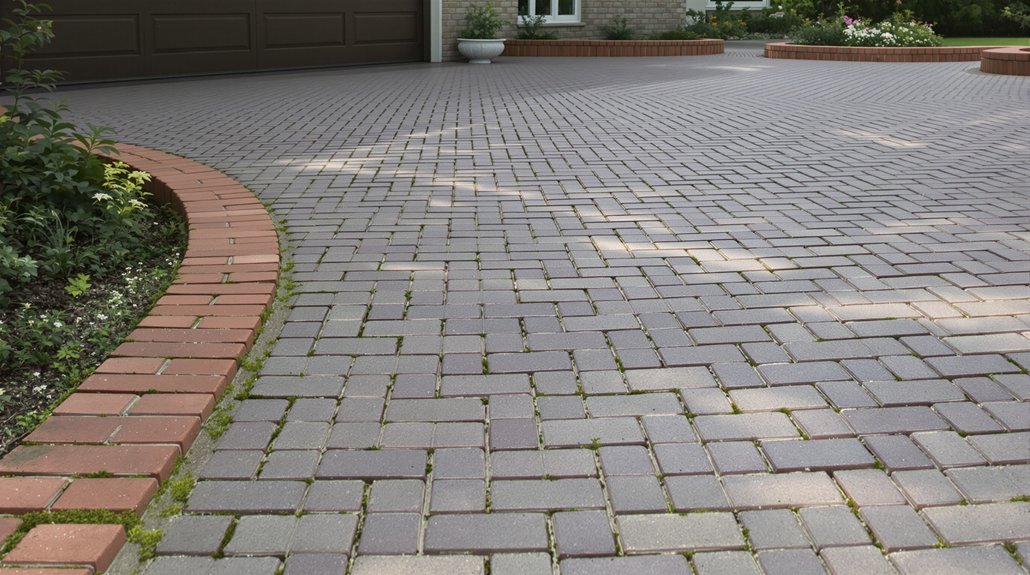
Transforming discarded materials into functional driveway surfaces offers environmentally conscious homeowners an opportunity to reduce waste while creating durable, cost-effective alternatives to traditional paving options. Recycled asphalt provides excellent performance characteristics while diverting material from landfills. This crushed and reprocessed pavement maintains structural integrity and weather resistance at considerably lower costs than virgin materials. Reclaimed bricks salvaged from demolition projects offer timeless aesthetic appeal with proven longevity. These weathered materials develop unique patina and character impossible to replicate with new products. Both options require proper installation techniques to guarantee adequate drainage and stability. Professional assessment determines appropriate base preparation and grading requirements. These sustainable choices demonstrate that environmental responsibility and practical functionality can coexist effectively in residential applications.
Installation Considerations and Site Preparation Requirements
Proper site preparation forms the foundation for successful eco-friendly driveway installation, requiring careful evaluation of soil conditions, drainage patterns, and existing infrastructure. A thorough site assessment examines existing grade, proximity to trees, and underground utilities to prevent future complications. Soil stability testing determines load-bearing capacity and identifies potential settling issues that could compromise permeable surfaces.
Excavation depth varies by material choice, typically requiring 6-12 inches for proper base installation. Contractors must establish appropriate slopes for water management, ensuring runoff flows away from structures while maintaining permeability benefits. Compacting the subgrade provides essential stability without over-densification that impedes drainage. Installing edge restraints prevents material migration, while incorporating geotextile fabrics separates base layers from underlying soil, maintaining structural integrity throughout the driveway’s lifespan.
Cost Comparison and Long-Term Financial Benefits

While eco-friendly driveway materials often require higher upfront investment than traditional asphalt or concrete, their long-term financial benefits frequently offset initial costs through reduced maintenance, enhanced property values, and potential municipal incentives. Permeable pavers typically cost $10-20 per square foot compared to $3-7 for standard asphalt, representing a significant initial investment. However, these systems deliver substantial long term savings through minimal repair requirements and extended lifespans of 20-40 years versus 10-15 for conventional surfaces. Additionally, many municipalities offer rebates for stormwater management installations, reducing net costs by 10-30%. Property values often increase 5-15% with sustainable features, while reduced runoff can lower stormwater fees in participating jurisdictions, creating ongoing financial returns.
Maintenance Tips for Maximum Permeability and Longevity
Maintaining eco-friendly driveways requires specific strategies that preserve their environmental benefits while extending operational lifespan. Regular cleaning prevents debris accumulation that blocks porous surfaces, ensuring proper water infiltration. Homeowners should sweep permeable pavers monthly and pressure wash annually to remove sediment buildup. Drainage systems require periodic inspection to identify clogs or damage that could compromise functionality.
Seasonal upkeep involves different approaches throughout the year. Winter preparations include gentle snow removal techniques that avoid damaging surface materials, while spring cleaning focuses on removing accumulated salt and debris. Summer maintenance emphasizes weed control between pavers using eco-friendly methods. Fall tasks include leaf removal and drainage system checks before winter weather arrives.
Professional assessment every three years helps identify potential issues early, preventing costly repairs while maintaining ideal permeability performance.