

Resin-bound driveways offer St Albans homeowners superior winter protection through polyurethane polymers that maintain flexibility during freeze-thaw cycles, preventing the cracking common in concrete and asphalt surfaces. The permeable structure channels water downward rather than allowing surface pooling, eliminating ice formation while providing excellent slip resistance through natural textured grip. This drainage system absorbs thermal stress and preserves structural integrity throughout harsh winter conditions. Understanding these technical advantages reveals why professional installation considerations become essential for ideal performance.
The Science Behind Resin’s Superior Winter Performance

When temperatures plummet and traditional pavement materials begin to crack and deteriorate, resin-bound surfaces demonstrate remarkable resilience through their unique molecular structure. The resin composition consists of polyurethane polymers that maintain elasticity across extreme temperature ranges, preventing the brittle fractures common in concrete and asphalt.
This temperature flexibility allows resin surfaces to expand and contract without compromising structural integrity. Unlike conventional materials that become rigid in freezing conditions, resin maintains its porous network, ensuring effective drainage even when ice forms. The molecular bonds within the resin create a flexible matrix that absorbs thermal stress rather than transferring it to the surface structure.
Additionally, the permeable nature prevents water accumulation beneath the surface, eliminating the freeze-thaw cycle damage that destroys traditional pavements during St Albans’ harsh winter months. The anti-slip properties built into resin driveways provide excellent traction during icy conditions, ensuring safe passage for both pedestrians and vehicles when winter weather strikes.
How Permeable Surfaces Prevent Ice Formation and Water Damage
The molecular flexibility that enables resin’s winter resilience works in tandem with its permeable structure to create a powerful defense against ice-related damage. Surface permeability allows water to drain through the material rather than pooling on top, eliminating the standing water that typically freezes into hazardous ice sheets.
Traditional impermeable surfaces trap moisture, creating perfect conditions for ice formation during temperature drops. Resin driveways feature microscopic gaps between aggregate particles that channel water downward into the ground below. This drainage prevents the accumulation of surface water that would otherwise freeze overnight.
The continuous water movement through permeable resin surfaces maintains better temperature regulation, further supporting ice prevention. St Albans homeowners benefit from reduced slip hazards and lower maintenance costs when water damage from freeze-thaw cycles becomes virtually eliminated.
Slip Resistance That Keeps St Albans Families Safe During Winter Months
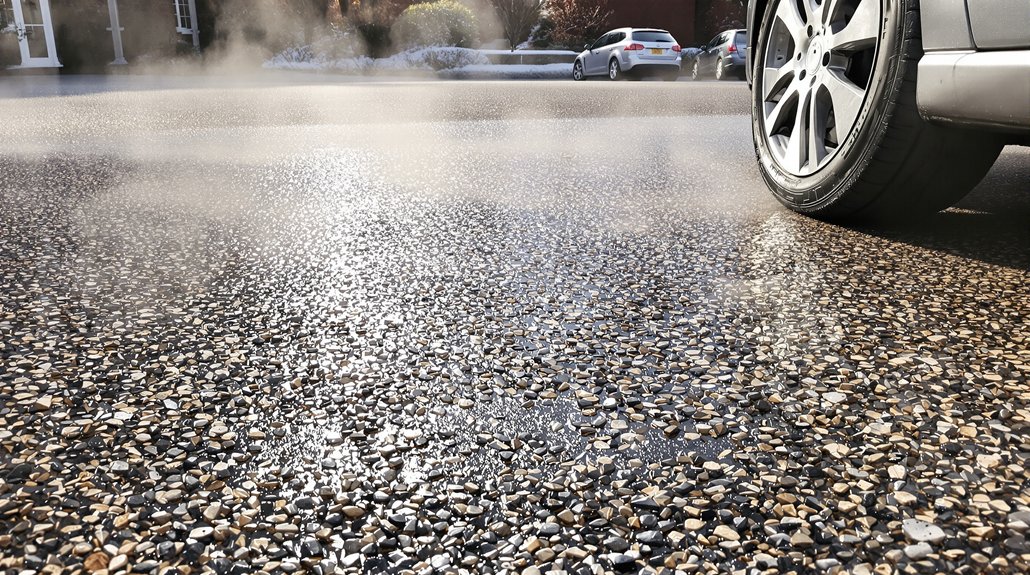
Beyond preventing ice formation, resin driveways deliver exceptional slip resistance through their carefully engineered aggregate composition. The textured surface creates natural grip that protects against winter accidents.
| Surface Type | Slip Resistance Rating | Winter Performance | Maintenance Required | Safety Level |
|---|---|---|---|---|
| Resin Driveway | Excellent | Superior grip | Minimal cleaning | Very High |
| Concrete | Poor | Becomes slippery | Regular treatments | Low |
| Tarmac | Fair | Variable conditions | Frequent gritting | Medium |
| Block Paving | Good | Moderate performance | Joint maintenance | Medium-High |
| Gravel | Variable | Unpredictable | Constant leveling | Low-Medium |
St Albans families benefit from consistent traction regardless of weather conditions. The slip resistance benefits extend beyond winter, providing year-round family safety. Unlike smooth surfaces that become hazardous when wet or frozen, resin driveways maintain their protective characteristics throughout seasonal changes.
Durability Advantages: Why Resin Outlasts Traditional Paving in Freeze-Thaw Cycles
Freeze-thaw cycles create relentless stress on traditional paving materials, causing cracks, surface deterioration, and structural failure over time. Resin driveways demonstrate superior freeze thaw resilience through their flexible polymer matrix, which accommodates temperature fluctuations without compromising structural integrity.
Key Durability Advantages of Resin Paving:
- Flexible composition – Polymer binders flex with temperature changes rather than cracking like concrete or tarmac
- Water resistance – Non-porous surface prevents water infiltration that causes freeze-expansion damage
- UV stability – Advanced resins maintain color and strength despite seasonal weather exposure
- Minimal maintenance – Self-draining properties eliminate standing water that accelerates deterioration
This exceptional resin longevity translates into decades of reliable performance, making resin surfaces a cost-effective investment for St Albans homeowners facing harsh winter conditions year after year.
Drainage Excellence: Eliminating Pooling Water and Ice Hazards
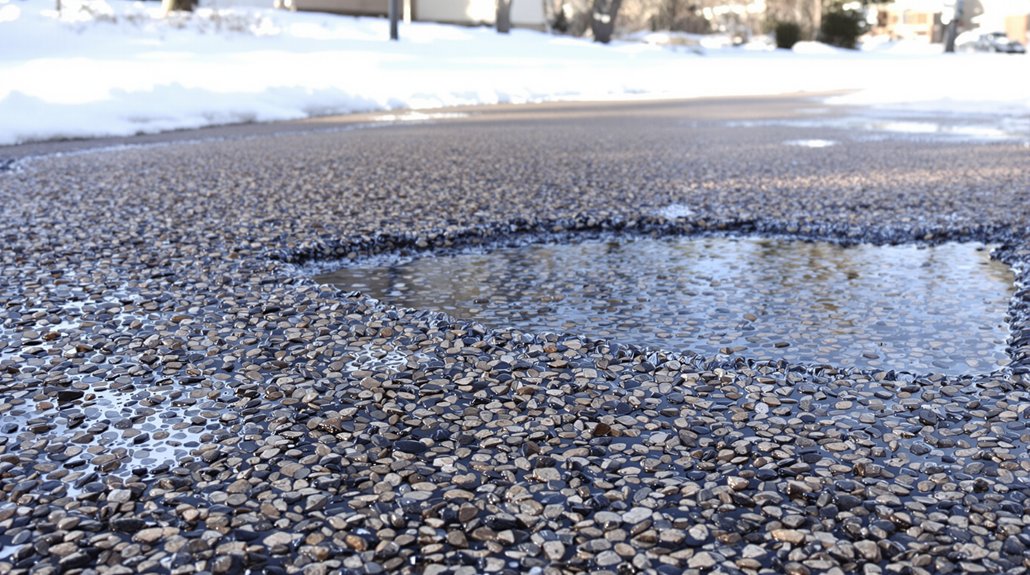
When winter weather creates dangerous ice patches and standing water hazards, resin driveways provide exceptional drainage solutions that traditional paving materials simply cannot match. The permeable surface structure allows water to drain through rather than accumulating on top, preventing the formation of treacherous ice sheets that plague conventional driveways.
Unlike impermeable concrete or asphalt surfaces that channel water into problematic pooling areas, resin bound systems eliminate standing water entirely. Water passes directly through the porous surface into underlying drainage layers, maintaining safe walking and driving conditions throughout winter months.
This superior drainage capability greatly reduces winter hazards for St Albans homeowners. Property owners experience fewer slip-and-fall incidents, reduced liability concerns, and enhanced accessibility during harsh weather conditions, making resin driveways an intelligent investment for winter safety.
Low Maintenance Winter Care for Resin-Bound Surfaces
Most property owners discover that resin-bound surfaces require minimal winter maintenance compared to traditional paving materials. The permeable nature of these surfaces eliminates the need for aggressive ice removal techniques that damage conventional driveways.
Resin-bound surfaces dramatically reduce winter maintenance demands, with their permeable design eliminating the harsh ice removal methods that destroy traditional driveways.
Effective winter maintenance for resin-bound surfaces includes:
- Light snow removal – Use plastic shovels or brushes to prevent surface scratching
- Minimal de-icing products – Apply sparingly only when necessary, avoiding harsh chemicals
- Regular debris clearing – Remove leaves and organic matter before freezing occurs
- Gentle cleaning methods – Use low-pressure washing for stubborn ice patches
Proper resin care during winter months protects the investment while maintaining surface integrity. The reduced winter maintenance requirements make resin-bound driveways particularly attractive for St Albans homeowners seeking hassle-free property management throughout challenging weather conditions.
Cost Analysis: Long-Term Savings Vs Traditional Driveway Materials
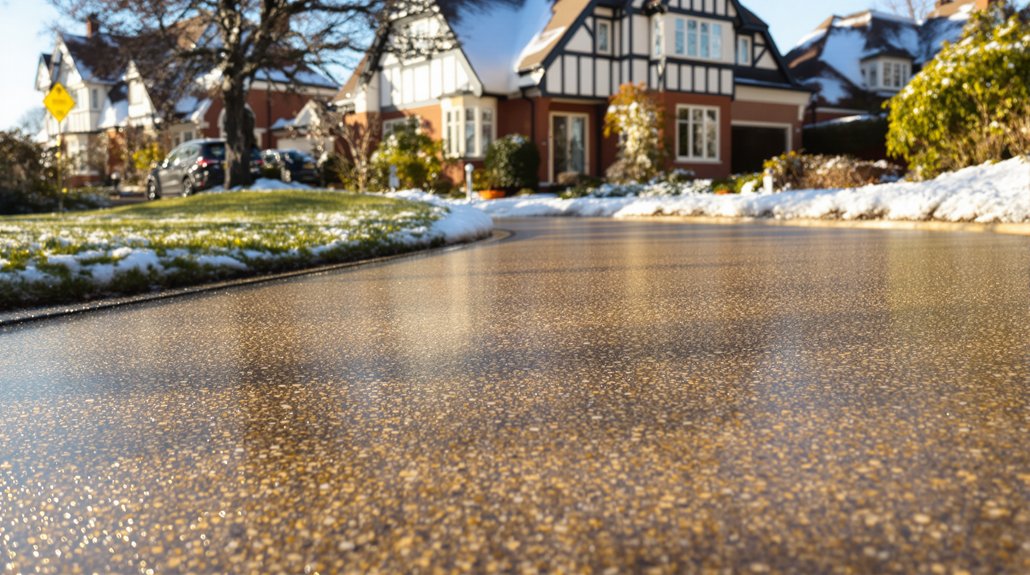
Although initial installation costs for resin-bound driveways typically exceed those of traditional materials like concrete or asphalt, the long-term financial benefits often justify the higher upfront investment. This long term investment proves financially sound when considering maintenance requirements and replacement cycles.
| Material | Lifespan | Winter Maintenance Cost | Replacement Frequency |
|---|---|---|---|
| Resin-bound | 25+ years | Minimal | Once per generation |
| Concrete | 15-20 years | Moderate | Every 15-20 years |
| Asphalt | 10-15 years | High | Every 10-15 years |
| Block paving | 20-25 years | High | Every 20-25 years |
Material comparison reveals resin surfaces eliminate costs associated with crack repairs, pothole filling, and regular resurfacing. Traditional driveways require frequent winter damage repairs, while resin-bound surfaces maintain structural integrity through freeze-thaw cycles, delivering superior value over decades.
Professional Installation Considerations for St Albans Climate Conditions
Given St Albans’ temperate oceanic climate with its characteristic wet winters and occasional frost periods, proper resin-bound installation requires specific technical adaptations that differ greatly from standard procedures used in drier regions.
Professional contractors must implement specialized installation techniques to guarantee peak performance in local weather conditions. The region’s frequent freeze-thaw cycles demand enhanced sub-base preparation and drainage systems to prevent structural damage.
Key considerations include:
- Enhanced drainage systems – Installing extensive water management solutions to handle St Albans’ high precipitation levels
- Temperature-specific resin formulation – Using cold-weather resistant binding agents suited for local frost conditions
- Compliance verification – Confirming all work meets local regulations and planning permissions specific to Hertfordshire
- Seasonal timing optimization – Scheduling installation during prime weather windows for proper curing and bonding