
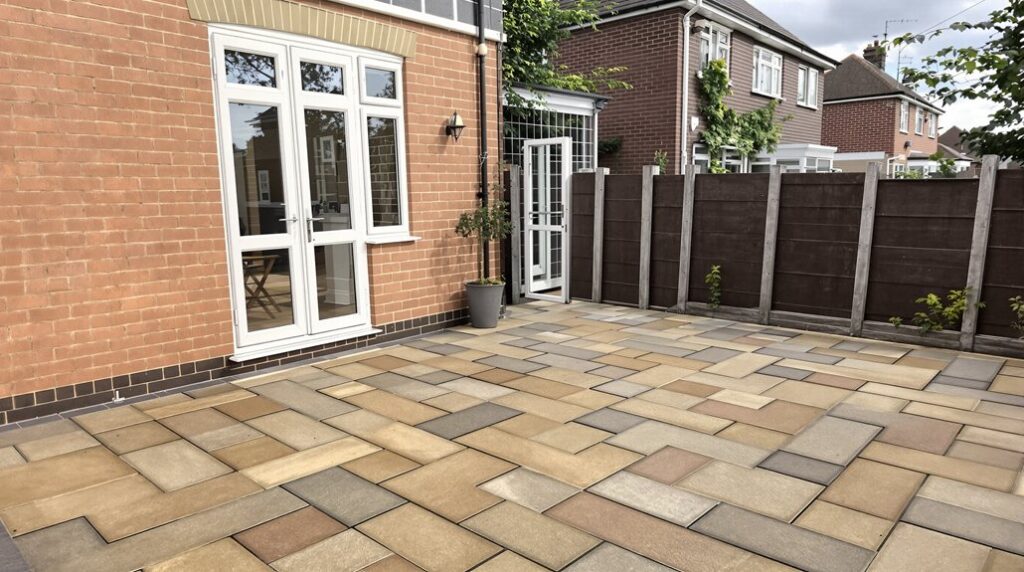
Driveway repair starts with identifying what you’re actually dealing with — hairline cracks, potholes, heaving, or edge crumbling each need different treatment approaches. For small cracks, we recommend cleaning with a wire brush and applying liquid filler. Potholes need cold-patch asphalt applied in layers. Repair costs range from $100 for minor fixes to $3,000+ for full resurfacing. Whether you DIY or hire a pro depends on the damage’s severity, and there’s a lot more to it.
What Type of Driveway Damage Are You Actually Dealing With?

Before diving into repairs, you’ve got to know exactly what you’re dealing with—because not all driveway damage is created equal. We recommend starting with a thorough crack assessment to identify whether you’re looking at hairline surface cracks, structural fractures, or edge crumbling. Each type demands a different approach.
Next, conduct a full surface evaluation to spot issues like potholes, heaving, drainage problems, or widespread deterioration. Run your hand across the surface and look for soft spots, loose material, or uneven sections.
Knowing your damage type prevents wasted money on the wrong fix. A simple sealant won’t save a driveway with deep structural failure, and aggressive patching is overkill for minor surface wear. Accurate diagnosis is where every successful repair actually begins.
Concrete vs. Asphalt: How Repair Methods Differ

Once you’ve identified your damage type, the material your driveway is made of completely changes how you’ll approach the repair. Concrete and asphalt aren’t interchangeable, and neither are their fixes.
Concrete advantages include superior longevity and structural strength, but repairs demand precise mixing ratios and curing time. A poorly patched concrete crack will fail faster than the original damage. We recommend matching your patch compound carefully to avoid color mismatches and weak bonds.
Asphalt drawbacks center on its temperature sensitivity and shorter lifespan. It softens in extreme heat and becomes brittle in cold, making repairs a recurring expense. However, asphalt patching is generally faster and cheaper upfront.
Knowing your material prevents wasted effort and money on incompatible repair products.
Tools and Materials You Need Before You Start

Having the right tools and materials on hand makes the difference between a repair that holds and one that fails within a season. Before attempting any repair techniques, gather your essential tools: a cold chisel, hand tamper, wire brush, margin trowel, and safety glasses. You’ll also need a stiff-bristled broom and a pressure washer to clean the damaged area thoroughly.
For materials, match your supplies to your surface. Concrete repairs require hydraulic cement, bonding adhesive, and a concrete mix. Asphalt repairs call for cold-patch asphalt filler and a tamping tool. Both surfaces benefit from having crack filler and a sealant on standby.
Don’t skip the prep supplies — painter’s tape, plastic sheeting, and a mixing bucket will keep your work area clean and controlled.
How to Fix Small Cracks in Your Driveway

Small cracks — those under a quarter inch wide — are the easiest driveway problems to tackle, so let’s handle them before they widen into something more serious. Surface preparation is our first priority. We’ll use a wire brush to scrub out loose debris, then blow out remaining dust with a leaf blower or compressed air. Any vegetation growing inside the crack needs to come out completely — roots included.
Once the crack is clean and dry, we’ll apply a liquid or semi-liquid crack filler directly into the opening, slightly overfilling it to account for settling. We’ll smooth the surface with a putty knife and let it cure fully before driving over it. Most fillers need 24 hours minimum before bearing vehicle weight.
How to Patch Potholes in Your Driveway

Potholes demand more preparation than cracks do, so we’ll need to put in extra work before applying any patching material. Pothole identification starts with evaluating depth and width, since shallow depressions need different patching techniques than deep cavities.
Potholes require more prep work than cracks — start by assessing depth and width before choosing your patching approach.
Follow these steps:
- Clean the pothole — Remove loose debris, dirt, and standing water using a wire brush and blower.
- Apply cold-patch asphalt — Pour the material in two-inch layers, compacting each layer firmly with a tamper.
- Seal the edges — Brush liquid asphalt sealant around the patch perimeter to bond it with the surrounding driveway surface.
Allow the patch to cure fully before driving over it. Rushing this process weakens the repair and shortens its lifespan considerably.
How Much Does Driveway Repair Cost?

Repair costs vary widely depending on the type and extent of damage, ranging from around $100 for minor crack filling to over $3,000 for full driveway resurfacing or replacement. Several repair cost factors influence your final bill, including material type, labor, and driveway size. We recommend checking DIY pricing guides before hiring a contractor so you’ll know if you’re getting a fair quote.
| Repair Type | Estimated Cost |
|---|---|
| Crack Filling | $100–$400 |
| Pothole Patching | $300–$800 |
| Resurfacing | $1,000–$2,500 |
| Full Replacement | $2,000–$7,000 |
Smaller jobs are often DIY-friendly, saving you significant labor costs. Larger structural repairs, however, typically require professional equipment and expertise, making contractor quotes worthwhile.
DIY Driveway Repair vs. Hiring a Professional

Whether you tackle driveway repairs yourself or hire a pro depends on the damage’s scope and your comfort with hands-on work. A proper cost analysis helps clarify which path makes sense.
DIY works best when:
- Cracks are small and manageable using basic repair techniques like crack fillers or sealants
- You’re comfortable following product instructions and can source affordable materials
- The damage covers a limited area without structural compromise
Hiring a professional makes sense for extensive damage, sunken sections, or full resurfacing. Pros bring specialized repair techniques, better materials, and faster results—though at a higher cost.
We recommend getting contractor quotes before committing to DIY. Sometimes the cost analysis reveals professional repair isn’t much more expensive than doing it yourself.
How to Seal Your Driveway After Repairs

Once the repairs are done—whether you handled them yourself or brought in a pro—sealing the driveway is the next step to protect your work and extend its lifespan. Repair timing matters here: wait at least 24–48 hours after patching before applying any sealant, and avoid sealing fresh asphalt for 90 days.
For sealing techniques, we recommend cleaning the surface thoroughly, filling any remaining hairline cracks, and applying a brush-grade or squeegee sealant in thin, even coats. Start at the top and work your way down, overlapping each pass slightly. Two coats offer better protection than one.
Keep traffic off the sealed surface for at least 24 hours. Sealing annually keeps moisture, UV damage, and freeze-thaw cycles from undoing your repair work.
When Is Driveway Damage Too Far Gone to Repair?

Sometimes, no amount of patching or sealing can save a driveway that’s structurally compromised. Knowing the repair indicators that signal replacement is essential for avoiding wasted money. Watch for these key replacement factors:
Not every driveway can be saved — knowing when to replace rather than repair prevents costly, never-ending patch jobs.
- Widespread cracking — When cracks cover more than 25% of the surface, repairs become temporary fixes at best.
- Sunken or heaving sections — These indicate base failure beneath the surface, making structural restoration nearly impossible.
- Recurring potholes — If potholes return shortly after repair, the underlying foundation has deteriorated beyond saving.
We recommend getting a professional assessment when you’re seeing multiple warning signs simultaneously. Investing in full replacement earlier saves money long-term compared to repeatedly patching a failing driveway. Don’t let small repairs drain your budget indefinitely.
Maintenance Habits That Prevent Costly Driveway Repairs

Replacing a failing driveway is costly, but most replacements can be avoided altogether with consistent upkeep. Preventive maintenance doesn’t require much time or money — it just requires regularity. We recommend sealing asphalt driveways every two to three years to block moisture penetration and UV damage. For concrete, keep expansion joints clean and filled to prevent cracking. Conduct seasonal inspections each spring and fall to catch small issues before they worsen. During these walkthroughs, check for new cracks, pooling water, and edge deterioration. Clear debris and standing water promptly, since both accelerate surface breakdown. Avoid using harsh deicing chemicals in winter — they weaken both asphalt and concrete. A little attention twice a year can add decades to your driveway’s lifespan.