
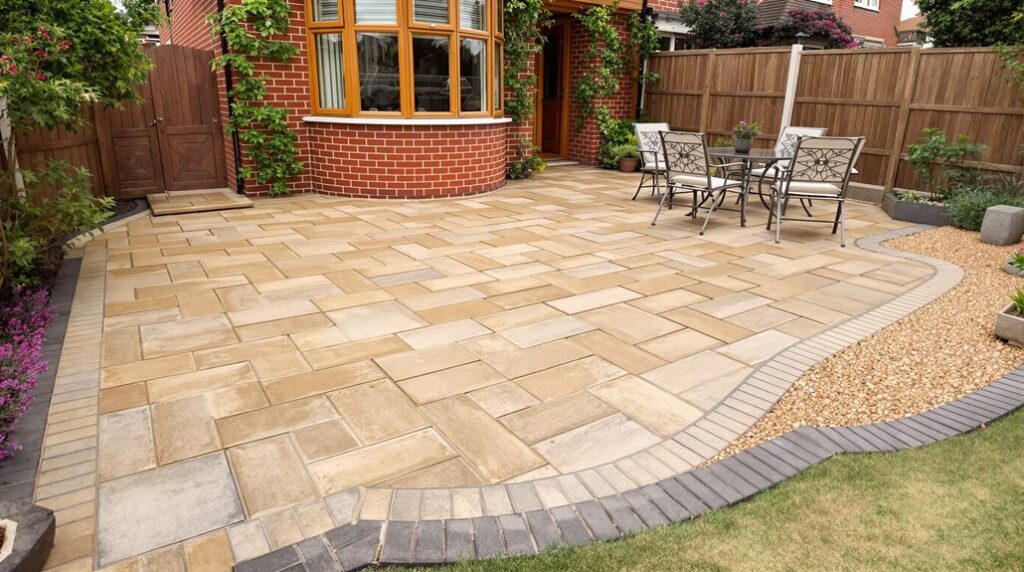
Hertfordshire homeowners frequently encounter driveway cracking and surface damage due to the region’s prevalent clay soil conditions. Clay soil’s notorious expansion and contraction cycles create ongoing challenges for traditional paving materials, leading to costly repairs and premature replacement. The key lies in understanding how specific materials respond to ground movement and selecting options that work with clay’s natural behavior rather than against it. Several innovative solutions have emerged that address these unique geological demands.
Understanding Clay Soil Movement and Its Impact on Driveways
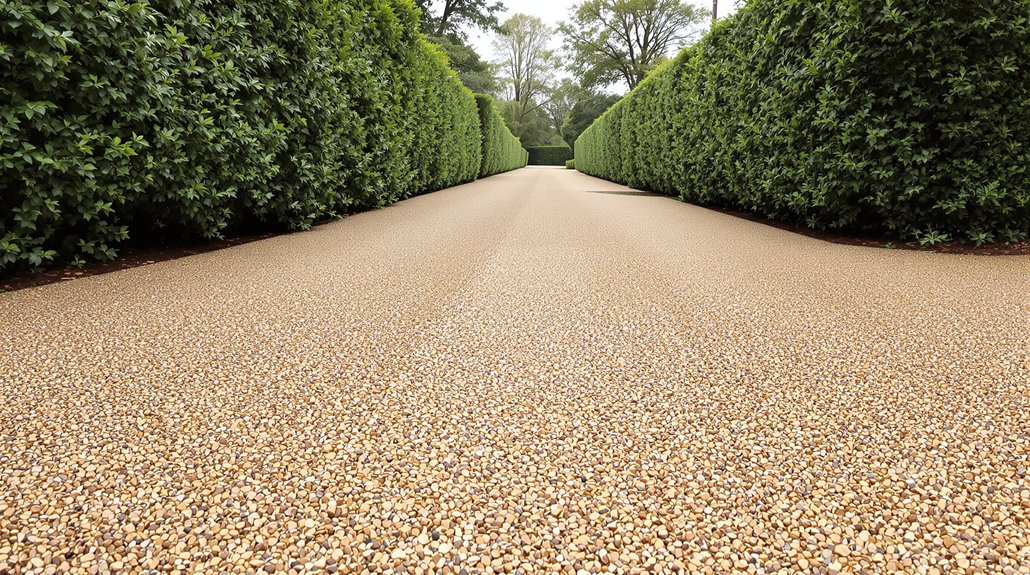
Clay soil presents unique challenges for driveway construction due to its expansive properties and high moisture sensitivity. This soil type undergoes significant soil expansion when wet, swelling substantially and creating upward pressure on surfaces above. Conversely, during dry periods, clay contracts dramatically, causing settling and potential cracking.
The cycle of expansion and contraction creates considerable stress on driveway materials, leading to surface deterioration, uneven settling, and structural failure over time. Drainage challenges compound these issues, as clay’s low permeability prevents water from filtering through naturally. Poor drainage results in standing water, prolonged saturation periods, and extended soil expansion phases.
Understanding these movement patterns proves essential for selecting appropriate driveway materials that can withstand the constant pressure changes and accommodate the soil’s dynamic behavior throughout seasonal variations. Materials like resin-bound surfaces offer superior flexibility and drainage compliance, making them particularly suitable for managing clay soil’s challenging characteristics.
Permeable Paving Solutions for Clay Soil Management
Addressing drainage challenges inherent to clay soil requires strategic implementation of permeable paving systems that allow water infiltration while maintaining structural integrity. Permeable options include porous concrete, permeable asphalt, and interlocking pavers with open joints that facilitate water movement through surface layers.
These drainage solutions work by creating channels for water to penetrate rather than pooling on impermeable surfaces. Porous concrete contains larger aggregates with minimal fine particles, creating interconnected voids. Permeable asphalt utilizes modified binder content to maintain porosity while preserving durability.
Interlocking pavers offer versatility through adjustable joint spacing filled with permeable materials like sand or gravel. Proper installation requires adequate sub-base preparation with drainage layers to prevent water accumulation beneath the surface, ensuring long-term performance on clay substrates.
Flexible Materials That Adapt to Ground Movement
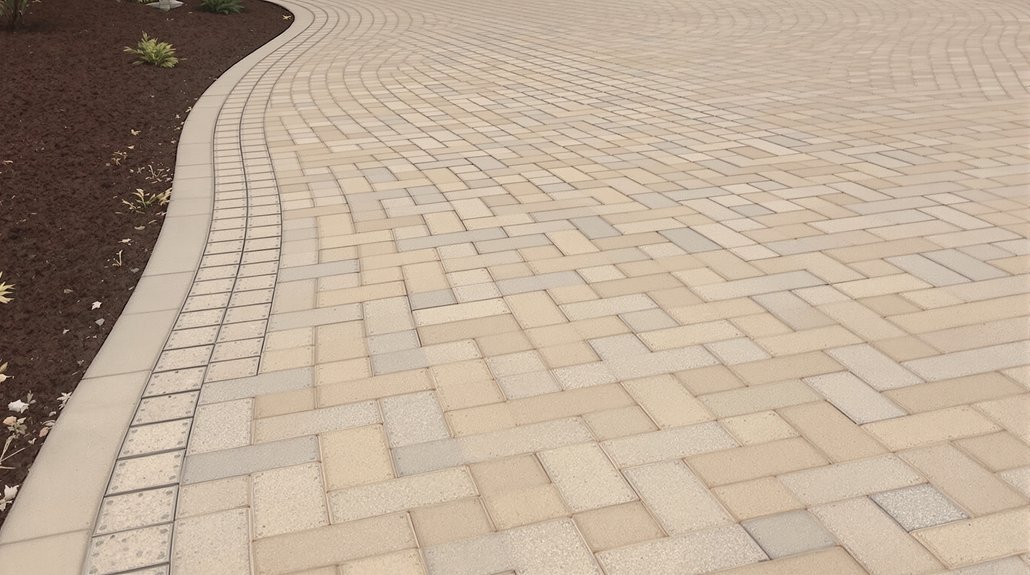
Several driveway materials demonstrate exceptional resilience when confronting the expansion and contraction cycles characteristic of clay soil environments. These flexible materials accommodate ground movement without compromising structural integrity, ensuring superior driveway longevity compared to rigid alternatives.
Flexible driveway materials outperform rigid alternatives by adapting to clay soil movement, maintaining structural integrity through expansion and contraction cycles.
Rubber pavement systems excel in clay conditions by flexing with soil movement while maintaining surface continuity. Loose aggregate materials like gravel naturally adjust to ground shifts, redistributing loads effectively across the substrate. Interlocking pavers provide controlled flexibility through joint systems that absorb movement while preserving overall stability.
- Recycled rubber surfaces compress and expand with temperature fluctuations while resisting cracking from substrate movement
- Decomposed granite pathways naturally conform to ground changes while providing excellent drainage characteristics
- Segmental concrete pavers feature sand-filled joints that allow individual units to move independently without surface failure
Resin Bound Surfaces for Clay Soil Applications
Resin bound surfaces emerge as sophisticated solutions for clay soil challenges, combining natural aggregates with polyurethane binders to create permeable yet stable driveway systems. These surfaces excel on expansive clay because their flexible matrix accommodates ground movement without cracking or displacement.
The resin benefits include superior drainage capabilities that prevent water accumulation, reducing clay soil expansion and contraction cycles. The bound aggregate system distributes loads evenly across unstable substrates while maintaining structural integrity during seasonal soil shifts.
Essential installation tips include preparing proper sub-base drainage and allowing adequate curing time in clay soil conditions. Professional contractors must verify consistent resin-to-aggregate ratios and apply surfaces during ideal weather conditions. The resulting driveway provides long-term performance with minimal maintenance requirements, making resin bound systems ideal investments for clay soil properties.
Proper Foundation and Installation Techniques for Clay Ground
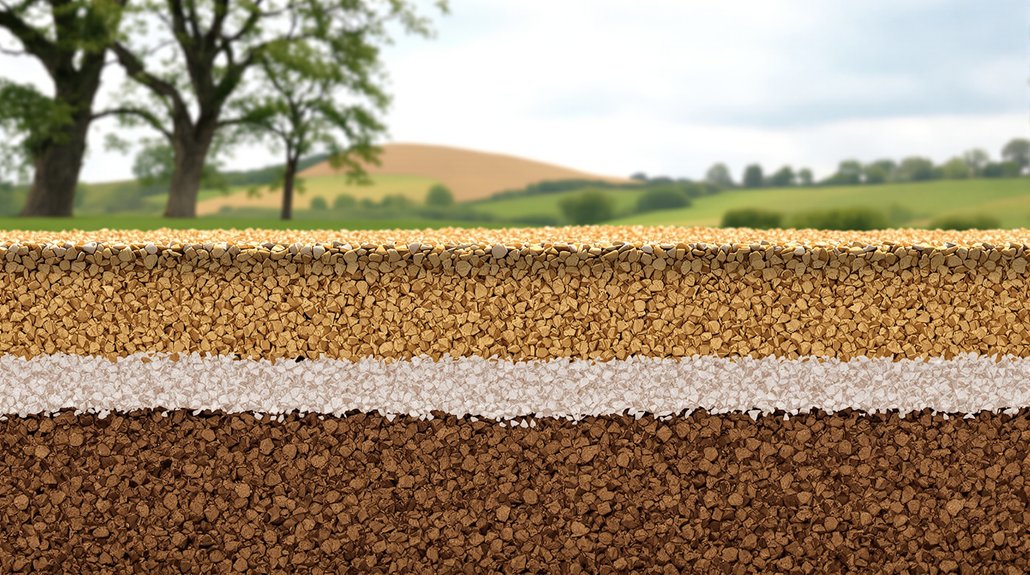
Establishing a robust foundation on clay soil requires systematic excavation and strategic layering techniques that counteract the natural instability of expansive earth. Professional installers must remove existing clay to adequate depths, typically 18-24 inches, before introducing stabilizing materials. Foundation drainage systems become critical components, preventing water accumulation that causes clay expansion and contraction cycles.
The installation process demands precise compaction of each layer using mechanical equipment. Soil stabilization occurs through introducing granular materials that distribute loads evenly across the clay substrate. Proper grading guarantees water flows away from the driveway surface.
- Install French drains or perforated pipes beneath the sub-base layer
- Apply geotextile fabric between clay soil and aggregate layers
- Compact materials in 4-6 inch lifts using vibratory rollers