
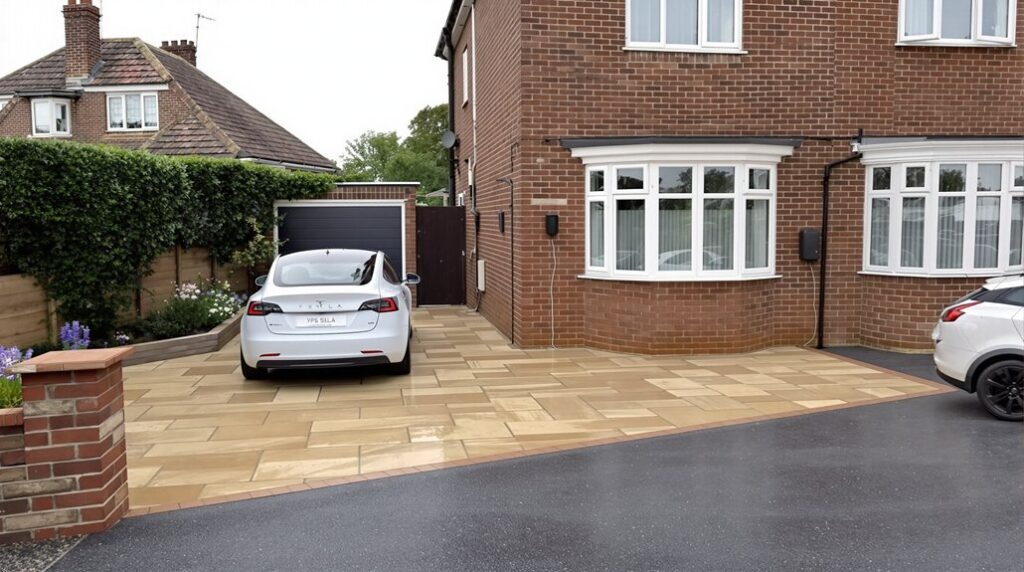
Resin driveways offer superior structural support for electric vehicles, which weigh 20-30% more than conventional cars due to heavy battery packs. Unlike traditional asphalt that cracks under increased weight or concrete that develops hairline fractures, resin-bound surfaces resist deformation and rutting while accommodating electrical conduit installation for charging stations. St Albans homeowners typically recover 70-85% of installation costs through enhanced property valuations. The material’s non-conductive properties provide electrical insulation while maintaining drainage efficiency. This thorough analysis reveals additional benefits and installation considerations.
The Weight Challenge: Why Traditional Driveways Fail Under Heavy Electric Vehicles
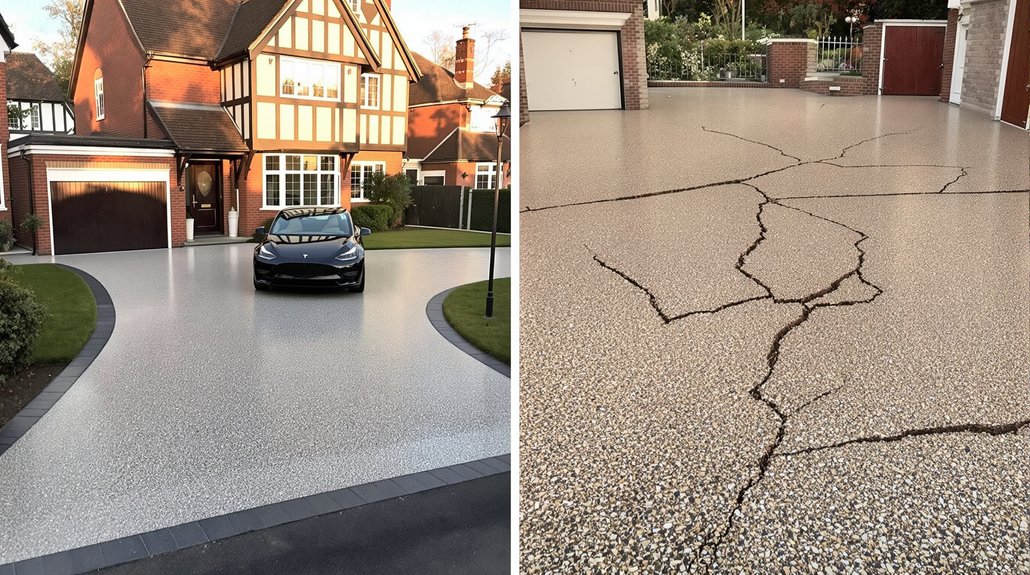
As electric vehicles become increasingly prevalent on residential streets, homeowners are discovering that their traditional asphalt and concrete driveways face unprecedented structural challenges. Electric vehicles typically weigh 20-30% more than conventional cars due to heavy battery packs, creating concentrated pressure points that exceed the load-bearing capacity of standard driveway materials.
Traditional asphalt surfaces develop cracks and depressions under this additional weight, particularly during hot weather when the material softens. Concrete driveways, while initially more robust, can suffer from hairline fractures that expand over time. The fundamental issue lies in inadequate weight distribution across conventional surfaces.
These materials were designed for lighter vehicles and lack the structural integrity needed for long-term electric vehicle parking. Repeated loading and unloading cycles accelerate deterioration, resulting in costly repairs and premature replacement. In contrast, resin driveways boast a lifespan of 15-20+ years under normal use, making them better equipped to handle the demands of heavier electric vehicles.
Electrical Infrastructure Integration: How Resin Surfaces Accommodate Charging Stations
While traditional driveway materials present significant challenges when integrating home charging stations, resin-bound surfaces offer superior adaptability for electrical infrastructure installation. The flexible nature of resin systems allows contractors to create precise channels for electrical conduits without compromising structural integrity. Unlike concrete or asphalt, which require extensive cutting and patching during charging installation, resin surfaces accommodate modifications seamlessly.
Resin compatibility with various electrical components extends beyond initial installation. The material’s non-conductive properties provide natural insulation around buried cables, while its permeability prevents water accumulation that could damage electrical systems. Additionally, resin surfaces can be easily restored after infrastructure upgrades, maintaining aesthetic appeal while supporting evolving charging technology. This adaptability makes resin driveways ideal for future electrical modifications as charging standards advance.
Durability Advantages: Weather Resistance and Long-Term Performance Benefits

Electric vehicle owners require driveway surfaces that withstand the constant weight and positioning demands of regular charging cycles, making material durability a critical consideration for long-term investment protection. Resin driveways excel in providing exceptional weather resistance and long term performance that surpasses traditional materials.
The advanced polymer composition delivers superior resistance to:
- Freeze-thaw cycles – preventing cracking and surface deterioration during harsh winters
- UV degradation – maintaining colour stability and structural integrity under prolonged sun exposure
- Heavy load bearing – supporting electric vehicle weight without deformation or rutting
- Chemical exposure – resisting oil spills, battery acid, and cleaning product damage
This extensive weather resistance guarantees consistent performance across decades, eliminating costly repairs and replacements while maintaining peak charging station functionality throughout changing environmental conditions.
Installation Considerations for EV-Ready Resin Driveways in St Albans
Property owners in St Albans planning resin driveway installations must address specific requirements that accommodate electric vehicle charging infrastructure from the outset. Electrical conduits and charging point foundations require careful integration during the initial groundwork phase, preventing costly retrofitting later. The driveway slope must be calculated to guarantee proper water drainage while maintaining accessibility for charging cables and equipment placement.
Professional installers should coordinate with certified electricians to establish underground cable routing before laying resin materials. Adequate spacing around designated charging areas allows for safe cable management and vehicle positioning. Load-bearing considerations become vital when heavy EVs regularly use the surface. Planning permission may be required for charging installations, making early consultation with local St Albans authorities indispensable for seamless project completion.
Cost Analysis: Investment Returns Through Property Value Enhancement

Recent market studies indicate that EV-ready resin driveways deliver substantial returns on investment through enhanced property valuations in St Albans’ competitive housing market. Investment analysis reveals that properties featuring these sustainable driveways command premium prices, with property appraisal experts noting significant value increases.
The financial benefits include:
- Initial investment recovery – Homeowners typically recoup 70-85% of installation costs through immediate property value gains
- Long-term appreciation – EV-ready properties demonstrate accelerated value growth compared to standard driveways
- Market differentiation – Unique selling proposition attracts environmentally conscious buyers willing to pay premiums
- Future-proofing returns – Protection against obsolescence as EV adoption increases across Hertfordshire
Professional property appraisal data consistently shows that forward-thinking homeowners who invest in EV-compatible resin driveways position themselves advantageously for sustained property value enhancement in St Albans’ evolving residential market.
Planning Permission and Local Regulations for EV Charging Infrastructure
While property value enhancement provides compelling financial incentives, homeowners must navigate specific regulatory requirements when installing EV charging infrastructure alongside resin driveways in St Albans. The permitting process typically requires approval from Hertfordshire County Council, particularly when electrical installations exceed standard domestic capacity. Most residential EV chargers fall under permitted development rights, eliminating formal planning applications for standard installations.
However, zoning laws may impose restrictions in conservation areas or listed buildings common throughout St Albans’ historic neighborhoods. Properties near heritage sites face additional scrutiny regarding visual impact and cable routing. Local building regulations mandate certified electrician installation and safety inspections. Homeowners should consult St Albans City and District Council before combining driveway renovations with charging infrastructure to guarantee compliance with both aesthetic guidelines and electrical safety standards, preventing costly modifications later.
Maintenance Requirements: Keeping Your Future-Ready Driveway in Peak Condition
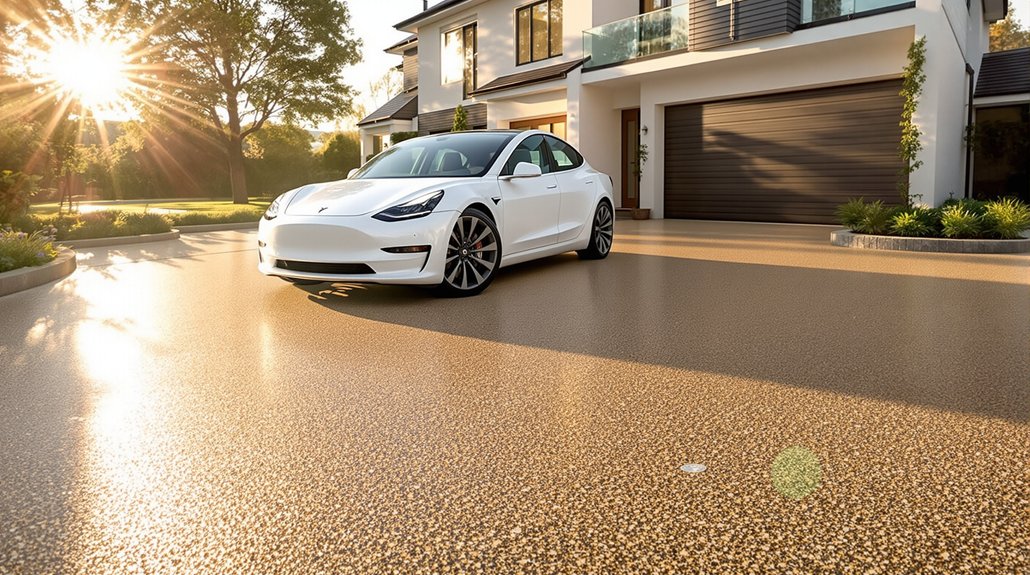
Most resin driveways require minimal maintenance compared to traditional surfaces, yet specific care protocols guarantee peak performance when supporting electric vehicle charging equipment.
Regular inspections should focus on areas where charging stations connect to the driveway surface, checking for cracks or loose aggregate that could compromise electrical installations. Surface repairs become critical when addressing any damage before it affects charging infrastructure stability.
Essential maintenance tasks include:
- Monthly visual assessments of the charging zone for surface integrity and drainage efficiency
- Quarterly deep cleaning using pressure washing to remove oil residues and debris accumulation
- Annual professional inspections to evaluate substrate condition and electrical component housing
- Immediate repair protocols for any surface damage near charging equipment to prevent water infiltration
Proper maintenance extends driveway lifespan while ensuring safe, reliable electric vehicle charging operations.