
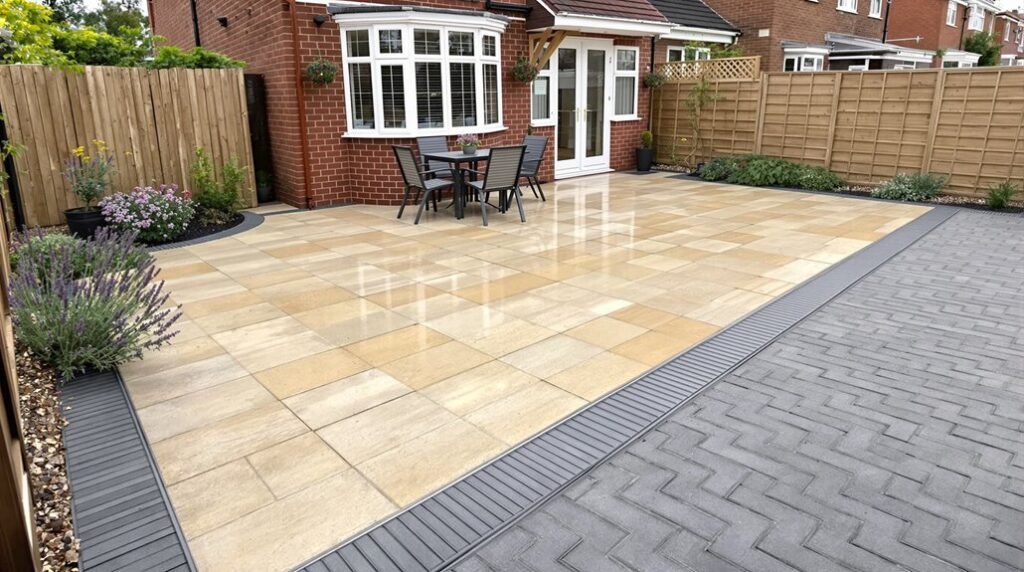
Weeds infiltrating gravel and block paving driveways create more than just aesthetic concerns. They compromise structural integrity by displacing materials and creating uneven surfaces that can damage vehicles. Traditional reactive approaches often prove costly and time-consuming, requiring repeated treatments that disrupt daily routines. Property owners who understand the critical window between installation and weed establishment can implement strategic prevention measures that eliminate future headaches and preserve their investment for decades.
Pre-Installation Ground Preparation Techniques
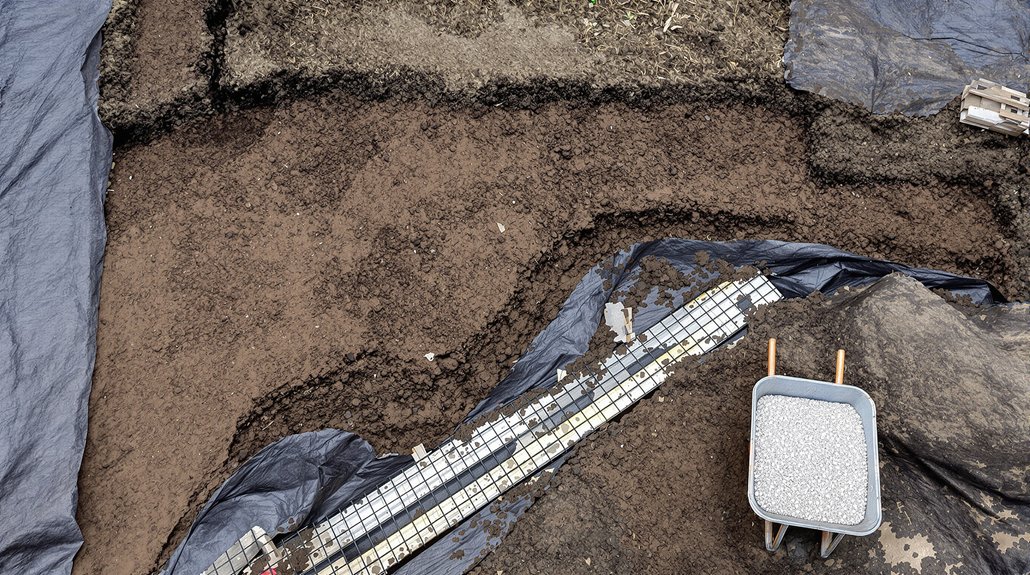
Proper ground preparation forms the foundation of effective weed prevention in driveways. Soil testing determines existing vegetation, pH levels, and drainage characteristics that influence weed growth patterns. Excavating the area to appropriate depth removes existing plant material and root systems that could regenerate through paving materials.
Ground leveling creates uniform surfaces that prevent water pooling, which encourages weed establishment in low-lying areas. Compacting the subgrade eliminates air pockets and soft spots that allow seeds to germinate. Installing a geotextile barrier over the prepared surface blocks weed penetration while maintaining soil stability. The barrier should extend beyond the driveway perimeter to prevent edge infiltration. Professional installers with local expertise understand how regional ground conditions affect weed growth and can adapt preparation techniques accordingly. Proper slope grading directs water away from the installation area, reducing moisture retention that supports unwanted plant growth in the finished driveway surface.
Choosing the Right Base Materials and Drainage Systems
Professional contractors recommend these essential components:
- Type 1 MOT aggregate – Provides superior compaction and creates dense barriers against weed penetration
- Geotextile membrane layers – Block seed germination while maintaining soil separation from base materials
- Permeable sub-base materials – Enable water movement while preventing organic matter accumulation
Drainage system importance cannot be overstated in extensive weed prevention strategies. Proper drainage eliminates standing water that encourages weed growth and soil erosion. Effective drainage systems channel moisture away from paved surfaces, maintaining the integrity of base materials and preventing conditions favorable to vegetation establishment.
Professional Weed Barrier Installation Methods
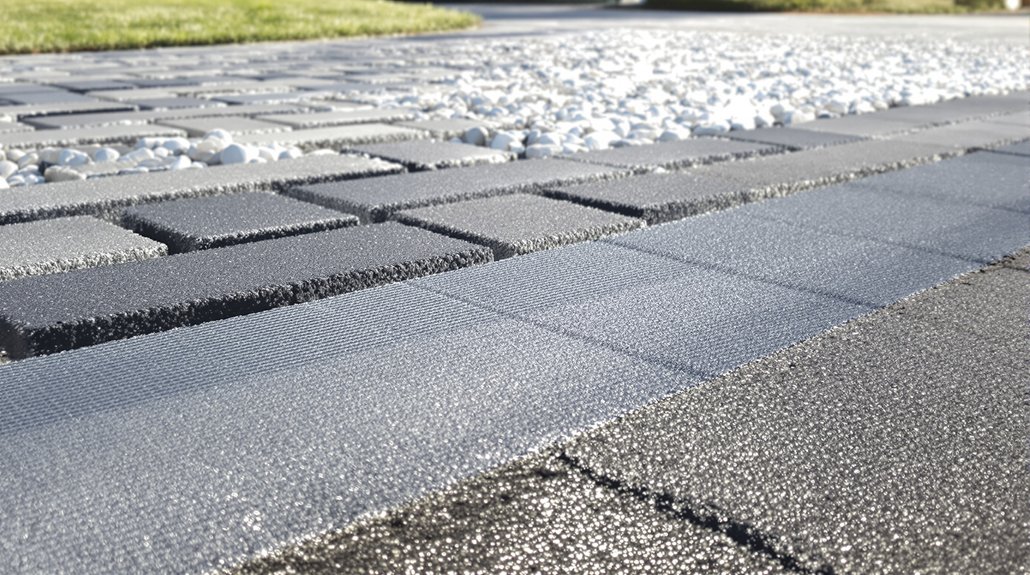
While base materials provide the foundation, installing weed barriers requires specific techniques to achieve maximum effectiveness. Professional installation techniques begin with thorough soil preparation, ensuring the surface is level and compacted. Contractors typically remove existing vegetation and debris before laying the barrier material.
Weed barrier options include landscape fabric, geotextile membranes, and plastic sheeting, each requiring different installation approaches. Professional installers overlap seams by at least six inches and secure edges with landscape pins or staples every two feet. They cut precise openings around existing structures and utilities to maintain barrier integrity.
Proper tensioning prevents wrinkles that could allow weed penetration. Quality installations include marking utility lines and creating adequate drainage channels. Professional teams also apply appropriate aggregate layers immediately after barrier placement to prevent wind displacement and UV damage.
Selecting Appropriate Gravel Types and Block Paving Materials
After establishing an effective weed barrier foundation, choosing the right surface materials becomes essential for long-term weed prevention success. Different gravel types offer varying levels of weed resistance based on their size, texture, and composition. Angular crushed stone provides superior interlocking properties that discourage weed growth, while smooth river rock may allow seeds to settle more easily between gaps.
Angular crushed stone creates superior interlocking barriers that prevent weed growth more effectively than smooth river rock surfaces.
For best weed prevention, consider these material characteristics:
- Particle size – Smaller gravel creates tighter surfaces but may compact excessively
- Surface texture – Angular materials interlock better than rounded stones
- Porosity – Dense block materials with minimal joints reduce germination opportunities
Block materials should feature tight-fitting joints and non-porous surfaces. Concrete pavers with polymeric sand filling create nearly impenetrable barriers, while natural stone requires careful selection for consistent thickness and minimal spacing.
Chemical Prevention Treatments and Safe Application Practices
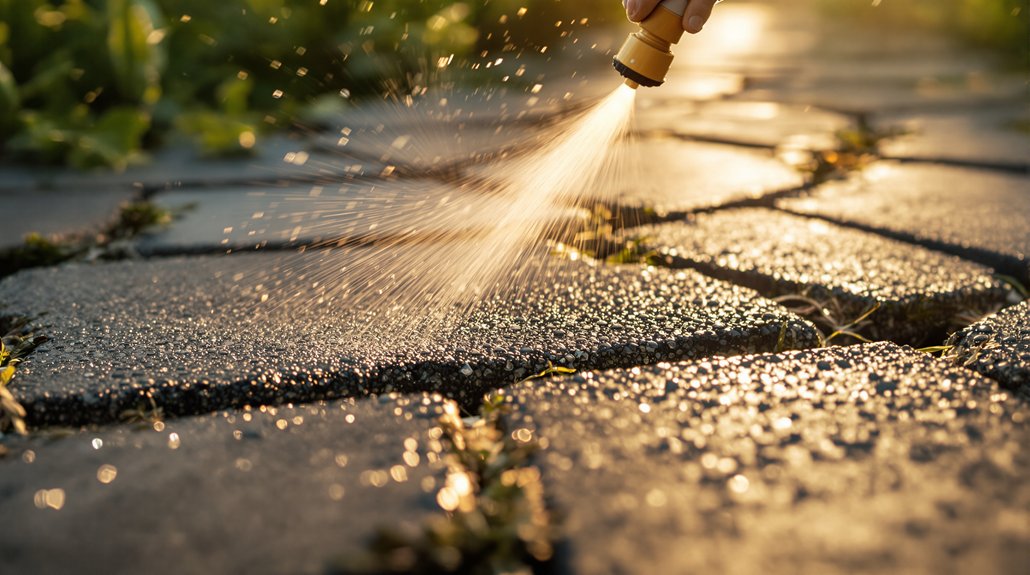
Chemical treatments provide an additional layer of weed prevention that complements proper material selection and physical barriers. Pre-emergent herbicides create a protective barrier in soil that prevents weed seeds from germinating, while post-emergent treatments target existing vegetation. Proper chemical application requires following manufacturer instructions regarding dilution rates, coverage areas, and timing intervals.
Essential safety precautions include wearing protective equipment such as gloves, eye protection, and appropriate clothing during application. Homeowners should avoid spraying on windy days to prevent drift onto desirable plants and guarantee children and pets remain away from treated areas until products dry completely. Environmentally conscious alternatives include corn gluten meal and vinegar-based solutions, though these typically require more frequent applications than synthetic herbicides for sustained effectiveness.
Natural and Organic Weed Suppression Alternatives
Although synthetic herbicides offer effective weed control, many homeowners prefer natural alternatives that pose minimal environmental risks and reduce chemical exposure around living spaces. These eco-friendly methods provide sustainable solutions for maintaining weed-free driveways while protecting beneficial insects and soil organisms.
Several natural herbicides demonstrate proven effectiveness:
- Corn gluten meal – Acts as a pre-emergent herbicide, preventing seed germination when applied before weed growth begins
- White vinegar solutions – Burns existing vegetation on contact, particularly effective against young weeds and moss
- Boiling water treatments – Provides immediate results by destroying plant cell structure upon direct application
Organic mulching strategies using wood chips, shredded bark, or gravel create physical barriers that suppress weed emergence. These materials block sunlight while maintaining soil moisture balance, creating unfavorable conditions for unwanted vegetation establishment.
Regular Maintenance Schedules and Inspection Routines
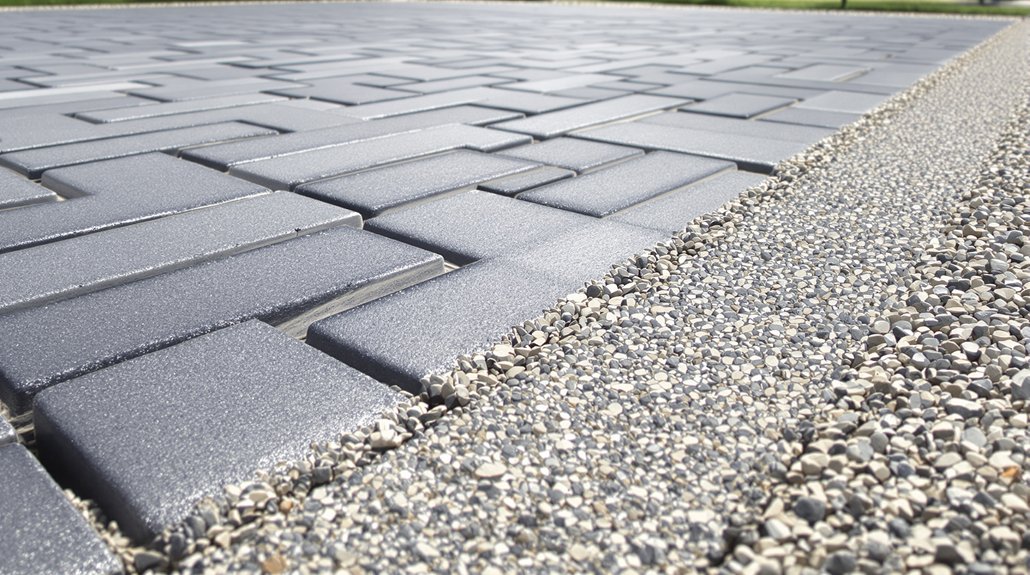
While natural weed suppression methods provide excellent foundation protection, consistent monitoring and timely intervention determine long-term success in maintaining weed-free driveways. Establishing proper inspection frequency guarantees early detection before weeds establish deep root systems. Monthly visual surveys during growing seasons allow property owners to identify emerging seedlings and address problem areas promptly.
A thorough maintenance checklist should include examining joint spaces between pavers, checking gravel displacement, and noting areas where organic debris accumulates. Weekly removal of fallen leaves and debris prevents decomposition that creates fertile growing conditions. Spring and fall represent critical periods requiring intensified attention, as seasonal changes trigger increased weed germination. Documenting inspection findings helps identify recurring problem zones and evaluate treatment effectiveness over time.
Effective Spot Treatment Strategies for Early Weed Detection
Targeting individual weeds immediately upon detection prevents small problems from becoming widespread infestations that require extensive remediation efforts. Early detection remains the cornerstone of effective driveway maintenance, enabling property owners to address isolated growth before root systems establish and spread to adjacent areas.
Early intervention transforms minor weed issues into manageable maintenance tasks, preventing costly widespread infestations through strategic detection and immediate response protocols.
Successful spot treatment requires strategic approaches tailored to specific weed types and growth stages:
- Mechanical removal using specialized tools to extract entire root systems from joints and crevices
- Targeted herbicide application directly to individual plants using precision applicators or brushes
- Boiling water treatment for immediate results on small weeds without chemical residue concerns
These focused interventions prove more cost-effective than broad-spectrum treatments while minimizing environmental impact. Regular monitoring combined with prompt spot treatment maintains driveway aesthetics and structural integrity year-round.
Long-Term Driveway Care and Preventative Maintenance Plans
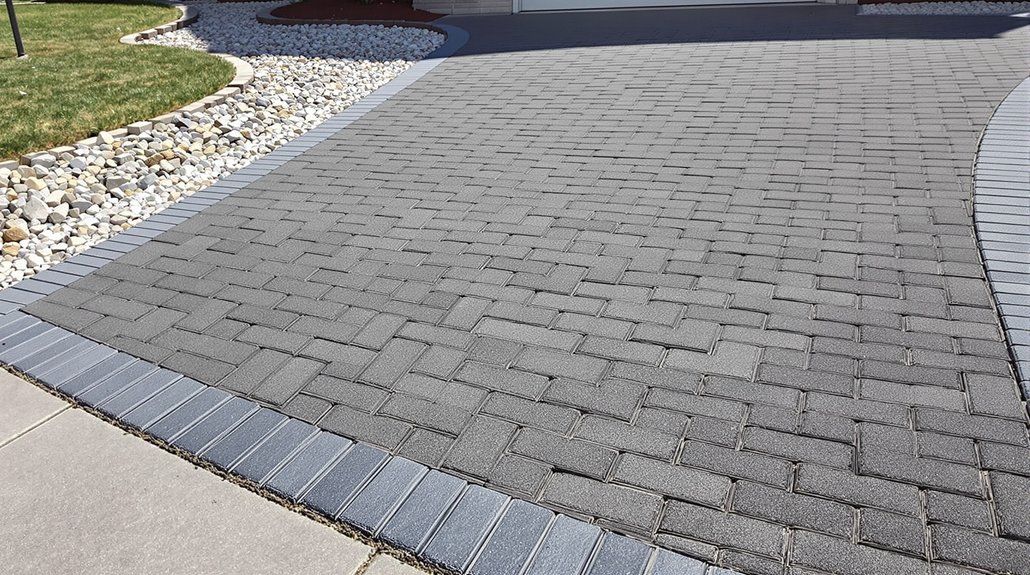
Strategic maintenance schedules form the foundation of effective long-term driveway preservation, requiring property owners to establish systematic approaches that address both immediate needs and future challenges. Annual driveway sealing creates protective barriers that prevent moisture penetration and subsequent weed growth in surface cracks. Quarterly inspections enable early identification of potential problem areas before they develop into costly repairs. Property owners should implement seasonal maintenance protocols including spring debris removal, summer edge trimming, autumn leaf clearing, and winter drainage assessment. Establishing relationships with qualified contractors guarantees consistent service quality and competitive pricing for major interventions. Documentation of maintenance activities helps track performance patterns and optimize future scheduling. Regular reapplication of pre-emergent herbicides during peak growing seasons maintains chemical barriers against persistent vegetation establishment.