

Property owners face a dual challenge when selecting driveway lighting solutions. The fixtures must provide adequate illumination for safe navigation while enhancing the home’s visual appeal. Poor lighting choices can create hazardous conditions for vehicles and pedestrians, yet overly utilitarian options often detract from a property’s aesthetic value. The key lies in understanding which lighting technologies and design approaches successfully balance these competing priorities without compromising either safety standards or architectural harmony.
Essential Safety Considerations for Driveway Lighting
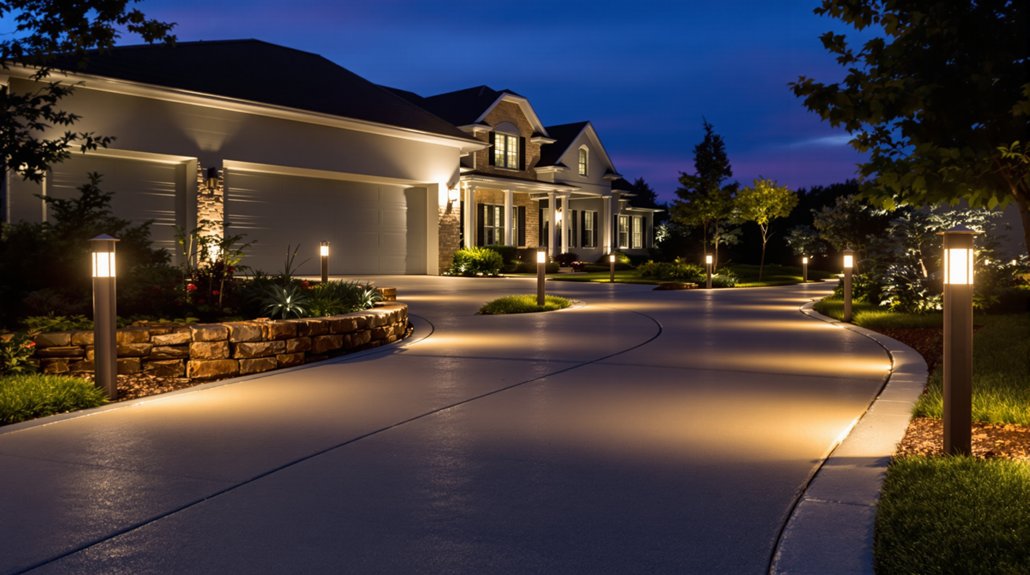
When planning driveway lighting installations, homeowners must prioritize visibility and accident prevention above aesthetic considerations. Proper light placement guarantees clear sightlines along the entire driveway path, eliminating dark spots where hazards might lurk. Strategic positioning at curves, intersections, and entry points helps drivers navigate safely during nighttime hours.
Glare reduction becomes vital for preventing temporary blindness that could cause accidents. Fixtures should direct illumination downward rather than into drivers’ eyes, while shielded designs minimize harsh brightness. Motion sensors enhance security while conserving energy, activating when vehicles or pedestrians approach.
Adequate spacing between fixtures maintains consistent illumination without creating shadows. Weather-resistant materials secure reliable performance during storms, while proper electrical installation prevents dangerous malfunctions that could compromise both safety and property protection.
LED Strip Lights for Modern Edge Definition
LED strip lights offer homeowners a sleek solution that combines the safety requirements discussed above with cutting-edge aesthetic appeal. These flexible lighting systems excel at creating crisp visual boundaries that guide vehicles and pedestrians effectively while adding sophisticated ambiance.
Strategic strip placement along driveway edges creates illuminated pathways that enhance both functionality and design. Installing strips beneath coping stones, within retaining walls, or along pathway borders produces clean lines that define traffic areas without overwhelming the landscape.
| Placement Location | Color Temperature | Visual Effect |
|---|---|---|
| Driveway borders | 3000K warm white | Subtle guidance |
| Retaining walls | 4000K neutral white | Modern definition |
| Step edges | 2700K soft white | Welcoming accent |
| Entrance gates | 5000K cool white | Security focus |
| Curved sections | 3500K balanced white | Smooth changes |
Professional installation guarantees peak performance and longevity.
Classic Lamppost and Pillar Lighting Solutions

While modern LED strips provide contemporary appeal, traditional lamppost and pillar lighting delivers timeless elegance that complements established architectural styles and formal landscape designs. These fixtures serve as prominent focal points, creating dramatic illumination patterns while maintaining sophisticated aesthetics.
Classic lampposts work exceptionally well for longer driveways, providing ambient lighting at regular intervals. Their traditional elegance enhances colonial, Victorian, and craftsman homes. Pillar lights mounted on stone or brick columns offer structured illumination for driveway entrances and gates.
Material choices include wrought iron, cast aluminum, and powder-coated steel finishes in black, bronze, or copper. Height variations from 36 inches to 8 feet accommodate different spacing requirements and lighting coverage needs. These fixtures typically use standard bulbs, making maintenance straightforward while preserving authentic period character.
Solar-Powered Options for Eco-Friendly Illumination
Solar-powered driveway lighting combines environmental responsibility with practical illumination, eliminating electrical wiring costs and reducing energy consumption. These eco friendly options harness sunlight during daylight hours to power LED fixtures throughout the night, making them ideal for environmentally conscious homeowners.
Solar driveway lighting delivers cost-effective illumination while supporting environmental sustainability through renewable energy technology.
Modern solar fixtures offer improved solar panel efficiency, providing reliable illumination even during shorter winter days. Key advantages include:
- Zero operating costs – No electricity bills or wiring installation expenses
- Weather-resistant designs – Durable construction withstands rain, snow, and extreme temperatures
- Easy installation – Simple stake-in-ground or post-mounting systems require no electrical expertise
Solar pathway lights, bollards, and accent fixtures create attractive driveway borders while maintaining safety. Advanced models feature motion sensors and adjustable brightness settings for enhanced functionality.
Motion Sensor and Smart Lighting Technology
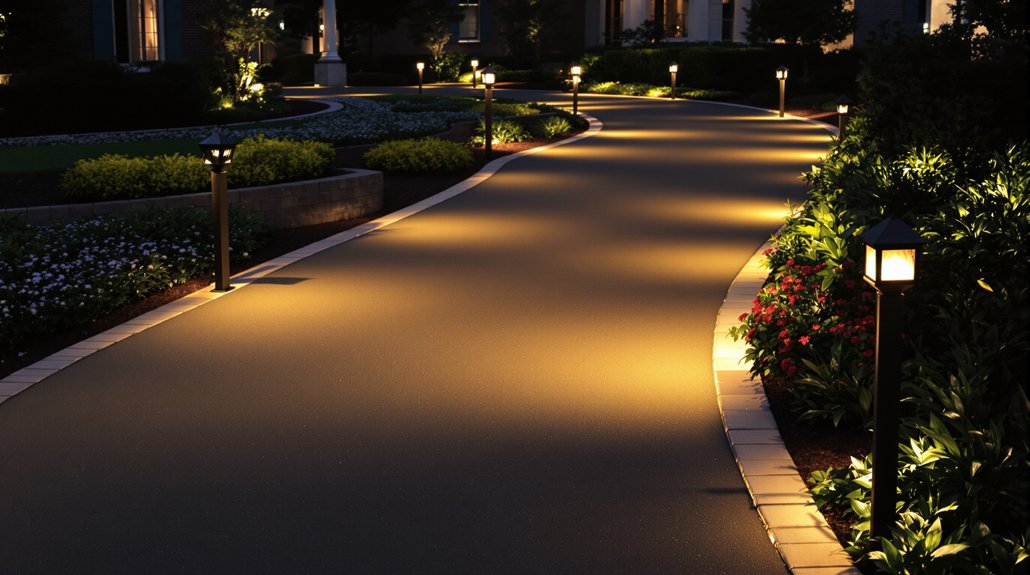
As technology advances, motion sensor and smart lighting systems transform traditional driveway illumination into responsive, intelligent networks that activate only when needed. These systems detect movement within predetermined ranges, automatically triggering lights when vehicles or pedestrians approach. Motion sensors eliminate unnecessary energy consumption by keeping lights dormant during inactive periods.
Smart home integration allows homeowners to control driveway lighting remotely through smartphone applications or voice commands. Users can adjust brightness levels, set schedules, and monitor energy usage patterns. Advanced systems learn household routines, automatically adapting lighting schedules accordingly.
Energy efficiency reaches new heights with programmable dimming features and customizable sensitivity settings. Some smart lights incorporate ambient light sensors that prevent activation during daylight hours, further reducing electrical consumption while maintaining ideal security coverage throughout the property.
Landscape Integration and Decorative Accent Lighting
Beyond mere functionality, driveway lighting serves as an artistic element that seamlessly blends illumination with existing landscaping to create cohesive outdoor environments. Strategic placement of decorative fixtures enhances pathway aesthetics while complementing architectural features and natural elements.
Effective landscape integration involves selecting appropriate lighting styles that harmonize with the property’s overall design theme:
- Garden bed uplighting – Illuminates trees, shrubs, and ornamental plants along driveway borders to create depth and visual interest
- Decorative post lanterns – Provides ambient lighting while serving as sculptural elements that define entry points and connections
- Low-profile boulder lights – Mimics natural stone formations while delivering subtle ground-level illumination that guides without overwhelming
These decorative accent options transform driveways from purely utilitarian spaces into welcoming pathways that showcase the property’s landscape design throughout evening hours. When combined with premium sandstone paving or resin-bound surfaces, thoughtfully positioned lighting fixtures accentuate the natural beauty and texture of these materials while ensuring safe navigation after dark.
Installation Tips and Maintenance Best Practices
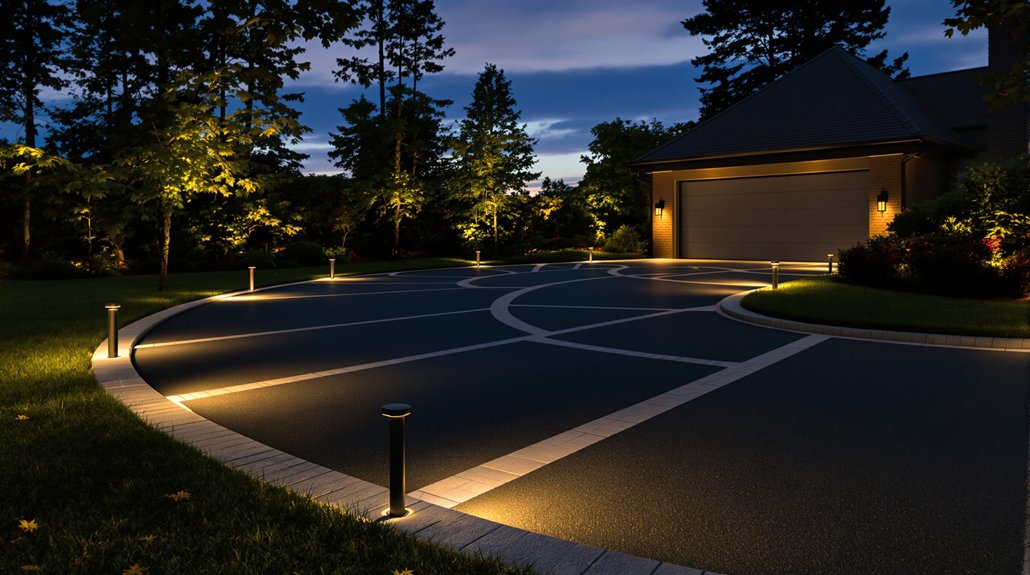
Proper installation techniques and ongoing maintenance protocols determine the long-term effectiveness and durability of driveway lighting systems. Professional electricians should handle hardwired installations to guarantee code compliance and safety. Low-voltage systems offer DIY-friendly alternatives but require proper transformer sizing and wire gauge selection. Burial depths must meet local regulations, typically 18 inches for standard electrical lines.
Regular maintenance schedules extend system lifespan greatly. Monthly inspections should check for loose connections, damaged fixtures, and debris accumulation. LED bulbs require replacement every 5-10 years, while traditional bulbs need annual changes. Solar fixtures benefit from quarterly panel cleaning to maintain charging efficiency. Seasonal adjustments include timer reprogramming and winterization procedures. Landscape growth monitoring prevents vegetation from obstructing light distribution patterns, guaranteeing ideal illumination performance year-round.