
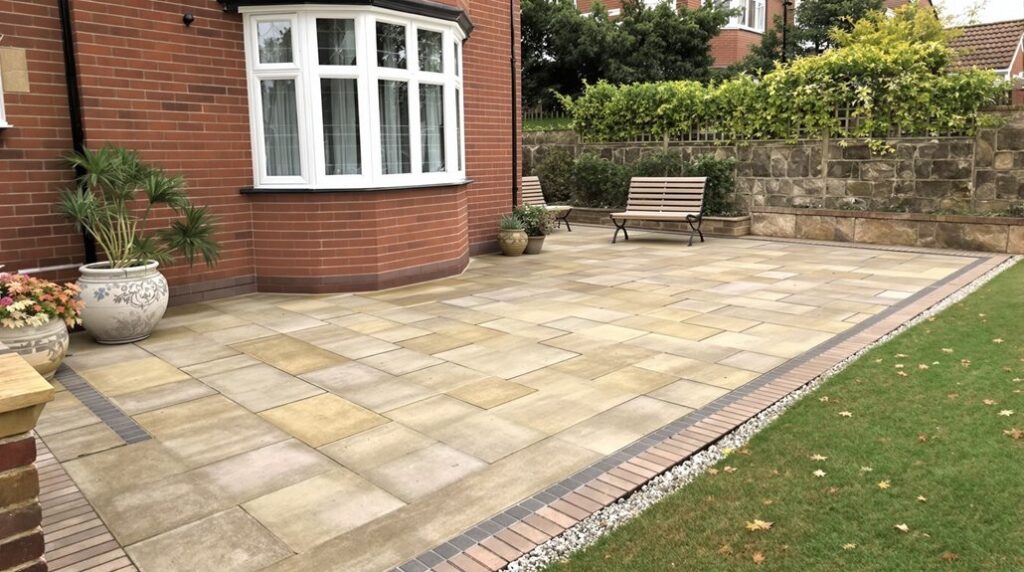
Hertfordshire’s unpredictable weather patterns present unique challenges for homeowners considering new driveways. The county’s clay-heavy soils, combined with frequent rainfall and harsh winter freeze-thaw cycles, can quickly destroy poorly chosen materials. Many residents discover their investment cracking, flooding, or deteriorating within just a few years. Understanding which materials can withstand these specific local conditions requires careful consideration of factors most homeowners never anticipate.
Understanding Hertfordshire’s Climate Challenges for Driveways
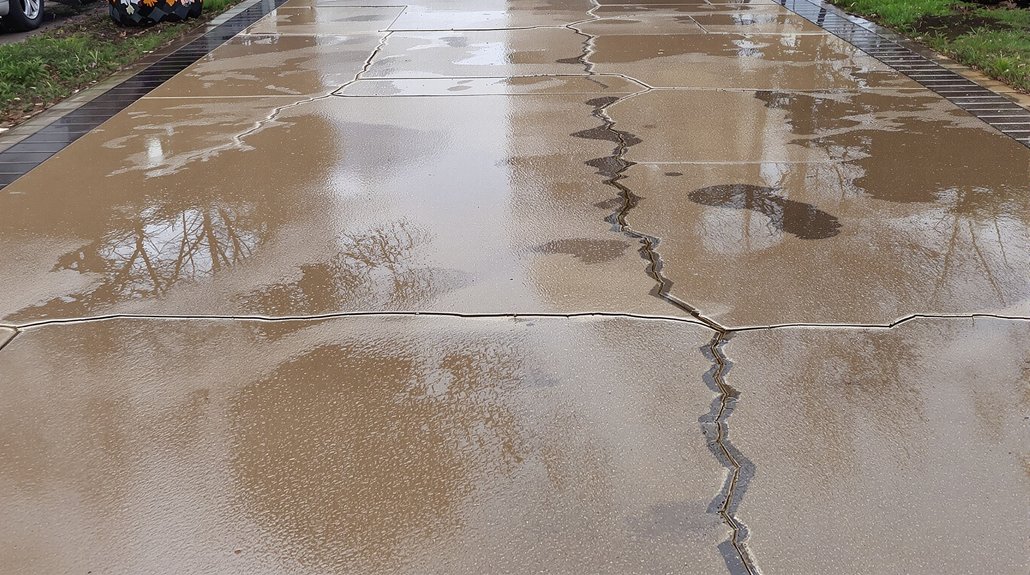
When selecting driveways in Hertfordshire, property owners must contend with the county’s temperate oceanic climate that brings frequent rainfall, occasional frost, and seasonal temperature fluctuations. These weather patterns create specific challenges that directly impact driveway longevity. Heavy precipitation can cause water pooling, surface erosion, and drainage issues that weaken structural integrity over time. Winter frost cycles lead to expansion and contraction, creating cracks in unsuitable materials like concrete or poorly installed surfaces.
The region’s moderate humidity levels also promote moss and algae growth, particularly on porous surfaces. Modern resin-bound surfaces in Hertfordshire provide excellent water permeability while complying with SuDS regulations, making them particularly suited to Hertfordshire’s wet weather conditions. Property owners must consider seasonal adjustments when maintaining their driveways, including regular cleaning, sealing, and addressing minor repairs before they escalate. Understanding these climate-related factors enables informed decisions about material selection and maintenance schedules to guarantee peak performance year-round.
Weather-Resistant Driveway Materials for Local Conditions
Given Hertfordshire’s challenging climate conditions, selecting appropriate materials becomes essential for guaranteeing driveway durability and performance. Concrete alternatives such as resin-bound surfaces and permeable block paving offer superior resistance to freeze-thaw cycles while maintaining structural integrity. Natural stone provides excellent drainage properties and withstands temperature fluctuations effectively.
Asphalt requires proper installation with adequate drainage systems to prevent water damage during heavy rainfall periods. Gravel driveways excel in wet conditions but need regular maintenance. Porcelain paving offers exceptional frost resistance and low water absorption rates.
Material selection considerably impacts driveway longevity in Hertfordshire’s variable weather patterns. Homeowners should prioritize materials with proven track records against local climate stressors, including thermal expansion, frost penetration, and prolonged moisture exposure. Professional installation guarantees peak performance regardless of chosen material.
Permeable Paving Solutions for Heavy Rainfall Management
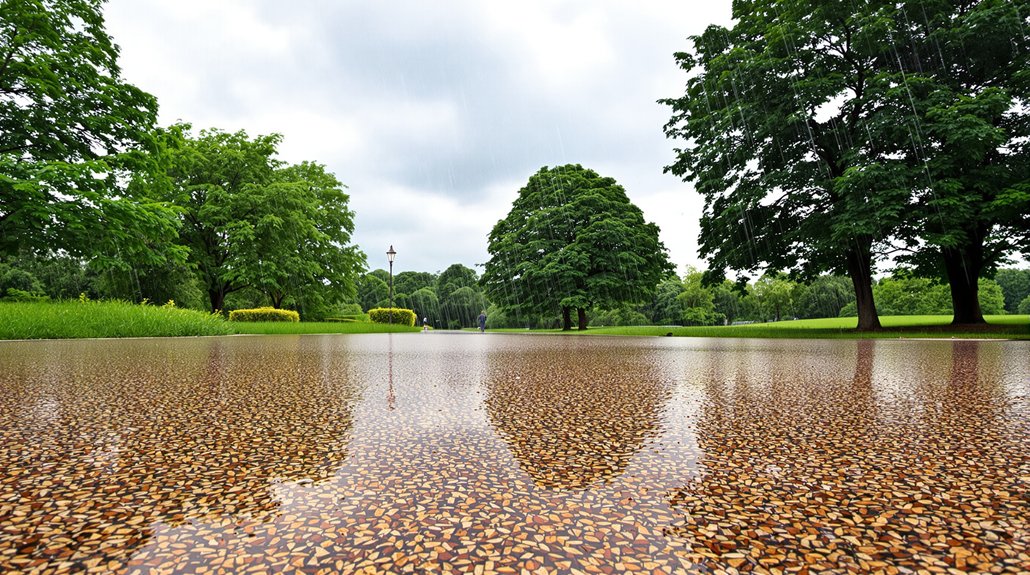
Hertfordshire’s frequent heavy rainfall demands driveway solutions that actively manage water runoff rather than simply resisting moisture penetration. Permeable options like porous asphalt, permeable concrete, and interlocking pavers allow water to filter through the surface into underlying drainage layers. These materials reduce surface flooding while replenishing groundwater supplies.
Gravel driveways naturally provide excellent drainage, though they require regular maintenance. Block paving with wide joints filled with permeable materials creates effective water management systems. Installation techniques prove vital for ideal performance. Proper base preparation includes graduated aggregate layers and geotextile fabrics to prevent clogging. Adequate slope guarantees water flows toward designated drainage areas rather than pooling. Professional installation secures correct depth specifications and compaction levels, preventing future settlement issues that compromise permeability.
Freeze-Thaw Resistance: Materials That Won’t Crack in Winter
Winter’s relentless freeze-thaw cycles pose significant threats to driveway integrity, as water infiltration followed by expansion during freezing creates powerful forces that crack and deteriorate many common materials. Concrete proves particularly vulnerable to ice damage, developing surface scaling and deep cracks over time. Asphalt fares better but requires regular sealing to maintain winter durability.
Resin-bound surfaces excel in freeze-thaw conditions due to their flexible composition and excellent drainage properties. Natural stone, when properly installed with adequate drainage, demonstrates exceptional resistance to thermal cycling. Block paving systems accommodate movement without structural failure, making them ideal for harsh winter conditions.
Material selection should prioritize porosity, flexibility, and proven performance records in similar climates to guarantee long-term driveway survival.
Drainage Considerations for Clay and Chalk Soils
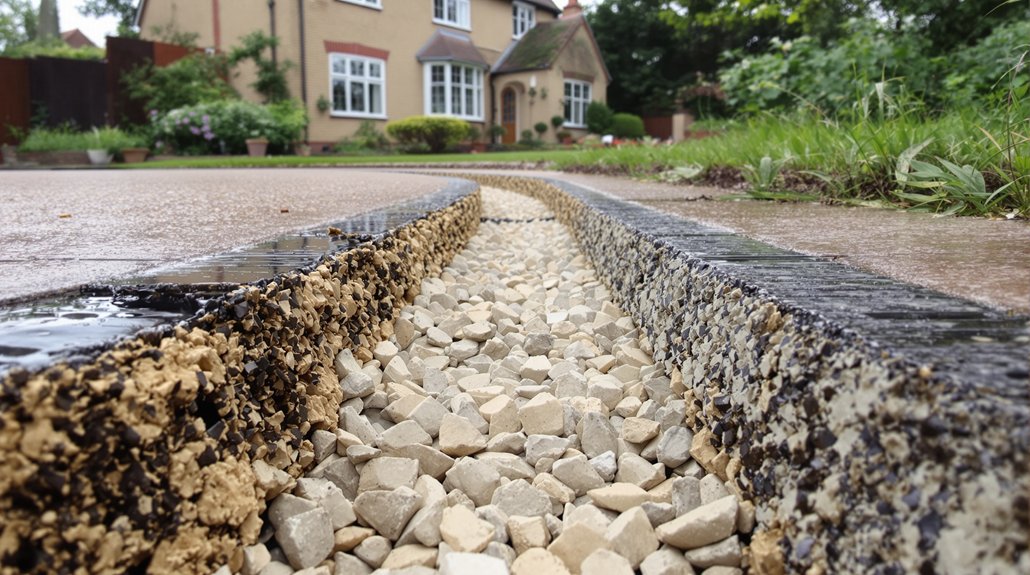
While freeze-thaw resistance protects driveway surfaces from seasonal damage, the underlying soil composition determines whether proper drainage can prevent water-related structural failures altogether.
Hertfordshire’s diverse geology presents unique challenges for driveway installation. Clay soils exhibit poor clay permeability, causing water to pool rather than drain naturally. This creates hydrostatic pressure beneath driveways, leading to heaving, cracking, and eventual structural failure. Installing French drains, permeable sub-bases, and adequate grading becomes essential for clay-heavy areas.
Conversely, chalk soils drain rapidly but present different concerns. While chalk stability appears advantageous initially, excessive drainage can undermine driveway foundations by creating voids and settlement issues. Property owners must balance drainage efficiency with structural support, often requiring specialized aggregate layers to maintain stability while managing water flow effectively through chalk substrates.
Maintenance Requirements for Different Weather-Resistant Options
Although proper drainage addresses foundational concerns, the longevity of weather-resistant driveways depends heavily on ongoing maintenance specific to each material type. Block paving requires annual joint sand replenishment and occasional re-sanding to prevent weed growth and maintain stability. Concrete driveways benefit from sealing techniques applied every three to five years to prevent water penetration and surface degradation. Asphalt surfaces demand bi-annual crack sealing and complete resurfacing every fifteen years. Gravel driveways need regular raking and periodic stone replacement to maintain appropriate levels and drainage function.
Establishing maintenance schedules based on material properties guarantees prime performance against Hertfordshire’s variable weather conditions. Homeowners who follow manufacturer-recommended maintenance protocols typically extend driveway lifespans by thirty to fifty percent compared to those using reactive maintenance approaches.