

Resin driveways markedly outperform traditional materials in St Albans’ temperate oceanic climate. Their flexible polymer composition withstands freeze-thaw cycles that commonly crack concrete and asphalt. The porous structure provides superior drainage during frequent rainfall, preventing water retention and freeze damage. Traditional materials like concrete absorb moisture and become brittle, while asphalt creates safety hazards when wet. Block paving drainage depends heavily on joint maintenance. Though resin requires higher upfront investment, lower maintenance costs and enhanced durability make it more cost-effective long-term for local weather conditions.
Understanding St Albans Climate Challenges for Driveway Materials
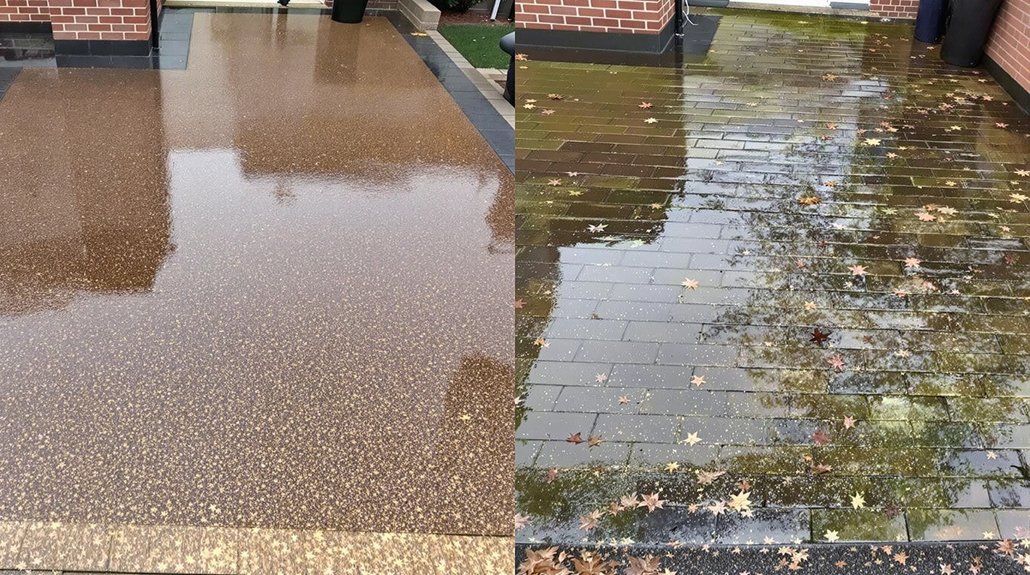
While St Albans enjoys a temperate oceanic climate, the region’s weather patterns present distinct challenges for driveway materials that property owners must carefully consider. The area experiences frequent rainfall throughout the year, with winter temperatures often hovering around freezing point, creating freeze-thaw cycles that can severely damage unsuitable surfaces. These climate considerations directly impact material longevity and maintenance requirements.
Traditional materials like concrete and asphalt face particular vulnerabilities during harsh weather periods. Concrete can crack when water penetrates and freezes, while asphalt becomes brittle in cold temperatures and soft during warmer months. Local landscaping professionals frequently observe how moisture retention affects different driveway surfaces, with some materials developing drainage issues that compound weather-related damage. Understanding these environmental factors proves essential when selecting appropriate driveway materials for long-term durability. In contrast, resin driveways feature superior drainage characteristics due to their permeable nature, making them particularly well-suited to handle St Albans’ wet climate conditions.
How Resin Driveways Handle Freeze-Thaw Cycles and Temperature Fluctuations
Resin driveways demonstrate exceptional resilience against the freeze-thaw cycles that plague St Albans throughout winter months. The flexible polymer composition allows these surfaces to expand and contract naturally with temperature changes, preventing the cracking that commonly affects concrete and asphalt driveways.
Unlike traditional materials that become brittle in cold conditions, resin maintains its structural integrity across St Albans’ temperature range. The material’s freeze thaw resistance stems from its porous nature, which allows water to drain through rather than pooling on the surface where it might freeze and cause damage.
This temperature adaptability proves particularly valuable during St Albans’ unpredictable winter weather patterns. When temperatures fluctuate rapidly between freezing and thawing, resin driveways continue performing reliably while traditional materials often develop stress fractures and surface deterioration.
Traditional Concrete and Asphalt Performance in Wet Weather Conditions
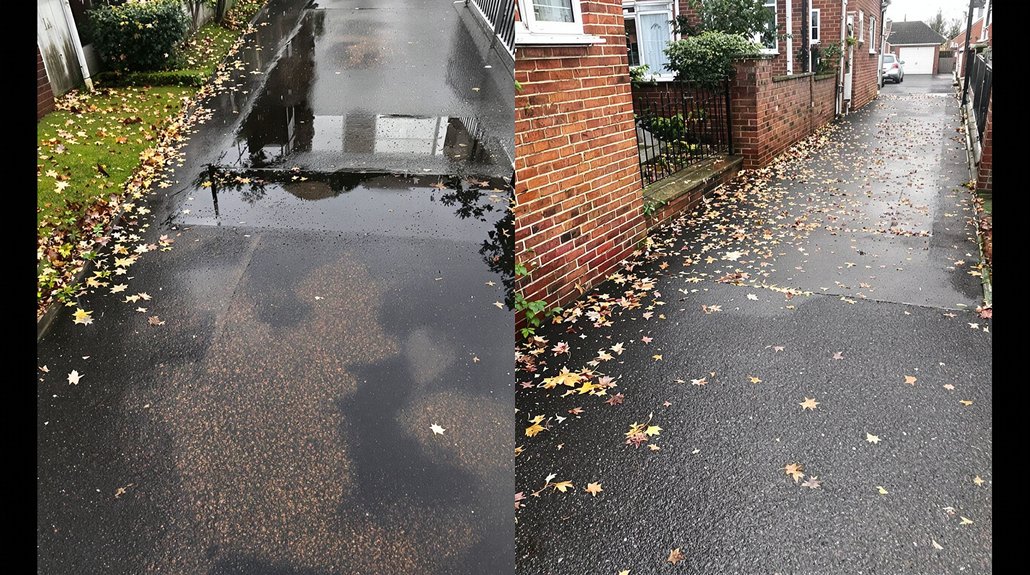
Traditional concrete and asphalt driveways face significant challenges when exposed to St Albans’ frequent rainfall and wet conditions. Concrete’s porous nature leads to significant water absorption, creating problems with surface degradation and structural integrity over time. When saturated, concrete becomes prone to cracking as absorbed moisture expands during freeze cycles.
Asphalt surfaces demonstrate poor slip resistance when wet, becoming hazardous for vehicles and pedestrians. The smooth texture of aged asphalt compounds this safety concern, particularly during heavy downpours common in the region. Both materials develop puddles and standing water due to inadequate drainage characteristics.
Standard concrete requires regular sealing to minimize water absorption, while asphalt needs frequent reapplication of surface treatments to maintain any semblance of grip in wet conditions.
Block Paving Vs Resin: Drainage Capabilities During Heavy Rainfall
Drainage performance distinguishes these two popular driveway materials notably during St Albans’ intense rainfall periods. Block paving creates gaps between individual blocks that facilitate water infiltration, though these joints can become compromised when sand washing occurs or weeds develop. However, proper installation with adequate sub-base preparation guarantees effective drainage capabilities.
Block paving drainage relies on joints between blocks, but sand washing and weed growth can compromise water infiltration effectiveness.
Resin permeability offers superior water management through its porous structure, allowing rainfall to pass directly through the surface material rather than relying solely on joints.
Key drainage differences include:
- Block paving depends on joint spacing for water flow
- Resin surfaces provide consistent permeability across the entire area
- Maintenance requirements vary considerably between materials
During heavy rainfall events, resin driveways typically demonstrate more reliable drainage performance, while block paving effectiveness depends heavily on joint condition and ongoing maintenance practices.
Long-Term Durability Comparison Under St Albans Weather Extremes
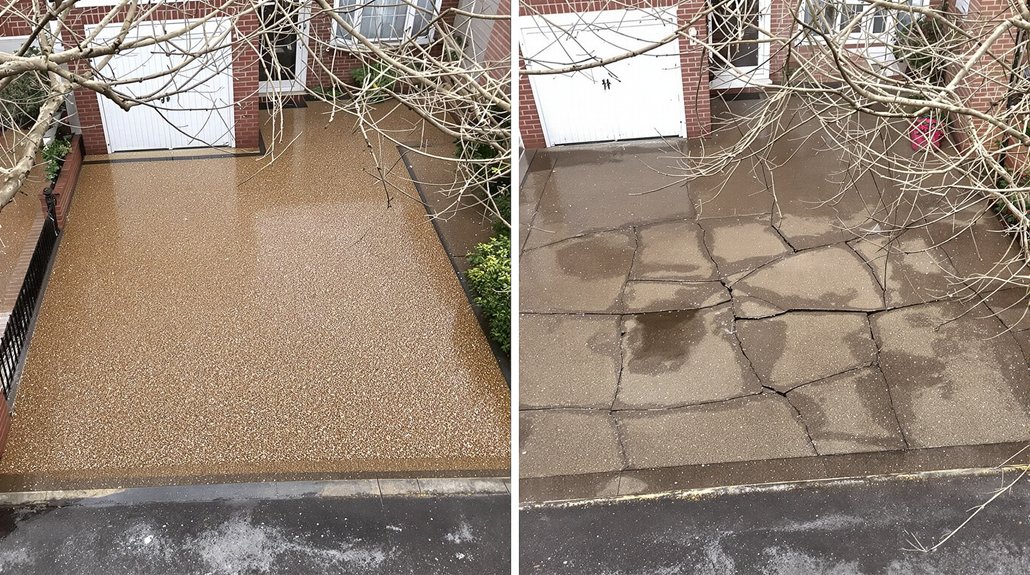
Weather extremes across St Albans test driveway materials through freeze-thaw cycles, UV exposure, and temperature fluctuations that reveal fundamental differences in long-term performance. Resin driveways demonstrate superior weather resistance through flexible polymer structures that accommodate thermal expansion without cracking. Traditional materials show varying responses to environmental stress.
| Material Type | Freeze-Thaw Resistance | UV Degradation | Thermal Movement | Maintenance Required |
|---|---|---|---|---|
| Resin Bound | Excellent | Minimal | Flexible | Low |
| Block Paving | Good | None | Rigid joints | Medium |
| Tarmac | Poor | High | Brittle cracking | High |
| Concrete | Fair | Minimal | Expansion joints | Medium |
| Gravel | Excellent | None | Natural drainage | High |
Long term testing reveals resin systems maintain structural integrity across temperature ranges, while traditional materials require periodic repairs addressing weather-induced deterioration.
Cost-Effectiveness and Maintenance Requirements for Each Material Type
Initial investment costs and ongoing maintenance expenses create markedly different financial profiles across driveway materials, with long-term value emerging as a more accurate measure than upfront pricing alone.
Long-term value proves more telling than initial costs when evaluating driveway material investments and their true financial impact.
A thorough cost analysis reveals significant variations in total ownership expenses. While traditional materials like concrete and asphalt typically require lower initial outlays, their maintenance frequency substantially increases long-term costs. Resin surfaces command higher upfront investment but demonstrate superior financial efficiency over extended periods.
Key maintenance frequency differences include:
- Resin driveways: Annual cleaning and occasional repairs every 10-15 years
- Concrete surfaces: Regular sealing every 2-3 years plus crack repairs
- Asphalt driveways: Resealing every 2-4 years with periodic resurfacing
Material longevity directly impacts financial returns, making resin installations increasingly cost-effective despite higher initial expenditure.