
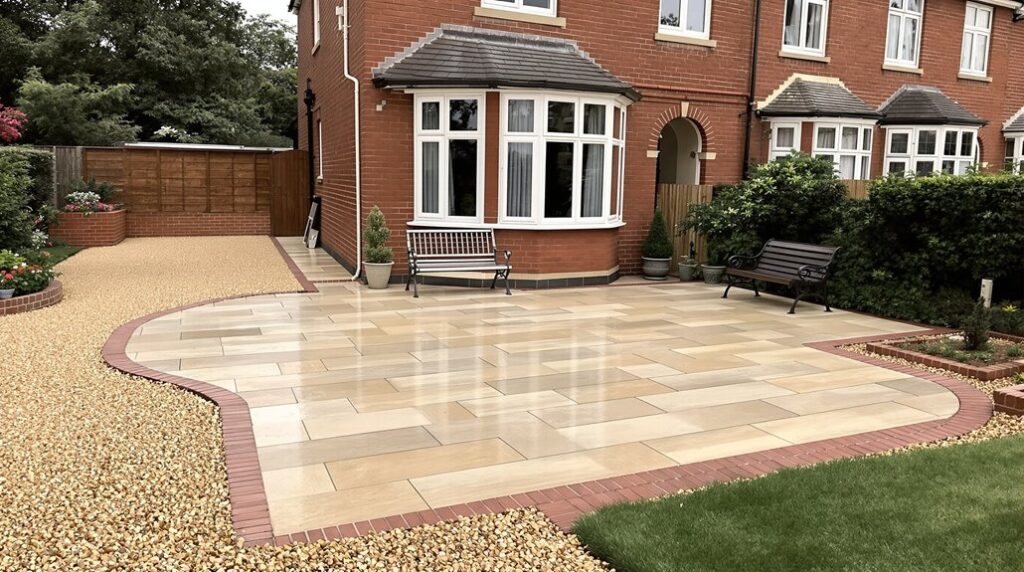
Installing a gravel driveway in Hertfordshire presents unique challenges that catch many homeowners off guard. The county’s distinctive clay soil composition and unpredictable weather patterns create specific requirements that differ from standard installation practices. Poor planning decisions made during the initial phases often result in costly repairs, drainage problems, and structural failures within the first few years. Understanding these regional complications before breaking ground can mean the difference between a lasting investment and an expensive mistake.
Inadequate Ground Preparation and Excavation Depth
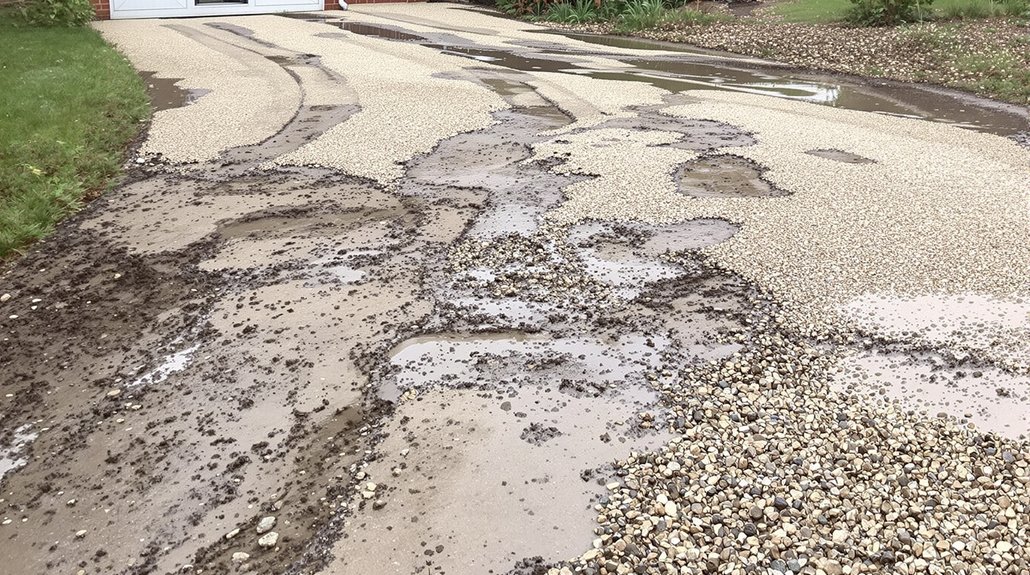
When homeowners rush to lay gravel without properly preparing the foundation, they create a pathway to costly repairs and premature driveway failure. Proper excavation standards require removing topsoil and organic matter to a depth of 6-8 inches, depending on soil conditions and expected traffic load. Many property owners underestimate this critical step, resulting in uneven settling and poor drainage.
Inadequate soil compaction beneath the gravel base leads to rutting, potholes, and structural instability. The subgrade must be thoroughly compacted using mechanical equipment to achieve ideal density. Skipping this process allows water penetration and frost heave damage during Hertfordshire’s winter months. Professional contractors understand that proper ground preparation, though time-intensive, prevents future maintenance headaches and extends driveway lifespan greatly.
Poor Drainage Planning for Hertfordshire’s Clay Soil
Although Hertfordshire’s heavy clay soil presents unique drainage challenges, many homeowners fail to account for its low permeability when installing gravel driveways. Clay soil retains water, creating puddles and unstable foundations that compromise driveway integrity. Professional soil testing reveals specific drainage requirements before installation begins.
| Drainage Solutions | Installation Depth | Maintenance Frequency |
|---|---|---|
| French drains | 18-24 inches | Annual inspection |
| Permeable membranes | 12-18 inches | Bi-annual cleaning |
| Soakaways | 36-48 inches | Every 5 years |
| Channel drains | 6-12 inches | Monthly clearing |
Effective drainage solutions include installing French drains along driveway edges, incorporating permeable geotextile membranes beneath gravel layers, and creating soakaways to handle excess water. Local expertise regarding ground conditions helps identify the most suitable drainage approach for each property’s specific challenges. Without proper drainage planning, clay soil transforms driveways into waterlogged, rutted surfaces that require costly repairs.
Choosing the Wrong Gravel Type and Size
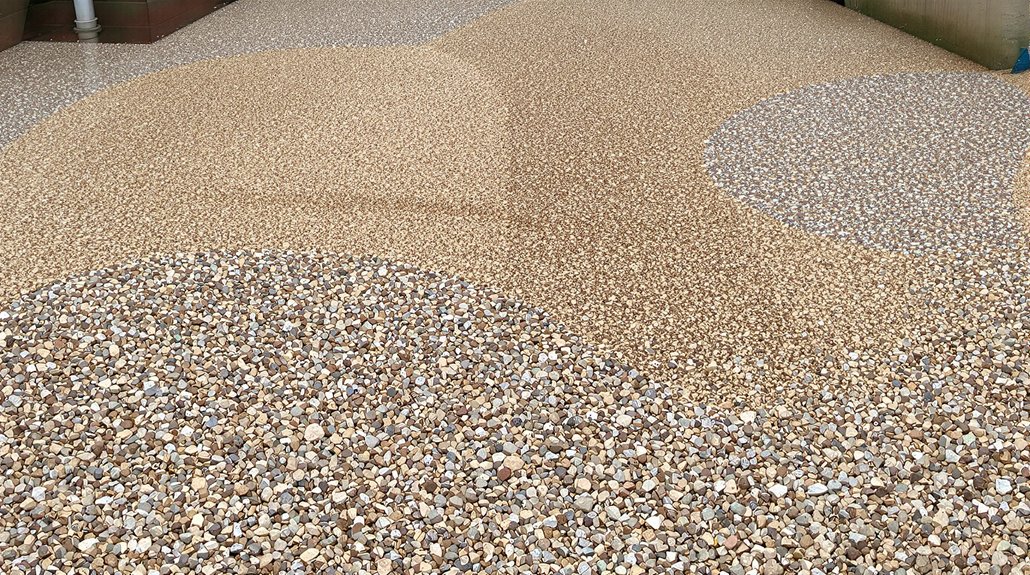
Many homeowners select gravel based solely on appearance, overlooking essential functional requirements that determine long-term driveway performance. Hertfordshire’s climate demands specific gravel characteristics to withstand freeze-thaw cycles and heavy rainfall. Angular crushed stone provides superior compaction and stability compared to smooth river gravel, which shifts easily under vehicle weight.
Size selection proves equally critical. Fine gravel creates dust problems and poor drainage, while oversized stones lack proper binding properties. The ideal combination uses 40mm base aggregate topped with 20mm finishing gravel. Gravel color selection should consider heat absorption and maintenance visibility—lighter colors reflect heat but show dirt more readily. Proper gravel installation techniques require graduated sizing layers, ensuring smaller particles fill voids between larger stones for maximum stability and longevity.
Skipping the Essential Sub-Base Layer
The sub-base layer serves as the foundation that determines whether a gravel driveway will endure decades of use or require constant repairs within months. Many homeowners underestimate sub base importance, leading to costly reconstruction projects. Without proper foundational stability, the driveway surface will shift, develop ruts, and create drainage problems.
A poorly constructed sub-base transforms your driveway investment into an expensive maintenance nightmare requiring frequent repairs and eventual replacement.
A properly installed sub-base requires several critical steps:
- Excavation depth – Remove existing soil to appropriate depth based on traffic loads
- Compaction process – Compress base materials using mechanical equipment for best density
- Material selection – Choose appropriate aggregate size for local soil conditions
- Drainage integration – Install proper water management systems during sub-base construction
Professional installation guarantees the sub-base provides long-term structural integrity for heavy vehicle traffic.
Incorrect Edge Restraint Installation
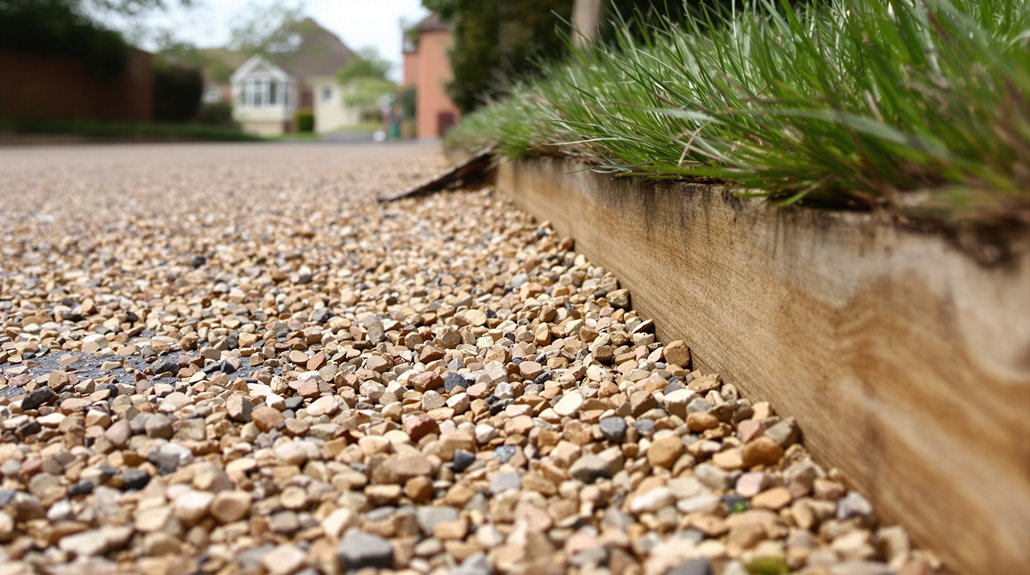
Gravel spreads beyond intended boundaries when homeowners fail to install proper edge restraints, creating an unkempt appearance and requiring frequent maintenance. Common mistakes include choosing inadequate edge restraint materials that cannot withstand vehicle loads or weather conditions. Plastic edging often proves insufficient for driveways, while concrete blocks or steel edging provide superior durability.
Poor installation techniques compound these problems. Restraints installed too shallow lose their anchoring ability, allowing gravel migration during heavy rainfall or vehicle movement. Failing to create proper drainage behind restraints causes water accumulation and potential failure. Additionally, leaving gaps between restraint sections permits gravel escape and undermines the system’s effectiveness. Proper edge restraint installation requires appropriate materials, adequate depth, continuous placement, and consideration of drainage requirements for long-term driveway stability.
Failing to Consider Local Planning Permissions
Why do seemingly straightforward driveway projects sometimes face unexpected delays or costly modifications? The answer often lies in overlooking essential planning permissions and local regulations. Many homeowners assume gravel driveways require no formal approval, but this misconception can lead to considerable complications.
Planning guidelines vary considerably across different councils, and specific requirements depend on factors like driveway size, drainage impact, and proximity to highways. Four critical considerations include:
- Drainage requirements for surfaces exceeding 5 square meters
- Highway safety assessments for new vehicle access points
- Conservation area restrictions affecting material choices
- Permitted development rights limitations in designated zones
Consulting local planning authorities before beginning work prevents costly retrofitting and guarantees compliance with all applicable regulations governing residential driveway installations.
Underestimating Gravel Quantities and Compaction Needs
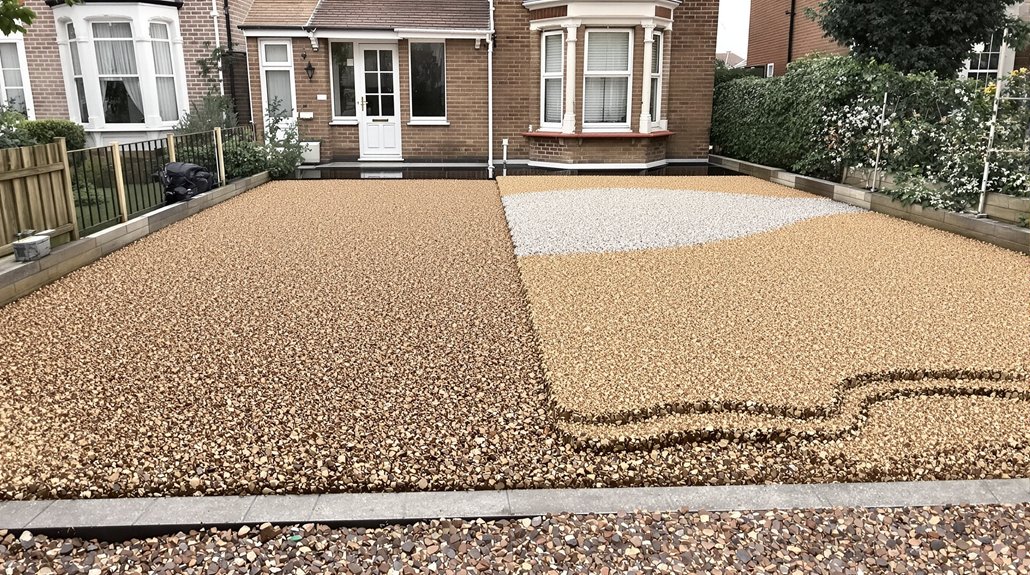
Even when homeowners obtain proper permissions, inadequate material calculations frequently derail gravel driveway projects. Accurate gravel quantity estimation requires understanding that loose gravel compacts considerably during installation, typically reducing volume by 20-30%. Many underestimate this compression factor, ordering insufficient materials and facing costly reorders mid-project.
Proper compaction techniques demand multiple passes with appropriate equipment, not just spreading and hoping for natural settling. Professional contractors use plate compactors or rollers in layers, typically compacting every 50-75mm of material depth. Inadequate compaction creates unstable surfaces prone to rutting, shifting, and premature deterioration.
Successful installations require calculating both initial loose volumes and final compacted depths. Homeowners should factor in sub-base requirements, edge restraints, and access considerations when determining total material needs for long-lasting driveways.
Ignoring Ongoing Maintenance Requirements
Neglect of routine upkeep transforms initially pristine gravel driveways into problematic surfaces within months of installation. Property owners frequently underestimate the ongoing commitment required to maintain gravel surfaces effectively. Without consistent attention, driveways develop ruts, potholes, and uneven surfaces that compromise both functionality and aesthetics.
Essential maintenance tasks include:
- Monthly raking to redistribute displaced gravel
- Quarterly weed control to prevent vegetation growth
- Bi-annual topping with fresh gravel material
- Annual edge redefinition to maintain boundaries
Routine inspection identifies emerging issues before they escalate into costly repairs. Seasonal upkeep addresses weather-related damage, particularly after heavy rainfall or freeze-thaw cycles. Establishing a maintenance schedule prevents minor problems from becoming major renovations, ultimately protecting the initial investment while ensuring long-term driveway performance.