
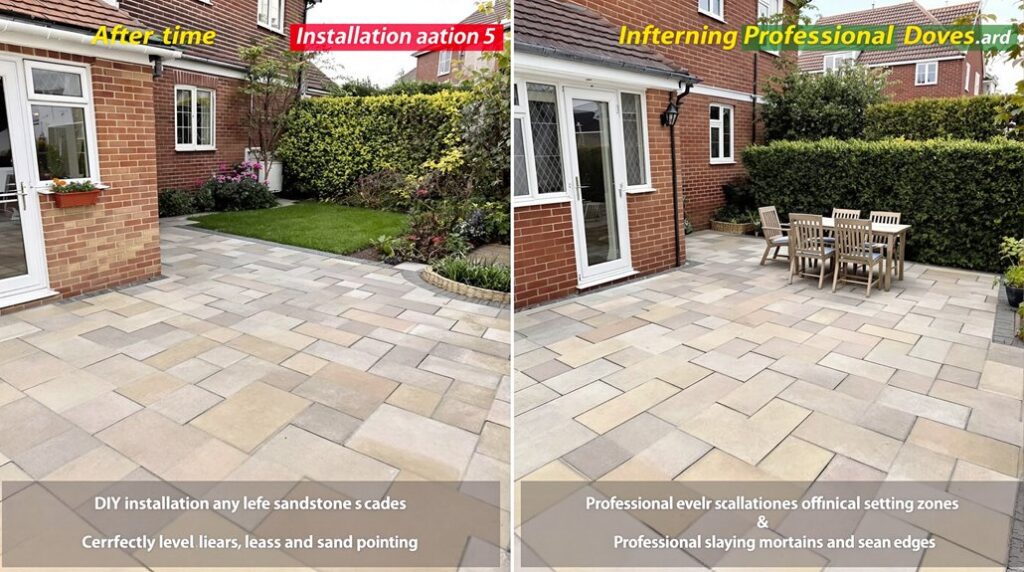
Homeowners facing driveway replacement often assume the DIY route offers significant savings over professional installation. Surface-level comparisons between material costs and contractor quotes seem to support this belief. However, the true financial picture reveals unexpected complexities that can dramatically shift the cost equation. Hidden expenses, time commitments, and long-term consequences create variables that many property owners fail to evaluate when making their initial calculations.
Breaking Down Material Costs for DIY Installation
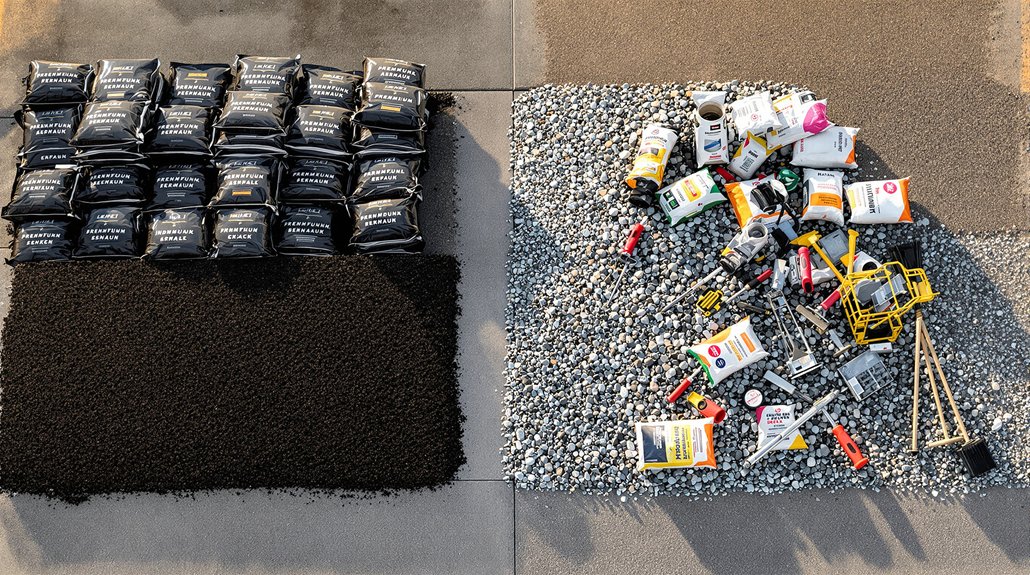
Most homeowners considering a DIY driveway installation face material costs that typically range from $3 to $8 per square foot, depending on the chosen surface type. Gravel represents the most economical option at $1-3 per square foot for materials alone. Asphalt costs approximately $2-4 per square foot, while concrete ranges from $4-8 per square foot.
A detailed cost breakdown reveals additional expenses beyond surface materials. Base preparation requires gravel or crushed stone at $30-50 per ton. Essential tools like compactors, rakes, and leveling equipment add $200-500 in rental fees. Material types greatly impact total investment, with decorative concrete or stamped patterns increasing costs substantially. Concrete also demands forms, reinforcement mesh, and finishing tools, while asphalt requires specialized equipment for proper installation and compaction. Professional installers typically offer resin-bound surfaces as an alternative that provides durability while complying with SuDS regulations, though DIY installation of this material requires specialized knowledge and equipment.
Tool Rental and Equipment Expenses You’ll Need
Several specialized tools become essential for DIY driveway installation, with rental costs varying greatly based on project scope and surface material. Different tool types command distinct pricing structures, while rental durations notably impact overall expenses.
DIY driveway installation requires specialized rental tools, with costs fluctuating significantly based on project complexity and chosen materials.
Essential equipment for most driveway projects includes:
- Excavation tools – Mini excavators ($200-400/day) or plate compactors ($40-80/day)
- Concrete mixers – Portable units ranging $35-75 daily depending on capacity
- Grading equipment – Laser levels ($25-50/day) and screeds ($15-30/day)
- Finishing tools – Power floats ($60-120/day) for concrete or asphalt rollers ($150-300/day)
Weekly rates typically offer 20-30% savings compared to daily charges. Additional costs include delivery fees, fuel surcharges, and potential damage deposits, which can add $100-200 to total rental expenses.
Professional Labor Rates and Service Packages

Professional driveway installation contractors structure their pricing through thorough service packages that bundle labor, materials, and project management into fixed-rate offerings. Labor cost evaluation reveals rates typically range from $3-8 per square foot for asphalt and $8-15 per square foot for concrete installations. Service package options vary considerably between contractors, with basic packages covering excavation, base preparation, and material installation, while premium packages include permits, drainage systems, and extended warranties. Regional differences greatly impact pricing, with urban markets commanding higher rates due to increased operational costs. Most contractors provide detailed estimates that itemize labor costs separately from materials, allowing homeowners to understand exactly where their investment goes during the installation process.
Hidden Costs That Catch DIY Installers Off Guard
While DIY driveway installation initially appears cost-effective, unexpected expenses frequently transform budget-friendly projects into financial burdens that exceed professional installation costs.
DIY driveway projects often become costly nightmares when hidden expenses push budgets beyond professional installation prices.
Several hidden fees emerge during DIY installations:
- Tool rental and equipment costs – Compactors, excavators, and specialized machinery rental fees accumulate quickly
- Material miscalculations – Ordering insufficient materials results in multiple delivery charges and price variations
- Permit and inspection fees – Local municipalities often require permits and inspections that homeowners overlook
- Unexpected repairs – Discovering damaged utilities, poor drainage, or unstable soil requires immediate professional intervention
These unforeseen expenses compound rapidly. Many DIY installers discover that foundation issues, utility line conflicts, or inadequate base preparation demand costly corrections. Material waste from inexperience and multiple trips for forgotten supplies further inflate budgets, making professional installation increasingly attractive.
Time Investment: Calculating Your Hours Vs Hourly Wage
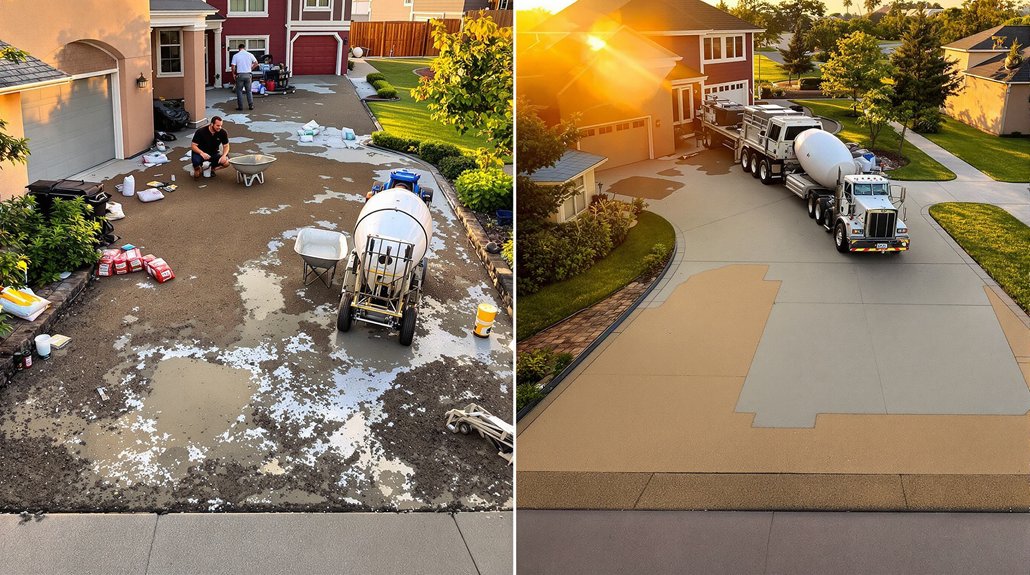
Beyond the financial considerations, homeowners must evaluate whether their time investment justifies choosing DIY installation over professional services. Effective time management requires calculating total project hours against personal hourly earnings to determine the true opportunity cost.
| Project Phase | DIY Hours Required | Professional Timeline |
|---|---|---|
| Excavation & Prep | 16-24 hours | 4-6 hours |
| Base Installation | 12-16 hours | 2-3 hours |
| Surface Application | 8-12 hours | 1-2 hours |
A homeowner earning $25 per hour spending 40 hours on driveway installation sacrifices $1,000 in potential income. This opportunity cost, combined with material expenses and tool rentals, often exceeds professional installation fees. Additionally, inexperienced installers frequently underestimate time requirements, extending projects across multiple weekends and disrupting personal schedules considerably.
Quality and Durability Differences Between Approaches
Expertise gaps between novice homeowners and seasoned contractors create substantial disparities in installation quality and long-term durability outcomes. Professional installers possess specialized knowledge in material selection, understanding which aggregate types, binding agents, and surface treatments perform best under specific climate conditions and traffic loads. Their longevity analysis considers factors beyond immediate cost savings.
Quality differences manifest in several critical areas:
- Foundation preparation – Proper excavation depth and base compaction
- Drainage systems – Strategic water management and slope calculations
- Material application – Consistent thickness and proper curing techniques
- Finishing details – Edge sealing and surface treatments
DIY installations frequently suffer from inadequate base preparation, improper material ratios, and insufficient curing time. These deficiencies typically result in premature cracking, surface deterioration, and costly repairs within three to five years.
Warranty Protection and Long-Term Guarantees

Professional driveway installations typically include extensive warranty coverage that protects homeowners against material defects and workmanship failures for periods ranging from two to ten years. These thorough guarantees often cover cracking, settling, drainage issues, and premature deterioration. Contractors frequently offer tiered protection levels, with basic coverage addressing major structural problems and premium warranties extending to surface imperfections.
DIY installations provide no warranty protection beyond manufacturer guarantees on raw materials. Homeowners assume complete responsibility for installation errors, premature failure, and ongoing maintenance costs. Professional long term guarantees transfer liability from property owners to licensed contractors, potentially saving thousands in repair expenses. Additionally, warranty documentation enhances property value and provides reassurance to future buyers. The absence of professional backing makes DIY projects notably riskier financial investments despite lower initial costs.
Common DIY Mistakes and Their Expensive Consequences
While warranty gaps expose DIY projects to significant financial risk, the underlying installation errors that trigger these costly problems reveal why professional protection becomes necessary. Poor planning frequently leads homeowners to underestimate material quantities, drainage requirements, and site preparation needs. Improper leveling creates immediate water pooling and long-term structural failure.
The most expensive DIY driveway mistakes include:
- Inadequate base preparation – causing premature cracking and settling
- Incorrect material calculations – requiring costly material reorders and delays
- Poor drainage integration – leading to water damage and foundation issues
- Substandard compaction techniques – resulting in uneven surfaces and early deterioration
These errors typically require complete reconstruction rather than simple repairs, often costing double the original professional installation estimate while delivering inferior results.
Maintenance Requirements and Ongoing Expenses
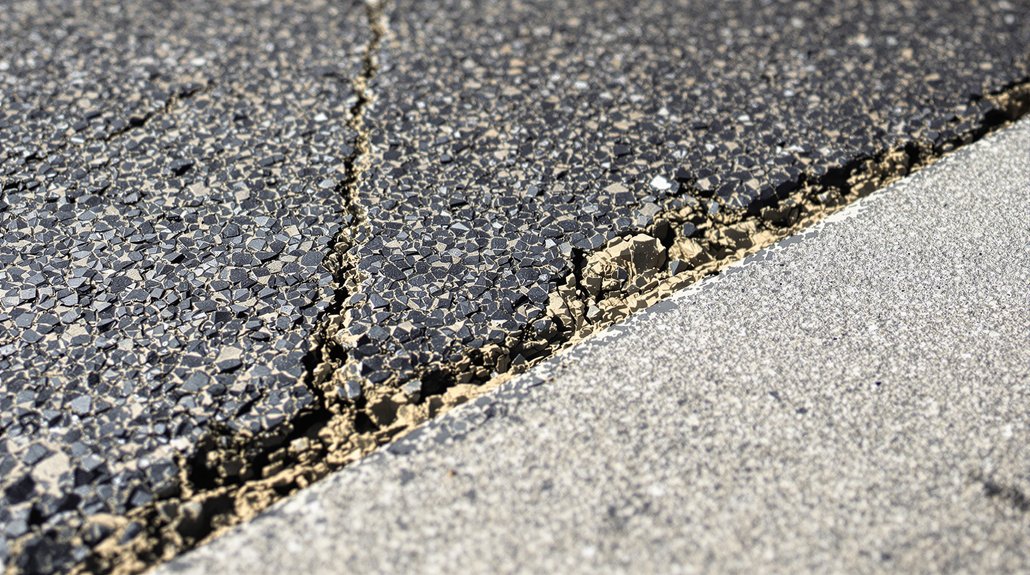
How markedly do maintenance demands differ between DIY and professionally installed driveways? Professional installations typically require less frequent intervention due to superior materials, proper base preparation, and expert execution. These driveways often maintain structural integrity for decades with minimal upkeep beyond periodic sealing and crack filling.
DIY installations frequently demand more aggressive maintenance frequency, particularly during initial years when settlement issues and material defects emerge. Homeowners may face annual repairs, frequent resealing, and premature replacement of sections that fail prematurely.
The ongoing upkeep costs compound greatly over time. While professional installations involve higher upfront investment, their reduced maintenance requirements often prove more economical long-term. DIY projects may appear cost-effective initially, but persistent repair needs and shortened lifespan create substantial hidden expenses that exceed professional installation costs.
Impact on Property Value and Resale Potential
When prospective buyers evaluate residential properties, driveway quality greatly influences their purchasing decisions and willingness to pay premium prices. Professional installations typically deliver superior resale value compared to DIY projects due to their durability, visual appeal, and code compliance. Property curb appeal greatly benefits from expertly installed driveways that complement architectural styles and neighborhood standards.
Professional installations impact property value through:
- Enhanced aesthetic appeal – Clean lines, proper grading, and quality materials create positive first impressions
- Structural longevity – Proper foundation work and drainage prevent premature deterioration
- Code compliance assurance – Meeting municipal requirements avoids future legal complications
- Warranty protection – Professional guarantees provide buyer confidence and transferable coverage
Conversely, poorly executed DIY driveways can actually decrease property values, creating liability concerns and requiring costly corrections before successful resale transactions.