

Resin bound driveways offer St Albans homeowners an innovative solution for maximizing compact terraced house frontages through sophisticated design strategies and practical benefits. Light-colored resin surfaces reflect natural light and create visual expansion in confined Victorian and Edwardian properties, while permeable characteristics solve drainage challenges without additional infrastructure. Strategic color combinations, geometric patterns, and curved pathways generate movement illusions that make small spaces appear larger. The following insights reveal how proper planning transforms cramped driveways into spacious-feeling, low-maintenance surfaces.
Why Traditional Paving Falls Short in Compact St Albans Properties
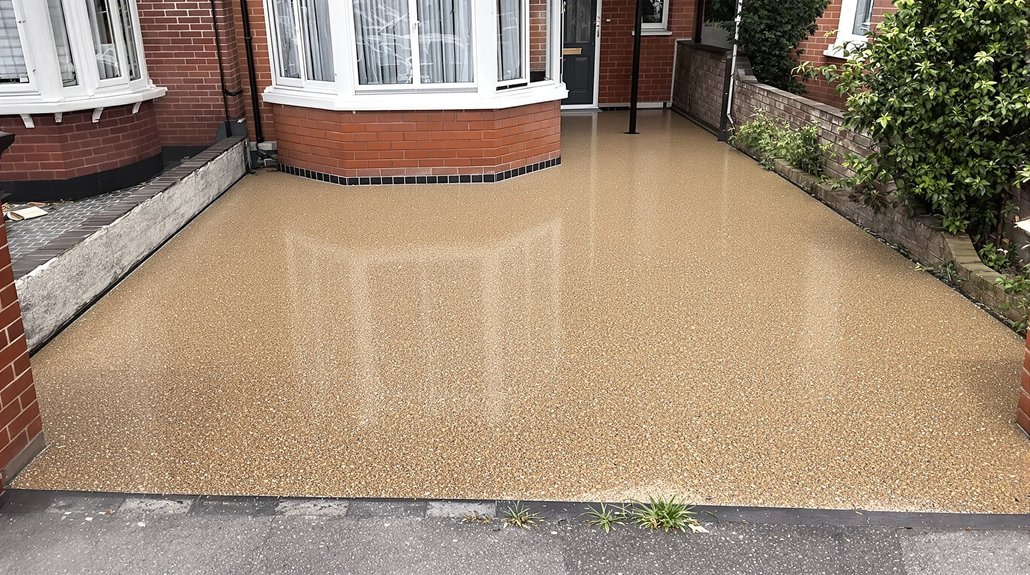
While St Albans homeowners with limited driveway space often default to traditional paving materials like concrete slabs or block paving, these conventional solutions frequently create more problems than they solve. Block paving creates uneven surfaces that collect weeds and moss in joints, requiring constant maintenance. Concrete slabs develop cracks over time, creating trip hazards and drainage issues. These materials also limit compact landscaping alternatives, forcing homeowners to choose between parking and greenery. Traditional paving raises significant accessibility considerations, as uneven surfaces prove challenging for wheelchair users or elderly residents with mobility aids. The rigid nature of conventional materials prevents creative design solutions that could maximise both functionality and aesthetic appeal in constrained spaces. Furthermore, traditional paving materials often fail to meet SuDS requirements for proper stormwater management, creating potential flooding issues in compact urban areas like St Albans.
Space-Enhancing Design Principles for Resin Bound Surfaces
Although compact driveways present unique spatial challenges, resin bound surfaces enable sophisticated design strategies that create visual expansion and functional efficiency. Strategic colour selection profoundly impacts perceived space, with lighter tones reflecting more light and creating openness. Neutral aggregates in cream or pale grey enhance brightness whilst maintaining elegance.
Texture contrasts between smooth pathways and coarser parking areas define functional zones without physical barriers. This subtle differentiation maximises usable space whilst maintaining visual cohesion. Light reflection properties of resin surfaces amplify natural illumination, particularly beneficial in shadowed areas between terraced properties.
Border integration eliminates harsh edges, allowing surfaces to flow seamlessly into landscaping. Curved pathways create movement illusions that make narrow driveways appear wider, whilst diagonal patterns draw the eye across rather than along confined spaces.
Colour and Pattern Strategies That Create Visual Expansion
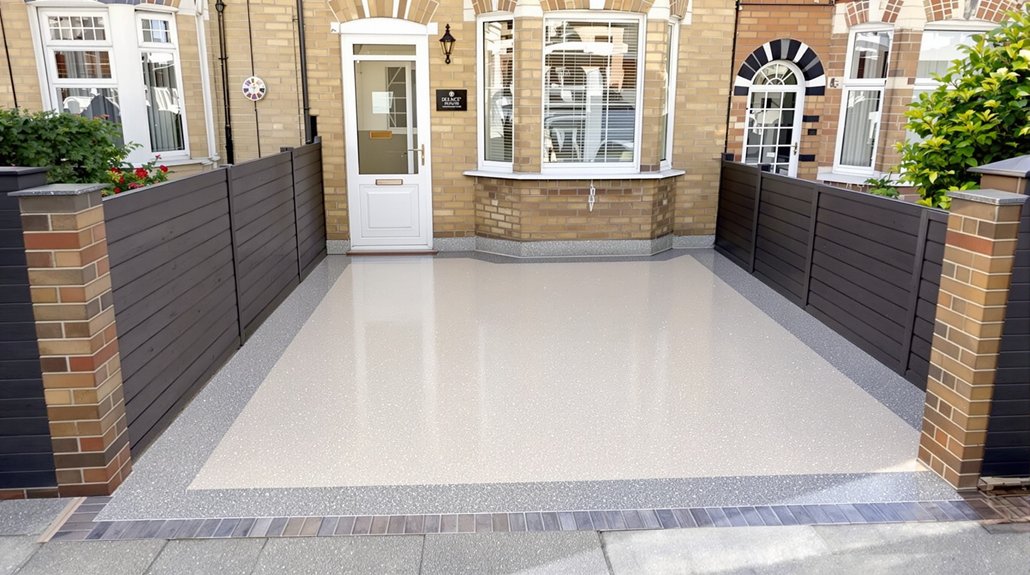
Beyond fundamental design principles, specific colour combinations and geometric patterns serve as powerful tools for transforming cramped driveways into seemingly spacious surfaces. Light neutrals like cream, pale grey, and soft beige reflect maximum light, making areas appear larger than darker alternatives. Strategic colour combinations create depth illusions – lighter perimeters with subtly darker centres draw the eye outward, expanding perceived boundaries.
Pattern layering amplifies these effects through geometric arrangements. Diagonal lines lead vision beyond actual space limits, while chevron patterns create directional flow that elongates narrow driveways. Border treatments using contrasting aggregate colours define edges whilst maintaining openness. Linear patterns running perpendicular to viewing angles maximise width perception, particularly effective for terraced house frontages where space constraints demand clever visual manipulation to achieve expansive appearance.
Solving Drainage Challenges in Limited Frontage Areas
Since confined frontage areas naturally restrict traditional drainage solutions, resin driveways require innovative water management approaches that maximise efficiency within minimal space parameters. Permeable resin surfaces excel in these constrained environments by allowing water to infiltrate directly through the material, eliminating the need for extensive guttering systems or additional drainage infrastructure.
Strategic installation techniques include creating subtle gradients that direct water flow towards planted borders or existing drainage points. Linear channel drains positioned along property boundaries provide discrete water collection without consuming valuable surface area. The inherent surface permeability of quality resin systems prevents standing water while maintaining structural integrity.
These targeted drainage solutions guarantee compliance with sustainable urban drainage requirements whilst preserving every square metre of usable driveway space in compact terraced house settings.
Working With Victorian and Edwardian Architectural Features
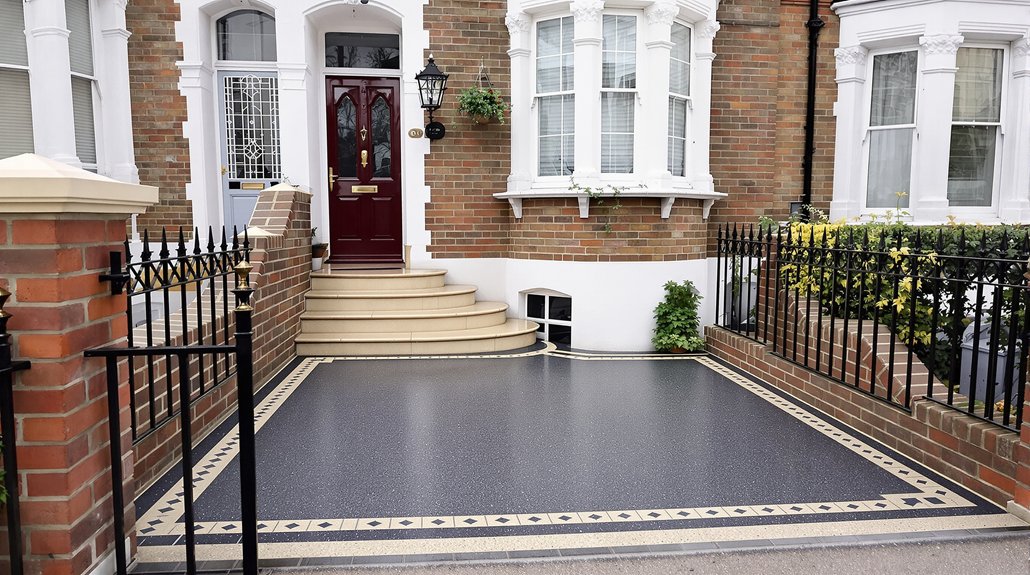
Victorian and Edwardian properties present distinctive architectural characteristics that demand careful consideration when installing modern resin driveway surfaces. These heritage homes feature ornate details, traditional materials, and established proportions that require sympathetic treatment.
| Architectural Element | Victorian Aesthetics | Edwardian Charm |
|---|---|---|
| Colour Palette | Deep burgundy, forest green, charcoal | Softer cream, sage green, warm grey |
| Border Treatments | Decorative brick edging, stone setts | Simple granite kerbing, clay pavers |
| Pattern Integration | Herringbone inlays, geometric designs | Subtle aggregates, natural textures |
| Material Harmony | Complement red brick, slate features | Balance with render, bay windows |
Successful resin installations respect original design intentions while providing contemporary functionality. Professional installers assess existing features, ensuring new surfaces enhance rather than compete with established architectural character.
Practical Considerations for Modern Vehicle Access
Modern vehicles present unique challenges for small driveway installations that extend beyond aesthetic considerations alone. Contemporary cars are markedly wider and longer than vehicles from previous decades, requiring careful measurement and planning for successful navigation in confined spaces.
Key factors affecting modern vehicle access include:
- Turning radius requirements – larger vehicles need additional maneuvering space for safe entry and exit
- Ground clearance considerations – low-profile cars may scrape on steep gradient changes
- Door opening allowances – adequate side clearance prevents damage to both vehicles and property boundaries
Homeowners must evaluate their primary vehicle size against available space dimensions before installation begins. Access routes should accommodate the largest vehicle regularly using the driveway, including delivery trucks and emergency services when necessary for practical long-term functionality.
Maintenance Benefits That Matter in Small Space Applications
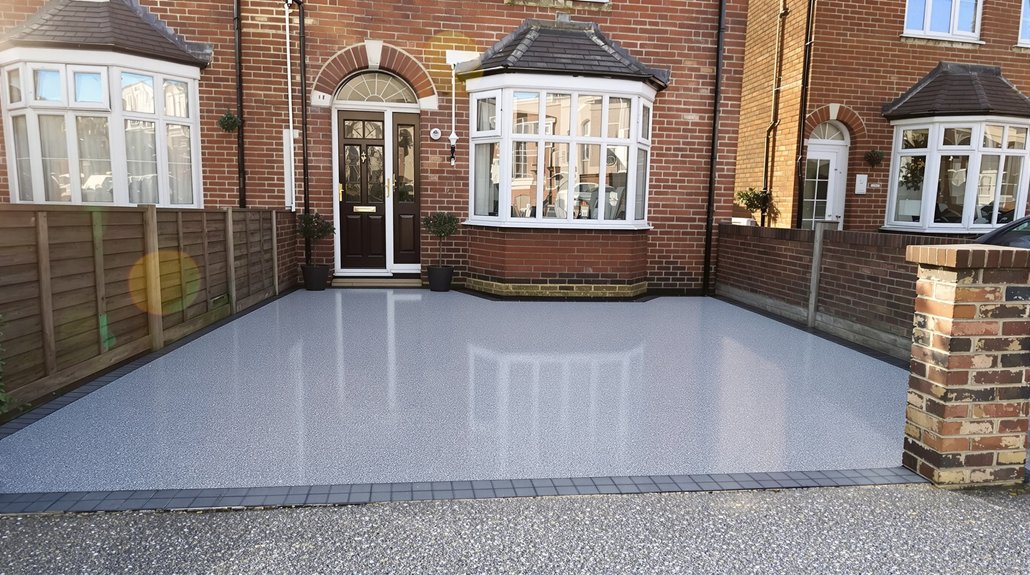
When space is at a premium, maintenance demands become a critical factor in driveway material selection. Resin surfaces excel in small driveway applications through their inherently low-maintenance characteristics. Unlike block paving or gravel alternatives, resin driveways resist weed growth and eliminate the need for regular re-pointing or stone replacement.
Simple cleaning techniques prove highly effective on resin surfaces. A basic pressure wash or garden hose removes dirt, leaves, and oil stains without specialist equipment or treatments. The non-porous surface prevents staining penetration, maintaining appearance with minimal effort.
The longevity features of resin driveways particularly benefit small spaces where replacement poses logistical challenges. Quality installations typically last 15-20 years without significant deterioration. This durability eliminates frequent maintenance disruptions in confined areas where alternative access routes are limited.