

Choosing the right driveway material can greatly impact a property’s curb appeal and long-term value. Homeowners face three primary options: resin-bound surfaces, traditional block paving, and cost-effective tarmac. Each material presents distinct advantages and drawbacks regarding installation costs, maintenance demands, and aesthetic appeal. The decision ultimately depends on individual priorities, budget constraints, and specific property requirements. Understanding these key differences will determine which option delivers the best return on investment.
Understanding Your Driveway Material Options
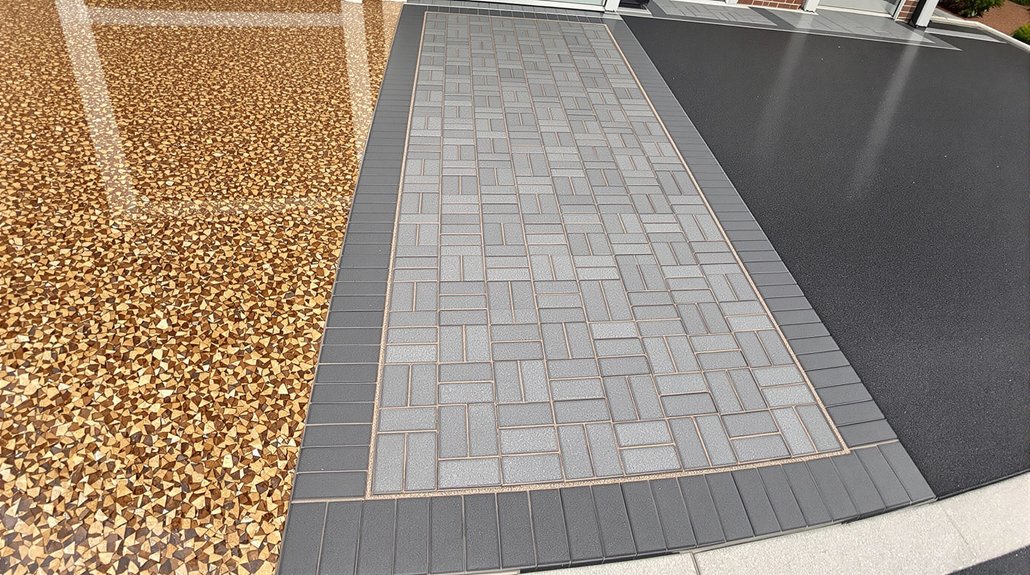
When homeowners begin planning a driveway installation or renovation, they encounter numerous material choices that vary greatly in cost, durability, and aesthetic appeal. Three popular options dominate the residential market: resin-bound surfaces, block paving, and tarmac. Each material possesses distinct material properties that influence performance, longevity, and maintenance requirements.
Resin driveways combine natural aggregates with polyurethane resin, creating smooth, permeable surfaces available in multiple colors. These surfaces offer durability and comply with SuDS regulations, making them an environmentally responsible choice for modern properties. Block paving utilizes interlocking concrete or clay bricks arranged in various patterns, offering exceptional durability and design flexibility. Tarmac, composed of tar and aggregate mixture, provides cost-effective surfacing with quick installation times.
The selection process requires careful consideration of budget constraints, local climate conditions, intended usage patterns, and desired driveway aesthetics. Understanding these fundamental differences enables informed decision-making that aligns with specific property requirements and homeowner preferences.
Cost Comparison: Initial Investment and Long-Term Value
Although initial costs often drive material selection, the true financial impact of driveway materials emerges through long-term ownership analysis. Tarmac presents the lowest upfront investment, typically costing £40-60 per square meter. Block paving requires moderate initial costs ranging from £50-80 per square meter, while resin surfaces demand the highest investment at £80-120 per square meter.
However, long-term benefits greatly alter the financial equation. Tarmac requires resurfacing every 10-15 years, adding substantial expenses. Block paving offers excellent durability with minimal replacement needs over decades. Resin driveways, despite higher initial costs, provide exceptional longevity with minimal maintenance requirements.
When calculating total ownership costs over 20 years, including maintenance, repairs, and potential resurfacing, resin and block paving often prove more economical than initially cheaper tarmac options.
Installation Process and Timeline for Each Material
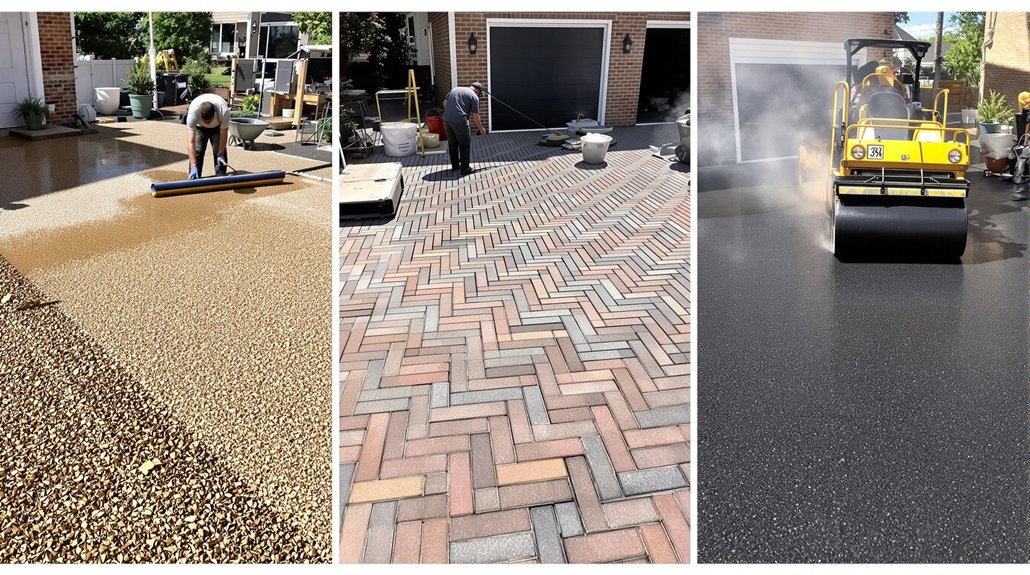
Beyond financial considerations, the installation complexity and timeframes vary considerably among driveway materials, directly impacting project planning and property accessibility.
| Material | Installation Techniques | Timeline | Weather Dependency |
|---|---|---|---|
| Resin | Mixing, spreading, UV-curing | 1-2 days | High (dry conditions essential) |
| Block Paving | Excavation, sand bedding, laying, compacting | 3-5 days | Medium (workable in light rain) |
| Tarmac | Base preparation, hot asphalt application, rolling | 2-3 days | Low (minimal weather restrictions) |
Timeline variations depend heavily on ground preparation requirements and weather conditions. Resin driveways demand precise installation techniques but offer rapid completion when conditions align. Block paving requires meticulous laying patterns, extending project duration. Tarmac provides the most predictable schedule due to its weather resilience and established installation methods, making it ideal for time-sensitive projects.
Durability and Lifespan Considerations
While initial installation costs and timelines influence material selection, the long-term durability and expected lifespan of driveway materials ultimately determine their true value proposition. Each material demonstrates distinct lifetime performance characteristics that greatly impact long-term investment returns.
Material strength varies considerably across options:
- Resin driveways typically last 15-20 years with minimal maintenance, offering excellent resistance to cracking and weather damage
- Block paving provides 20-25 years of service life, with individual blocks easily replaceable when damaged
- Tarmac surfaces generally endure 10-15 years before requiring considerable repairs or resurfacing
- Concrete driveways can exceed 30 years with proper installation and maintenance
Climate conditions, usage intensity, and maintenance frequency directly influence actual lifespan outcomes. Block paving offers superior repairability, while resin provides consistent surface integrity throughout its service life.
Maintenance Requirements and Ongoing Care
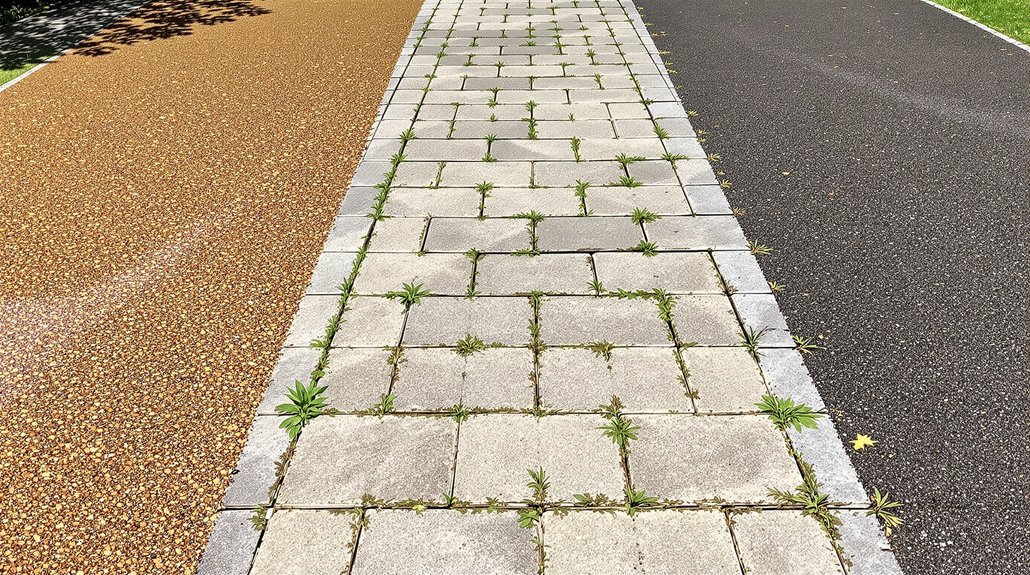
Regular maintenance requirements greatly differentiate driveway materials, with each option demanding specific care routines to preserve appearance and structural integrity. Understanding these obligations helps homeowners make informed decisions based on their available time and resources.
| Material | Cleaning Techniques | Repair Options |
|---|---|---|
| Resin | Pressure washing, mild detergent application | Professional reapplication for worn areas |
| Block Paving | Regular sweeping, weed treatment, occasional re-sanding | Individual block replacement, joint re-sanding |
| Tarmac | Power washing, oil stain removal treatments | Crack sealing, surface patching, complete resurfacing |
Resin driveways require minimal intervention beyond periodic cleaning. Block paving demands consistent weed management and sand replenishment between joints. Tarmac surfaces need regular crack monitoring and prompt repairs to prevent water penetration. Each material’s maintenance complexity varies greatly, influencing long-term ownership costs and time investment requirements.
Aesthetic Appeal and Design Flexibility
Aesthetic considerations often prove decisive when selecting driveway materials, as homeowners seek surfaces that complement their property’s architectural style while expressing personal taste.
The right driveway material transforms curb appeal by harmonizing with your home’s design while reflecting your unique aesthetic preferences.
Resin-bound surfaces excel in color options, offering vibrant hues and natural aggregates that create unique finishes. This material allows seamless curves and intricate patterns impossible with traditional alternatives.
Block paving provides exceptional design flexibility through:
- Multiple laying patterns including herringbone and basket weave
- Contrasting border combinations for visual impact
- Mixed color schemes creating distinctive zones
- Decorative accent strips and geometric designs
Tarmac remains the most limited option, typically available in standard black or gray finishes. While texture variation can be achieved through different aggregate sizes, creative possibilities are minimal compared to resin and block alternatives. Each material serves different aesthetic priorities depending on desired visual impact.
Drainage and Permeability Properties
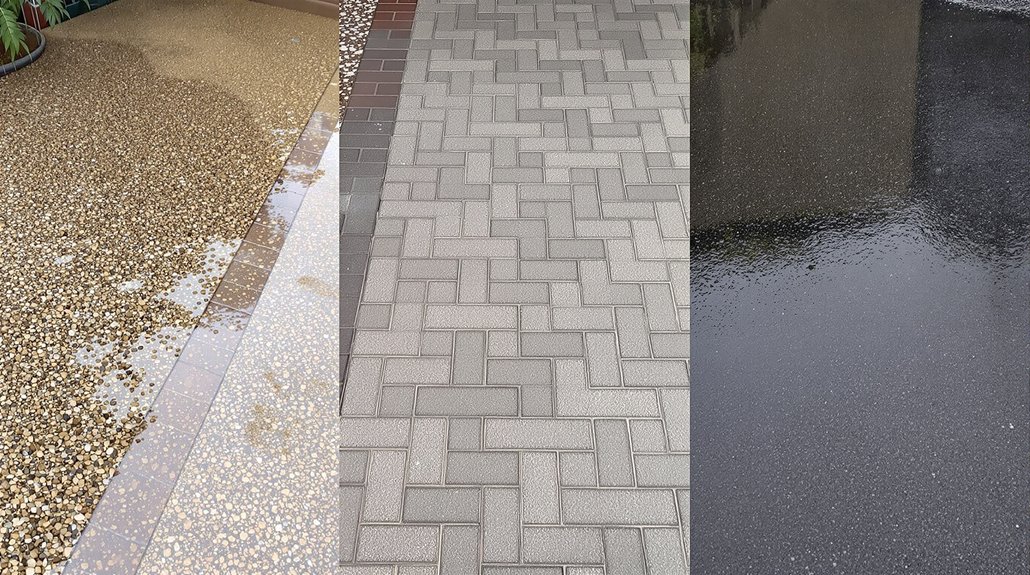
Resin-bound surfaces excel as permeable surfaces, allowing water to filter through naturally while preventing puddling. This permeability reduces runoff and supports sustainable drainage systems. Block paving offers moderate drainage through joints between pavers, though effectiveness depends on joint material and installation quality. Tarmac presents the greatest drainage challenges, creating impermeable surfaces that require additional drainage solutions like channels or soakaways.
Modern planning regulations increasingly favor permeable options, making resin-bound driveways particularly attractive for compliance. Property owners must consider local drainage requirements when selecting materials, as inadequate drainage can cause structural damage and regulatory issues.
Climate Resistance and Weather Performance
Britain’s unpredictable weather patterns demand driveway materials that can withstand dramatic temperature fluctuations, heavy rainfall, and occasional freeze-thaw cycles. Each material demonstrates varying levels of climate adaptation and weather resilience.
Resin bound surfaces excel in extreme conditions, maintaining flexibility during temperature changes while resisting cracking. Their seamless structure prevents water penetration and frost damage. Block paving shows moderate weather resilience but requires proper installation to prevent shifting during freeze-thaw cycles. Individual blocks may crack under severe temperature stress. Tarmac performs adequately in most conditions but becomes vulnerable to cracking during rapid temperature changes.
Resin bound driveways demonstrate superior weather resilience compared to block paving and tarmac, maintaining structural integrity through Britain’s challenging climate conditions.
Key weather performance factors include:
- Temperature tolerance – material expansion and contraction rates
- Frost resistance – ability to withstand freeze-thaw damage
- UV stability – protection against sun-induced deterioration
- Water resistance – prevention of moisture-related damage
Planning Permission and Legal Requirements

When does a driveway installation require planning permission, and what legal obligations must homeowners consider? Most driveway installations fall under permitted development rights, meaning planning permissions aren’t typically required. However, certain circumstances trigger the need for formal approval. Properties in conservation areas, listed buildings, or homes with Article 4 directions face stricter regulations. Additionally, driveways exceeding five square meters using non-permeable materials require planning permission due to sustainable drainage requirements.
Legal restrictions also apply to shared driveways, where neighbor consent may be necessary. Homeowners must guarantee compliance with building regulations, particularly regarding drainage and surface water management. Local authorities can impose specific requirements for materials and installation methods. Before proceeding, property owners should verify their permitted development rights and consult local planning departments to avoid potential legal complications or enforcement action.
Making the Final Decision Based on Your Needs
After considering legal requirements, budget constraints, and material characteristics, homeowners face the critical task of selecting the driveway solution that best aligns with their specific circumstances. The final decision requires balancing personal preferences with practical needs to guarantee long-term satisfaction.
The optimal driveway choice emerges from carefully weighing legal, financial, and material factors against your unique property requirements and personal preferences.
Key factors to evaluate include:
- Usage patterns – Heavy vehicle traffic favors robust block paving over resin surfaces
- Maintenance commitment – Tarmac requires minimal upkeep compared to block paving’s occasional re-sanding
- Aesthetic goals – Resin offers modern appeal while block paving provides traditional charm
- Climate considerations – Drainage capabilities and freeze-thaw resistance vary greatly between materials
Successful driveway selection involves weighing these elements against individual priorities, property characteristics, and lifestyle demands to attain peak functionality and visual appeal.