

Hertfordshire homeowners frequently encounter persistent water pooling on their driveways during heavy rainfall periods. The region’s primarily clay-based soil composition creates significant permeability challenges that standard drainage approaches often fail to address effectively. Standing water not only damages paving materials and creates safety hazards but can also lead to costly structural issues if left unresolved. Understanding the specific geological conditions and implementing targeted drainage solutions becomes critical for protecting property investments and maintaining safe access routes.
Understanding Hertfordshire’s Unique Drainage Challenges

Although Hertfordshire enjoys relatively stable weather patterns compared to other UK regions, its unique geological composition and topography create distinct drainage challenges for property owners. The county’s clay-rich soil types, particularly London Clay and Boulder Clay formations, have poor permeability that prevents water absorption during heavy rainfall. This creates problematic runoff patterns where surface water accumulates rather than naturally infiltrating the ground.
Hertfordshire’s gently undulating landscape, while aesthetically pleasing, can channel water flow toward residential properties situated in natural depressions or at the base of slopes. The county’s chalk downs in the north contrast sharply with impermeable clay in the south, creating varying drainage requirements across different areas. These geological factors, combined with increasingly intense rainfall events, make effective driveway drainage systems essential for preventing property flooding and water damage.
Signs Your Driveway Needs Better Drainage
When homeowners notice persistent puddles forming on their driveway surface after rainfall, this indicates inadequate drainage that requires immediate attention. Water pooling creates several visible warning signs that demand professional drainage assessment. Cracks appearing in concrete or asphalt surfaces often result from water infiltration and freeze-thaw cycles. Staining or discoloration patterns reveal where water consistently accumulates and fails to drain properly.
Erosion along driveway edges signals that runoff lacks proper channeling. Standing water that remains for hours after storms demonstrates insufficient slope or blocked drainage systems. Ice formation during winter months becomes particularly hazardous when drainage problems persist. Property owners may also observe water backing up toward garage entrances or flowing onto adjacent areas. Modern resin bound surfaces in Hertfordshire provide excellent drainage capabilities while complying with SuDS regulations, offering a solution to many common water management issues. These symptoms indicate underlying drainage deficiencies requiring immediate professional evaluation and remediation.
French Drain Systems for Effective Water Management

Because water naturally follows the path of least resistance, French drain systems provide one of the most effective solutions for managing driveway drainage problems. These underground drainage systems redirect water away from problem areas through a perforated pipe surrounded by gravel.
French drain benefits include:
- Prevents water pooling on driveway surfaces
- Reduces erosion and foundation damage risks
- Works continuously without maintenance requirements
- Handles large volumes of water efficiently
- Integrates seamlessly with existing landscapes
Proper installation tips guarantee peak performance. The drain must slope at least one inch per eight feet toward the discharge point. Professionals typically excavate a trench, install landscape fabric, add gravel layers, position perforated pipes, and backfill appropriately. Strategic placement along driveway edges or across slopes maximizes water collection and redirection capabilities.
Permeable Paving Solutions and Benefits
Traditional impermeable driveways create runoff problems by forcing water to flow across surfaces rather than allowing natural absorption into the ground. Permeable paving solutions address these drainage challenges by incorporating materials that enable water infiltration directly through the surface layer.
These systems utilize porous concrete, permeable asphalt, or interlocking pavers with gaps filled by gravel or sand. The permeable surfaces allow rainwater to filter through into underlying sub-base layers, reducing surface flooding and redirecting water into natural groundwater systems.
Key benefits include reduced pooling, decreased erosion, and improved environmental sustainability. Installation requires proper preparation with appropriate sub-base materials and drainage layers. Regular maintenance involves removing debris and occasional power washing to maintain ideal permeability rates for continued effective drainage performance.
Channel Drains and Surface Water Collection

While permeable surfaces effectively manage water infiltration, many driveways require additional surface water management systems to handle heavy rainfall and concentrated flow patterns. Channel drains provide efficient surface water collection methods by capturing runoff before it can pool or cause flooding issues.
Different channel drain types offer varying benefits for driveway applications:
- Linear channel drains – installed across driveway width for maximum water capture
- Slot drains – narrow profile systems ideal for modern aesthetic preferences
- Polymer concrete channels – lightweight yet durable with excellent flow rates
- Cast iron grating systems – heavy-duty options for high-traffic commercial driveways
- Modular plastic channels – cost-effective solutions for residential installations
Proper sizing and positioning promote superior performance, with channels typically placed at natural low points where water naturally accumulates during storm events.
Soakaway Installation and Ground Conditions
Once surface water has been collected through channel drains, effective disposal requires proper soakaway systems that depend heavily on existing ground conditions and soil permeability rates. Clay soils present significant challenges due to poor drainage capacity, often requiring alternative solutions or pre-treatment systems. Sandy or gravelly soils typically offer excellent permeability, making soakaway installation more straightforward and effective.
Professional soil permeability testing determines appropriate soakaway sizing and positioning. This involves percolation tests that measure how quickly water infiltrates the ground over specific timeframes. Results directly influence soakaway dimensions and depth requirements.
Ground conditions also affect excavation methods and structural stability. Rocky terrain may necessitate mechanical breaking, while high water tables require modified installation techniques. Proper assessment guarantees soakaways function efficiently without compromising surrounding foundations or creating waterlogging issues.
Cost Considerations for Different Drainage Methods

Budget planning greatly impacts drainage method selection, with costs varying dramatically between simple surface solutions and extensive underground systems. Basic channel drains represent the most economical option, while thorough soakaway installations require substantial investment.
Drainage system costs depend on several critical factors:
- Material quality – Premium materials increase longevity but raise initial expenses
- Excavation requirements – Deeper systems demand more extensive groundwork
- Professional labour – Complex installations require specialized expertise
- Site accessibility – Restricted access increases installation expenses considerably
- Permitting fees – Local authority approvals add regulatory costs
Surface-level solutions typically cost between £200-800, while underground systems range from £1,500-5,000 depending on complexity. Installation expenses often double material costs due to excavation, labour, and potential complications. Property owners should obtain multiple quotes and consider long-term maintenance costs when evaluating drainage investments.
Professional Installation Vs DIY Approaches
Property owners face a fundamental decision between hiring drainage professionals or undertaking installation themselves, with each approach offering distinct advantages and limitations. Professional installation guarantees proper system design, access to specialized professional tools, and compliance with local regulations. Contractors possess expertise in gradient calculations, pipe sizing, and integration with existing infrastructure. However, this expertise comes at premium costs.
DIY installation offers significant cost savings, particularly on drainage materials and labor expenses. Property owners gain hands-on knowledge of their drainage system while maintaining complete project control. Nevertheless, DIY approaches require substantial time investment, physical capability, and technical understanding. Improper installation can lead to inadequate drainage, structural damage, or costly repairs. Complex projects involving deep excavation or connection to municipal systems typically necessitate professional intervention for safety and regulatory compliance.
Maintenance Requirements for Long-Term Performance
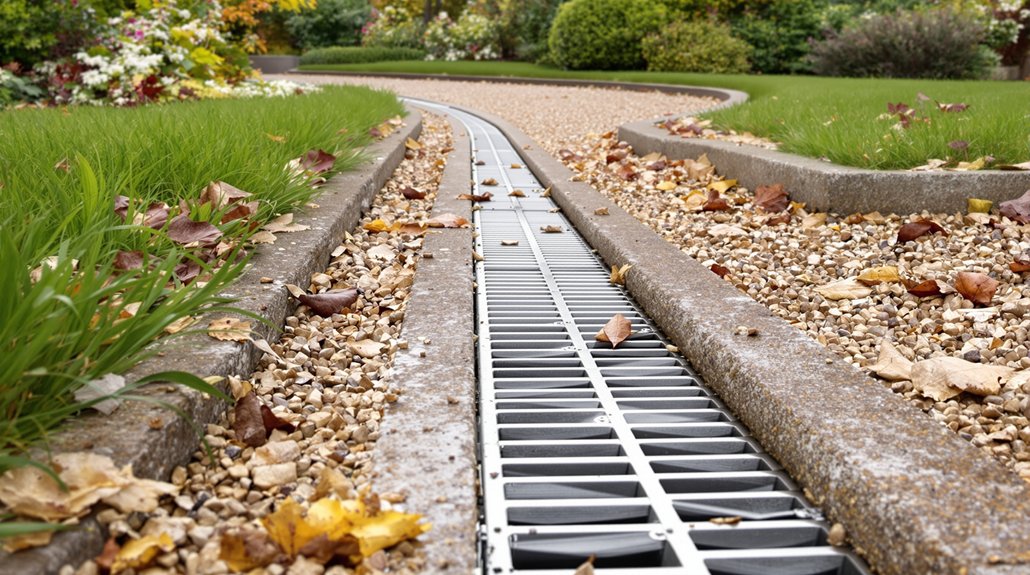
Effective driveway drainage systems require consistent maintenance schedules to preserve peak functionality and prevent costly system failures. Regular drainage inspections help identify blockages, wear patterns, and structural issues before they compromise system performance. Property owners should establish systematic maintenance routines that address both preventive care and corrective measures.
Essential maintenance tasks include:
- Clearing debris from drain covers and channel grates monthly
- Flushing underground pipes annually to remove sediment buildup
- Inspecting joints and connections for signs of separation or damage
- Checking slope integrity and surface conditions quarterly
- Documenting maintenance activities and system performance issues
Professional drainage inspections should occur every two years to assess overall system health. Proactive maintenance schedules extend system lifespan, maintain ideal water flow rates, and protect surrounding infrastructure from water damage.