

Resin driveways greatly enhance wheelchair accessibility in St Albans homes by replacing problematic traditional surfaces like gravel and cracked concrete. The polymer matrix technology creates seamless, porous surfaces that eliminate loose aggregate and provide stable traction for both manual and powered wheelchairs. These slip-resistant pathways maintain reliable grip in all weather conditions while reducing vibration transmission for comfortable transit. The smooth gradients accommodate mobility devices without creating barriers or obstacles. Exploring real-world transformations reveals the complete impact of these accessibility improvements.
Understanding Mobility Challenges With Traditional Driveway Materials

When maneuvering traditional driveway surfaces, wheelchair users frequently encounter significant obstacles that can compromise both safety and independence. Gravel driveways create unstable surfaces that cause wheels to sink and shift, making navigation difficult and potentially dangerous. Concrete surfaces with cracks or uneven joints present wheelchair restrictions that can catch wheels or create jarring impacts. Paved asphalt often develops potholes and surface deterioration over time, creating additional mobility obstacles.
These traditional materials also present challenges during weather conditions. Loose gravel becomes even more problematic when wet, while cracked concrete allows water accumulation that creates slippery hazards. The irregular surfaces force wheelchair users to expend more energy and potentially require assistance, reducing their autonomy when accessing their homes. In contrast, resin driveways provide a continuous finish that eliminates these common mobility barriers by combining natural stone materials with UV-stabilized resin.
The Science Behind Resin-Bound Surface Technology
Unlike traditional driveway materials that rely on mechanical bonding or loose aggregates, resin-bound surfaces employ a sophisticated polymer matrix system that creates a uniformly smooth and stable foundation. The resin composition consists of polyurethane binders that encapsulate stone aggregates at the molecular level, eliminating loose particles and surface irregularities.
| Property | Traditional Materials | Resin-Bound Surface |
|---|---|---|
| Surface Texture | Uneven, loose stones | Seamless, stable |
| Porosity | Variable drainage | Controlled permeability |
| Structural Integrity | Gradual deterioration | Enhanced cohesion |
This advanced binding process guarantees exceptional surface durability while maintaining superior traction for wheelchair users. The polymer matrix distributes loads evenly across the entire surface, preventing cracking and maintaining consistent accessibility standards throughout the driveway’s lifespan.
Key Accessibility Benefits of Resin Driveways for Wheelchair Users

Because wheelchair navigation demands precise surface conditions, resin driveways deliver several critical accessibility advantages that directly address mobility challenges. The seamless, porous surface eliminates loose aggregate that can impede wheel movement, creating stable traction for manual and powered wheelchairs. Unlike gravel or block paving, resin-bound surfaces prevent wheels from catching on uneven joints or sinking into loose materials.
The surface texture provides ideal grip without creating resistance that exhausts users during navigation. Resin driveways accommodate gentle slope gradients necessary for wheelchair access while maintaining structural integrity and drainage performance. The smooth finish reduces vibration transmission through wheelchair frames, enhancing user comfort during transit. Additionally, the non-slip properties remain consistent across weather conditions, ensuring reliable mobility access regardless of rain or moisture presence on the driveway surface.
Slip-Resistant Properties That Enhance Safety in All Weather Conditions
While traditional driveway materials often become hazardous when wet, resin-bound surfaces maintain their slip-resistant characteristics through integrated texture mechanisms that function independently of weather conditions. The aggregate stones within resin driveways create microscopic surface irregularities that provide consistent traction for wheelchair wheels regardless of rain, snow, or ice formation.
This superior slip resistance stems from the permeable nature of resin-bound systems, which prevents water accumulation that typically creates dangerous conditions on conventional surfaces. The material’s weather resilience guarantees that surface grip remains constant throughout seasonal changes, eliminating the unpredictable traction variations that wheelchair users often encounter on asphalt or concrete driveways. This consistent performance considerably reduces the risk of accidents during transfers and navigation.
Seamless Surface Design Eliminates Barriers and Obstacles
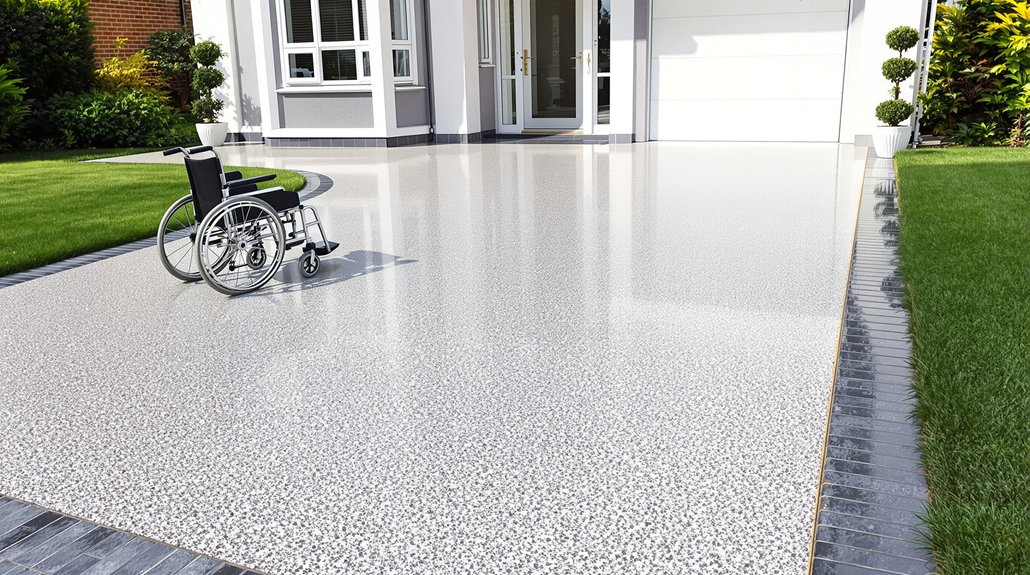
Beyond maintaining reliable traction, resin driveways eliminate the physical barriers that commonly impede wheelchair mobility on traditional surfaces. The seamless installation process creates a continuous surface without joints, gaps, or raised edges that can catch wheelchair wheels or create uncomfortable jolting movements.
Traditional paved driveways often feature uneven blocks, mortar lines, and settling issues that form obstacles for wheelchair users. Resin surfaces address these concerns through barrier free design principles, delivering a completely level pathway from street to entrance. The material’s self-leveling properties guarantee smooth changes between different gradient sections, preventing the abrupt alterations in elevation that can destabilize wheelchairs or require excessive effort to navigate. This seamless approach transforms driveways into genuinely accessible routes that support independent mobility for residents with varying physical needs.
Maintenance Requirements for Long-Term Accessibility Performance
Although resin driveways provide exceptional accessibility features upon installation, their continued performance depends on consistent maintenance practices that preserve surface integrity and safety characteristics. Regular resin maintenance involves periodic cleaning with pressure washing to remove debris, oil stains, and organic matter that could create slip hazards or surface deterioration. Immediate attention to any cracks or loose aggregate prevents minor issues from developing into accessibility barriers. Professional inspection every two to three years guarantees maximum long term durability and identifies potential problems before they compromise wheelchair navigation. Proper drainage maintenance prevents water pooling that could create dangerous conditions. UV-resistant sealant applications protect against weathering and color fading. These proactive maintenance measures sustain the smooth, level surface essential for safe wheelchair access throughout the driveway’s operational lifespan.
Cost Considerations and Investment Value for St Albans Homeowners

Financial planning for wheelchair-accessible resin driveways in St Albans requires homeowners to evaluate both immediate installation costs and long-term economic benefits. Investment costs typically range from £40-80 per square meter, positioning resin surfaces competitively against alternative accessibility solutions.
| Cost Factor | Initial Investment | Annual Maintenance |
|---|---|---|
| Resin Driveway | £2,400-4,800 | £50-150 |
| Concrete Ramps | £1,800-3,200 | £200-400 |
| Tarmac Surface | £1,200-2,400 | £300-600 |
| Block Paving | £3,000-6,000 | £250-500 |
| Gravel Alternative | £800-1,600 | £400-800 |
Long term savings emerge through reduced maintenance requirements and enhanced property values. Resin driveways eliminate costly annual resurfacing while providing superior wheelchair maneuverability. St Albans property assessors recognize accessibility improvements as valuable home enhancements, potentially increasing resale values by 3-5%.
Planning Permission and Installation Guidelines in Hertfordshire
Hertfordshire County Council regulations govern resin driveway installations that modify existing access routes or create new vehicular crossings. Homeowners typically require planning permissions when creating dropped kerbs or altering highway boundaries, though most resin surface replacements on existing driveways fall under permitted development rights.
Installation guidelines mandate proper drainage systems to prevent surface water runoff onto public highways. Contractors must guarantee adequate sub-base preparation and appropriate aggregate selection for load-bearing requirements. The council requires installations to maintain minimum gradient specifications for accessibility compliance.
Professional installers should verify boundary measurements and utility locations before commencing work. Homeowners must notify relevant authorities when modifying street-facing access points. Compliance with building regulations ensures long-term durability and prevents costly remedial work, particularly important for accessibility-focused installations serving wheelchair users.
Real-Life Case Studies From St Albans Accessibility Transformations
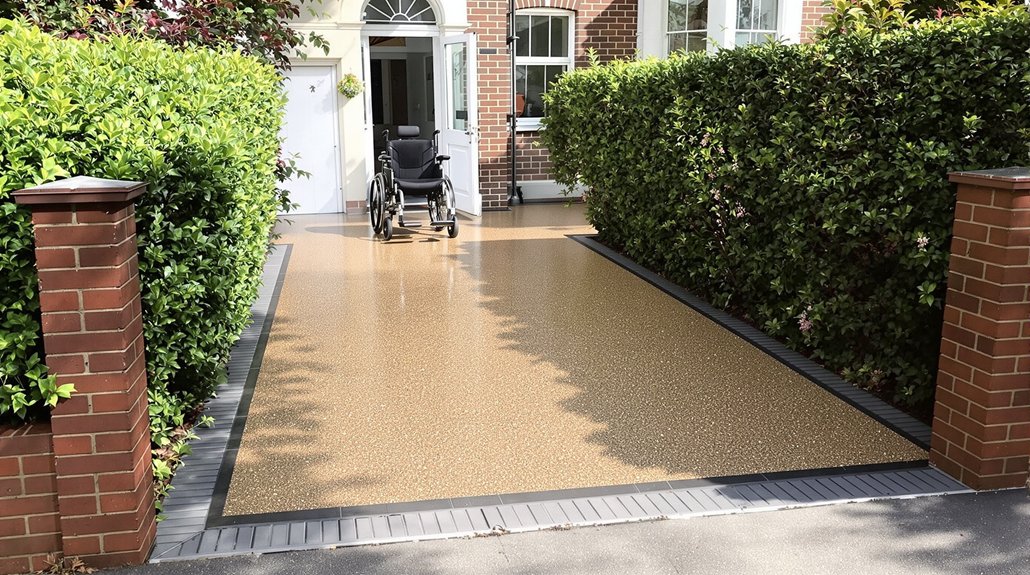
Several St Albans residents have transformed their properties through strategic resin driveway installations that prioritise wheelchair accessibility. The Henderson family replaced their gravel driveway with a smooth resin surface, eliminating mobility barriers for their teenage son who uses a wheelchair. Their installation features gentle gradients and anti-slip textures that provide excellent traction in wet conditions.
Community feedback highlights similar success stories throughout the area. The Williams household documented their transformation from an uneven block paving system to a seamless resin pathway, greatly improving daily navigation challenges. Homeowner testimonials consistently emphasise the durability and low maintenance requirements of these surfaces.
Local accessibility advocates report increased independence among residents following these installations, with many families noting reduced strain during daily transfers and improved safety during adverse weather conditions.