

Protecting your driveway starts with understanding your material’s weaknesses and staying consistent with upkeep. We recommend inspecting for cracks after every season, clearing debris and standing water promptly, and addressing stains before they penetrate deep. Small cracks under ¼ inch are repairable, but widespread damage may mean replacement is smarter. Regular sealing, proper drainage, and eco-friendly cleaning can extend your driveway’s life by twenty or more years. Stick with us — there’s a lot more ahead.
How Different Driveway Materials Wear Over Time
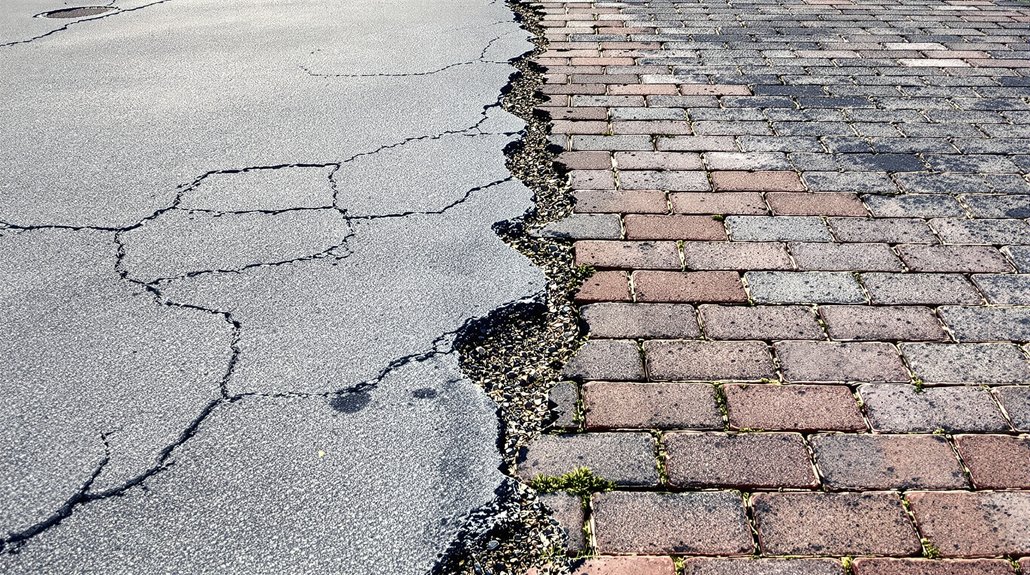
Different driveway materials wear in distinct ways, and understanding these differences helps you make smarter maintenance and replacement decisions. Concrete durability is impressive, often lasting 30–50 years, but it’s prone to cracking from freeze-thaw cycles and heavy loads. Asphalt aging happens faster, typically showing surface oxidation, cracking, and brittleness within 20–30 years without proper sealing. Gravel driveways lose material through displacement and erosion, requiring periodic replenishment. Pavers hold up well individually but shift over time as the base settles. Each material responds differently to temperature changes, moisture, and traffic weight. We recommend learning your driveway’s specific vulnerabilities early so you can apply targeted maintenance before minor wear becomes costly structural damage requiring full replacement.
Routine Driveway Maintenance Every Homeowner Should Do

Keeping your driveway in good shape doesn’t require professional help for most tasks—it requires consistency. Routine driveway inspections and seasonal cleaning prevent small problems from becoming costly repairs.
Here’s what every homeowner should do regularly:
- Inspect for cracks or shifts after winter and summer, when temperature extremes stress materials most
- Clear debris and standing water during seasonal cleaning to prevent staining, erosion, and surface deterioration
- Remove oil stains promptly using a degreaser before they penetrate and weaken the surface
- Check edge stability along borders where grass, soil, or roots can undermine structural integrity
Staying proactive with these simple steps extends your driveway’s lifespan considerably. Most tasks take under an hour and require only basic tools.
Cleaning Your Driveway Without Causing Damage

Cleaning a driveway seems straightforward, but the wrong technique or product can do more harm than good. Pressure washing is effective, but too much force can erode concrete, strip sealant, or push water into cracks, worsening existing damage. We recommend keeping pressure below 3,000 PSI and maintaining a consistent distance from the surface. For chemical cleaning, we strongly favor eco-friendly cleaners over harsh acids or bleach-based products. Aggressive chemicals degrade surface material, kill surrounding vegetation, and contaminate runoff. Eco-friendly cleaners break down oil, grease, and stains without compromising the driveway’s integrity or your landscaping. Always rinse thoroughly after cleaning to remove residue. Combining controlled pressure washing with the right cleaning solution keeps your driveway clean while preserving its long-term condition.
Cracks, Potholes, and Stains: Fix Them Before They Spread

Small problems in a driveway don’t stay small for long. Cracks widen, potholes deepen, and stains penetrate the surface — all of which compromise your driveway’s integrity and appearance. Tackling these issues early is the smartest approach to crack prevention and long-term durability.
Here’s what we recommend addressing promptly:
- Hairline cracks — Fill them with liquid crack filler before water seeps in and expands them
- Large cracks — Use a patching compound and tamp it firmly for a lasting seal
- Pothole repair — Pack cold-patch asphalt tightly, then compact it with a tamper or vehicle weight
- Oil and rust stains — Apply a degreaser immediately to stop deep penetration
Don’t wait. Early intervention saves you from costly, large-scale repairs later.
How Weather and Poor Drainage Destroy Driveways

Even after patching cracks and clearing stains, your driveway’s biggest threats often come from forces you can’t fully control — weather and water. Understanding weather impacts and applying smart drainage solutions keeps damage minimal.
| Weather Factor | How It Damages | Drainage Solutions |
|---|---|---|
| Freeze-thaw cycles | Expands cracks | Install edge drains |
| Heavy rainfall | Erodes surface | Add channel drains |
| UV exposure | Fades, dries out material | Sealcoat regularly |
| Standing water | Weakens base layer | Regrade the slope |
| Ice accumulation | Causes surface heaving | Use permeable pavers |
We recommend inspecting your driveway after every major storm. Catching pooling water early prevents costly structural damage. Redirect runoff away from the surface using grading adjustments or trench drains before problems escalate.
How Often Should You Seal Your Driveway?

Sealing frequency depends on your driveway’s material, climate, and traffic load. Staying on schedule protects your investment and maximizes driveway longevity. Here’s what we recommend:
- Asphalt driveways: Seal every 2–3 years, or sooner if cracking appears
- Concrete driveways: Seal every 3–5 years using a penetrating sealer
- Exposed aggregate: Seal every 2–3 years to protect the surface texture
- Pavers: Reseal every 3–4 years, inspecting joint sand annually
Don’t over-seal—applying sealant too frequently traps moisture and causes peeling. Always clean and repair cracks before sealing, since sealant locks in existing damage. Monitoring your driveway each spring lets us catch problems early, adjust our sealing frequency accordingly, and extend the surface’s functional life considerably.
The Best Driveway Sealers for Every Surface Type

Now that we recognize how often to seal, choosing the right product for our specific surface makes all the difference. Whether we’re tackling DIY sealing or hiring professionals, matching the sealer to the surface protects our investment longer.
| Surface Type | Best Sealer |
|---|---|
| Asphalt | Coal tar or asphalt-based sealer |
| Concrete | Penetrating silicate sealer |
| Pavers | Acrylic or polyurethane sealer |
For environmentally conscious homeowners, eco friendly sealers made from water-based or plant-derived formulas work effectively on both concrete and pavers without harsh chemical runoff. Asphalt surfaces typically require petroleum-based products for adequate protection.
Always read manufacturer guidelines before applying any sealer. Proper surface preparation — cleaning, crack repair, and dry conditions — determines whether our application succeeds or fails.
When to Repair vs. When to Replace Your Driveway

Deciding between repair and replacement comes down to three key factors: the extent of damage, the driveway’s age, and the cost comparison. Knowing the right repair indicators saves you money long-term.
Repair when you notice:
- Cracks smaller than ¼ inch wide
- Minor surface deterioration or fading
- Isolated potholes affecting less than 25% of the surface
- Drainage issues from slight settling
If replacement costs feel steep upfront, consider that repeated repairs on a driveway older than 20 years often exceed full replacement expenses within five years. We recommend replacing when structural damage is widespread, the base layer is compromised, or repair estimates surpass 50% of replacement costs. A new driveway also adds measurable curb appeal and property value.
The Long-Term Driveway Protection Plan That Actually Works

A five-step protection plan eliminates the guesswork and keeps your driveway in top condition for decades. First, we recommend sealing your driveway every two to three years to block moisture and UV damage. Second, fill cracks immediately before they expand. Third, keep heavy vehicles off the surface whenever possible. Fourth, improve drainage around your driveway’s edges to prevent water from pooling underneath. Fifth, schedule annual inspections to catch problems early.
These preventive measures work together to maximize driveway longevity without expensive interventions. We’ve seen homeowners extend their driveways’ lifespans by twenty or more years simply by staying consistent. The plan isn’t complicated — it just requires commitment. Follow these steps, and you’ll rarely face the costly decision between major repairs and full replacement.